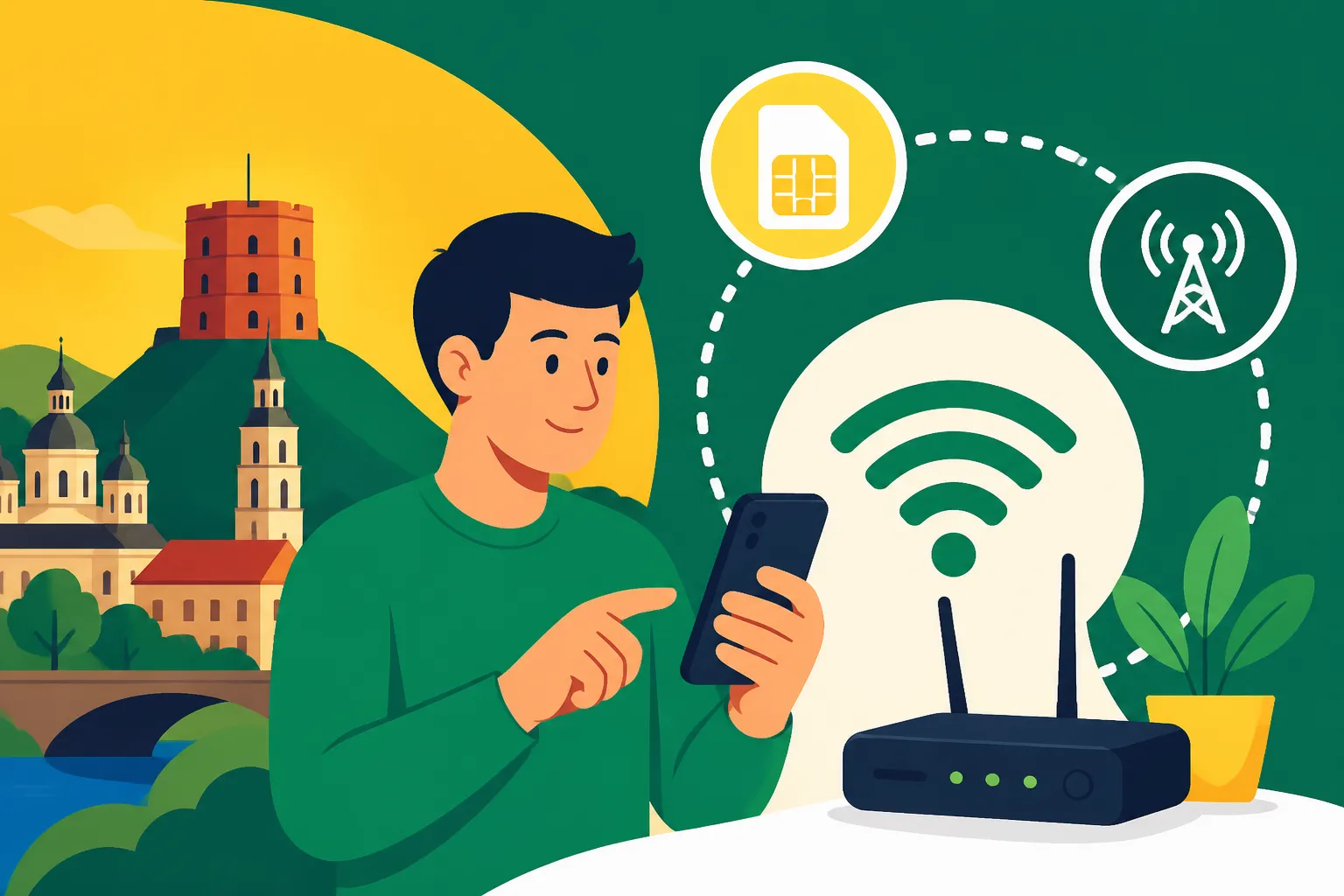
How Do I Set Up Internet and Mobile Service in Lithuania?
One of the immediate headaches you face when arriving in Lithuania, even before you've fully unpacked your boxes, is figuring out how to stay connected. Whether it's letting family know you've landed, navigating to your new apartment, or simply trying to order some food, reliable internet and mobile service is an absolute must. This guide will walk you through the labyrinth of options, from getting a quick local SIM to setting up fibre internet in your new home, ensuring you're digitally connected from day one.
Getting Connected Right Away: Mobile Options for New Arrivals
When you first step off the plane in Vilnius, Kaunas, or Klaipėda, your foreign SIM card is probably racking up roaming charges faster than you can say "labas." Getting immediate local connectivity is crucial, and thankfully, Lithuania offers some pretty straightforward solutions. It might feel like a whirlwind, but trust me, sorting out your phone is usually one of the easiest first steps.
Pre-paid SIM Cards: The Go-To for Immediate Connectivity
For most newcomers, a pre-paid SIM card, or išankstinio mokėjimo SIM kortelė, is your absolute best friend. Seriously, don't overthink it at first. These are designed for quick, hassle-free setup and don't require any long-term commitment or extensive paperwork.
You can grab these almost anywhere: at airport kiosks, major supermarket chains like Maxima, Iki, and Rimi, petrol stations, or directly from the provider stores in shopping centres. The big players in the Lithuanian mobile market are Telia, Bitė, and Tele2. Each offers a variety of starter packs with different amounts of data, calls, and texts. Typically, you'll pay a small upfront fee for the SIM card itself, which often includes a bundle of services valid for a certain period (e.g., 30 days). To top up your credit, you can buy vouchers at the same places you bought the SIM, or do it online through the provider's website.
For those who are tech-savvy or just want to hit the ground running without even swapping a physical card, an eSIM can be a game-changer. Services like Airalo allow you to download a digital SIM profile to your compatible phone before you even arrive, giving you instant data access as soon as you land. This is particularly handy if you’re only staying for a short period or want to test the waters before committing to a local provider. It’s one less thing to worry about when you’re navigating a new city!
The beauty of a pre-paid SIM is its simplicity. No credit checks, no residency proof needed beyond your passport, and no contracts tying you down. It’s perfect for those first few weeks as you're getting settled and figuring out how to get your Asmens Kodas (personal code), which, trust me, is a whole other adventure in itself.
Understanding SIM-Only Plans Versus Contract Bundles
Once you're a bit more established, perhaps you've secured a job and have a permanent address, you might start looking beyond pre-paid options. This is where SIM-only contract plans and bundled packages come into play.
The main difference is, of course, the commitment. With a contract, you're usually signing up for 12 or 24 months. In return, you often get better value for money in terms of data, calls, and texts compared to continually topping up a pre-paid card. You might also get access to new phones on payment plans, though this is less common for expats on shorter-term stays.
However, moving to a contract plan means you'll need a few more things in order:
- Asmens Kodas (Personal Code): This is essential for almost any official contract in Lithuania, from phone plans to housing.
- Proof of Residence: A rental contract (nuomos sutartis) is usually sufficient, demonstrating you have a stable address.
- Lithuanian Bank Account: For setting up direct debits for your monthly payments. This is usually one of the first things you'll sort out after your Asmens Kodas, and there's a lot to consider when choosing a bank for expats in Lithuania.
The hurdle for many expats is getting these documents in order. It’s frustrating to know you could get a better deal but be stuck on pre-paid because you’re still waiting on your Asmens Kodas or a bank account. Don’t worry, it’s a common expat rite of passage. Most people start with a pre-paid, then transition to a contract once their administrative ducks are in a row.
The main providers—Telia, Bitė, and Tele2—all offer a range of contract options. You’ll find competitive plans, especially if you’re looking to bundle services (more on that when we talk about home internet). My advice? Don't rush into a contract. Take your time, compare plans, and make sure you understand the terms, especially the minimum contract period and cancellation clauses.
Settling In: Choosing and Setting Up Home Internet
Once your mobile is sorted, the next big connectivity puzzle is usually home internet. You’ll want something reliable, fast, and preferably without a complicated setup. This is where things can get a little more involved than just popping in a SIM card, but it’s entirely manageable. After all, nobody wants to rely solely on their phone’s data plan for streaming, video calls, or work!
Decoding Your Internet Options: Fibre, DSL, and Mobile Broadband
Lithuania is generally quite well-connected, especially in urban areas, with a strong emphasis on fibre optic internet.
- Fibre Optic (Šviesolaidis): This is the gold standard here. Lithuania boasts one of the highest fibre penetration rates in the world, particularly in cities like Vilnius and Kaunas. Fibre offers incredible speeds, often symmetrical (same upload and download), and is incredibly reliable. If fibre is available in your building or neighbourhood, it's usually the best option. You can expect speeds ranging from 100 Mbps to a gigabit (1000 Mbps) or even more. The main providers for fibre are Telia, Bitė, and local providers like Cgates, Balticum, and Splius, depending on your city. If you're looking into how to set up fibre internet in Vilnius, for example, you'll find plenty of options.
- DSL (Skaitmeninė Abonentinė Linija): While still available, DSL is becoming less common due to fibre's prevalence. It uses traditional copper telephone lines and offers slower speeds compared to fibre, typically up to 50 Mbps. It's more likely to be found in older buildings or more rural areas where fibre hasn't yet reached. It’s generally reliable for basic browsing and streaming but might struggle with heavy usage or multiple devices.
- Mobile Broadband (Mobilusis Plačiajuostis Ryšys): This is essentially using a mobile network for your home internet, often via a dedicated modem or router that takes a SIM card. It's a great option if fibre or DSL isn't available, or if you need a portable internet solution. Speeds can be quite good (depending on 4G/5G coverage in your area), but it can be less stable than a wired connection and often comes with data caps, making it less ideal for heavy users. Telia, Bitė, and Tele2 are the primary providers for this.
When choosing, always prioritise fibre if it’s an option. It offers the best performance and value in the long run. If you're renting, your landlord or previous tenants might be able to tell you which providers operate in the building, saving you some research time.
Navigating Providers and Contracts for Home Internet
Once you've decided on the type of internet, it's time to pick a provider and sign up. The process will feel familiar if you've already navigated getting your mobile contract sorted.
The main national players like Telia, Bitė, and Tele2 all offer home internet services, often with good bundled deals if you combine your mobile and internet. For example, if you're already with Telia for your phone, they might offer a discount on their fibre internet. Beyond these, you have more regional or local providers such as Cgates (strong in Vilnius, Kaunas, and other major cities), Balticum (Klaipėda), and Splius (Šiauliai). These local companies can sometimes offer very competitive prices, so it’s worth checking what’s available specifically in your building or neighbourhood.
The signup process typically involves:
- Checking Availability: Most providers have an online tool where you can enter your address to see what services are available.
- Choosing a Plan: Compare speeds, monthly costs, and contract lengths. Look out for promotional offers, which are common for new customers.
- Providing Documents: You'll definitely need your Asmens Kodas and your rental contract (nuomos sutartis) to prove your address. This is the same documentation you’d need to set up electricity after moving into a Lithuanian apartment. Make sure your name is clearly on the rental contract, as this is usually required.
- Installation Scheduling: Once the contract is signed, an technician will need to come to your apartment to install the necessary equipment (router, fibre converter). Installation times can vary, but generally, expect a few days to a week. Sometimes it can be longer, so plan ahead if possible. It’s wise to ask if they have English-speaking technicians if your Lithuanian isn't up to par yet.
- Setting Up Payments: You'll typically set up a direct debit from your Lithuanian bank account.
Be sure to read the contract carefully. Pay attention to the minimum contract period, early termination fees, and any equipment rental costs. Often, the advertised price is for the first 6 or 12 months, after which it might increase. Understanding these nuances can save you headaches later. Many providers also offer bundles that include home internet, TV, and sometimes even a landline. If you're thinking about how to set up home internet and TV in Lithuania, a bundle might be a cost-effective solution.
| Provider | Internet Type (Typical) | Mobile Plans (Pre-paid) | Mobile Plans (Contract) | Home Internet Speed (Typical) | Notes for Expats |
|---|---|---|---|---|---|
| Telia | Fibre, DSL, Mobile BB | Labas | Extensive plans | 100 Mbps – 1 Gbps+ | Widest coverage, good English support, competitive bundles for mobile+internet. |
| Bitė | Fibre, Mobile BB | Labas (Giga) | Extensive plans | 100 Mbps – 1 Gbps+ | Strong fibre network in cities, good customer service reputation, attractive mobile plans. |
| Tele2 | Fibre, Mobile BB | Pildyk | Budget-friendly plans | 100 Mbps – 500 Mbps | Often the most budget-friendly option, especially for mobile, expanding fibre network. |
| Cgates | Fibre, Cable | N/A (Home only) | N/A (Home only) | 100 Mbps – 1 Gbps+ | Strong regional player, particularly in Vilnius and Kaunas, often very competitive home internet pricing. |
Note: Information is indicative and can change. Always check current offers and availability for your specific address.
Essential Considerations and Practical Tips for Expats
Navigating the local services, especially in a new language, can be daunting. But with a few tips and a bit of patience, you'll be communicating with the world (or at least your Lithuanian neighbours) in no time.
Language Barriers and Customer Service
Ah, the eternal expat challenge: the language barrier. While many Lithuanians, especially younger generations and those in customer-facing roles in larger cities, speak excellent English, you will encounter situations where it's not the primary language. When dealing with something as technical as setting up internet or understanding your phone bill, this can feel like a major hurdle.
Here are a few strategies:
- Bring a Lithuanian Speaker: If you have a local friend, colleague, or even your landlord who speaks Lithuanian, ask them to come with you to the provider's store or be on standby for a phone call. It makes a huge difference.
- Use Online Tools: Most major providers (Telia, Bitė, Tele2) have English versions of their websites and self-service portals. These are invaluable for checking your balance, changing plans, or finding FAQs.
- Seek Out English-Speaking Stores/Staff: In Vilnius, you'll find provider stores in major shopping centres (like Akropolis or Panorama) that are more likely to have English-speaking staff. Don't be afraid to ask, "Ar kalbate angliškai?" (Do you speak English?) right off the bat.
- Google Translate is Your Friend: For smaller interactions or when trying to decipher parts of a bill, Google Translate (especially the camera function) can be a lifesaver.
Remember, the staff are usually trying their best to help, even if communication is a bit clunky. A little patience and a smile go a long way!
Managing Your Services and Billing
Once everything is set up, managing your services is usually quite straightforward, especially with the digital tools available. Most providers have comprehensive online self-service portals where you can:
- View your current plan and usage.
- Check past bills and payment history.
- Change your plan or add services.
- Top up your pre-paid credit (for mobile).
- Report technical issues.
Your monthly bills, often combined with other utilities, will generally be available through these portals. Understanding your utility and communal costs (komunaliniai mokesčiai) in Lithuania is important, as sometimes internet or TV services are bundled into these, especially if they are building-wide services. For home internet, you'll usually get a separate bill, or it will be integrated into your overall provider statement if you have multiple services with them.
Payment is typically handled via direct debit from your Lithuanian bank account, or you can pay online through your bank’s e-banking system. If you ever need to cancel a service or switch providers, be mindful of your contract terms. Most contracts require a 30-day notice period, and early termination can incur fees. Make sure to check these details before making any changes. If you are moving out, for instance, you'll need to remember to officially cancel your contracts rather than just letting them run.
Getting connected in Lithuania, both on your phone and at home, is a crucial step in truly settling in. While there might be a few administrative hoops to jump through, the systems are generally efficient, and the high quality of internet infrastructure makes it a worthwhile effort. Good luck, and enjoy staying connected!
Disclaimer
The information provided in this guide is for general informational purposes only and does not constitute professional advice. While we strive to keep the information up-to-date and accurate, policies, procedures, and service offerings for internet and mobile providers in Lithuania can change frequently. Expats should always consult official sources, such as the websites of specific service providers, the Lithuanian Migration Department (MIGRIS), or relevant government bodies, and seek independent professional advice where necessary. We cannot be held responsible for any inaccuracies or outdated information.