How Do I Register an Imported Car in Lithuania?
So, you’ve finally arrived in beautiful Lithuania, perhaps you’ve found your perfect apartment, and now your trusty car, your steadfast companion through countless adventures, has made the journey with you. But wait, you quickly realize that just because it's here doesn't mean it's legal to drive indefinitely. The thought of navigating the local bureaucracy to register an imported car in a foreign language can make even the most seasoned expat break a sweat. This comprehensive guide is here to walk you through every twist and turn of getting your beloved vehicle officially registered with Regitra, Lithuania’s national vehicle registration authority, turning that initial headache into a manageable checklist.
The Initial Shock: Understanding Why You Need to Register Your Imported Car
Let's be honest, for many of us, bringing our car to a new country feels like bringing a piece of home. It's familiar, it's comfortable, and it's yours. The idea of having to jump through hoops to make it "official" in a new country can feel a bit unfair, especially when you're still unpacking boxes and trying to figure out which bus goes where. But rest assured, there are very clear, albeit sometimes frustrating, reasons why this step is absolutely mandatory once you become a resident.
Why Can't I Just Drive My Car Indefinitely?
This is a common lament, and I've heard it countless times from fellow expats. "My car is perfectly fine, it passed inspection back home, why do they need to re-check everything?" The truth is, once you establish residence in Lithuania, you are generally expected to register your vehicle here.
For EU citizens, the rules are a bit more flexible initially. You can typically drive your foreign-registered vehicle for up to six months after moving to Lithuania. This grace period is meant to give you time to settle in and sort out administrative tasks. However, after this period, or once you've officially declared Lithuania as your permanent place of residence, you must register your vehicle locally. It’s about ensuring that all vehicles on Lithuanian roads comply with national safety, environmental, and taxation standards, and that their owners are easily identifiable for legal and administrative purposes. It’s also linked to Lithuania's obligations within the broader European Union framework, ensuring consistency across member states.
For non-EU citizens, the window is often much shorter, sometimes as little as 10 days after importing the vehicle, or immediately upon establishing residency. This is a critical point that often catches people off guard. You might be driving on international plates, thinking you have time, but once you become a legal resident, the clock starts ticking much faster. This isn't Lithuania trying to be difficult, but rather a standard practice across many nations to ensure local compliance and prevent perpetual tax or regulatory evasion. It helps maintain the integrity of national road safety and taxation systems.
The Importance of the Asmens Kodas and Declaring Residence
Before you even think about stepping foot into a Regitra office with your car documents, you need to sort out your own legal status in Lithuania. This means two crucial things: getting your personal code (Asmens Kodas) and declaring your place of residence. Think of these as the foundational building blocks for almost any administrative task in Lithuania, including registering a vehicle.
Your Asmens Kodas is your unique identification number, much like a Social Security number or national ID number in other countries. It links you to all official databases, from healthcare to taxes, and yes, vehicle registration. Without it, Regitra simply can’t process your application, because they need to link the vehicle to a specific, identifiable resident. You can learn more about how to get your Asmens Kodas (Personal Code) and Why It Matters for Healthcare, as it’s essential for nearly every aspect of life here.
Equally important is declaring your place of residence, or gyvenamoji vieta. This officially tells the Lithuanian authorities where you live. You can't register a vehicle to an address that isn't officially recorded as your residence. This step is usually done at the local municipality (seniūnija) or through the Electronic Government Gateway (E. Valdžios Vartai) if you have an electronic signature. It's your official proof that you are indeed a resident here and therefore subject to Lithuanian laws, including vehicle registration. This is crucial for things like taxes, insurance, and even receiving official mail. Many expats often wonder, "How Do I Declare My Place of Residence in Lithuania?", and it's one of the first things you'll need to sort out.
Once you have both your Asmens Kodas and your declared residence, you’re finally ready to start the actual car registration process. It might seem like a lot of groundwork, but trust me, trying to bypass these steps will only lead to frustration and delays.
Navigating the Regitra Gauntlet: Your Step-by-Step Registration Process
Alright, you've got your Asmens Kodas and your residence is declared. Now, for the main event: getting your imported car officially recognized by Regitra. This isn't a single quick stop; it's a multi-stage process that requires patience, attention to detail, and often, a good internet connection to book appointments. While it might feel like a "gauntlet," knowing the steps beforehand can make it much more manageable.
The Pre-Inspection Checklist: Getting Your Car Ready for Techninė Apžiūra
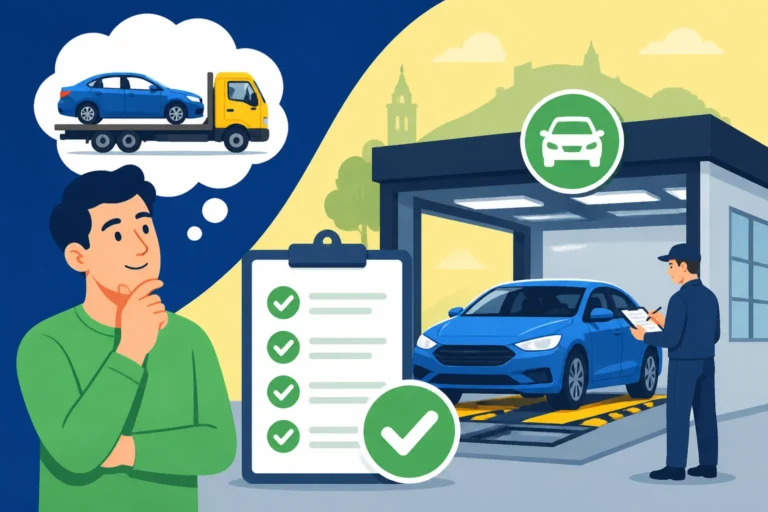
Before you even think about showing up at Regitra, your car needs to pass its Techninė Apžiūra, or technical inspection. This is Lithuania's equivalent of an MOT or TUV, ensuring your vehicle meets safety and environmental standards. It's usually the first major hurdle for imported cars, especially if they're coming from outside the EU or have any modifications.
Here's what you need to do to prepare:
- Cleanliness Matters: A clean car inside and out, especially the engine bay and undercarriage, makes a good first impression. Inspectors are human too.
- Lights, Tyres, Wipers: Check all your lights (headlights, tail lights, indicators, brake lights, fog lights), ensure your tyres have adequate tread depth and are correctly inflated, and that your wipers work perfectly. These are common failure points.
- Fluids and Levels: Make sure your oil, brake fluid, coolant, and windscreen wash levels are all correct.
- Safety Equipment: You’ll need a first-aid kit, a fire extinguisher, and a warning triangle in your car. These are mandatory in Lithuania and will be checked. Make sure they are easily accessible and certified.
- Documentation: Have your original vehicle registration certificate, proof of ownership (e.g., purchase invoice), and your personal identification documents ready.
If your vehicle is coming from outside the EU, be prepared for potentially more stringent checks, particularly regarding emissions, lighting standards (e.g., amber turn signals are often mandatory), and potentially even specific structural requirements. Sometimes, minor modifications might be needed to comply with EU standards, such as changing headlight alignment or rear fog lights. This is where it really helps to find a local mechanic who understands Techninė Apžiūra requirements for imported cars.
The All-Important Techninė Apžiūra (Technical Inspection) Itself
Once you've done your prep work, it's time for the inspection. You'll need to find an authorized technical inspection centre (usually marked by "Techninė Apžiūra" signs). There are many across the country, for example, in Vilnius you'll find them scattered around the city, like the ones near Savanorių Prospektas. You might need to book an appointment in advance, especially in larger cities. You can find more detailed information on Understanding the Vehicle Roadworthiness Test (Techninė Apžiūra) in Lithuania.
The inspection itself is thorough. Technicians will check everything from brake efficiency, exhaust emissions, suspension, steering, bodywork integrity, and all safety features. They'll also check your car's VIN (Vehicle Identification Number) against your documents.
What happens if you fail? Don't panic. If your car doesn't pass, you'll receive a list of defects. You'll then need to get these fixed and bring the car back for a re-inspection. Depending on the severity of the defects, you might have a limited time to do so without incurring a full new inspection fee. This is a common step, and many expats face it, especially with older vehicles or those from non-EU markets. My best advice? Find a good local mechanic before you go for the inspection to give your car a once-over and fix any obvious issues.
Gathering Your Paperwork: What Regitra Really Wants to See
With a successful Techninė Apžiūra certificate in hand, you're now ready for Regitra. This is where all those documents you’ve accumulated truly come into play. Organization is key here; a missing piece of paper can send you right back to square one.
Here’s a comprehensive list of what you’ll generally need:
- Personal Identification: Your valid passport or Lithuanian ID card.
- Lithuanian Residence Permit/Card: Proof of your legal right to reside in Lithuania.
- Proof of Asmens Kodas: Usually your ID card will suffice, but sometimes a separate printout from the Population Register might be requested if your ID card doesn't explicitly state it.
- Proof of Declared Residence: A certificate from the local municipality (seniūnija) or printout from the E-Government Gateway.
- Original Vehicle Registration Certificate: This is the document from your previous country of registration (e.g., V5C in the UK, Title in the US, Carte Grise in France). Ensure it’s the original, not a copy.
- Proof of Ownership: A purchase agreement, invoice, or gift deed proving you are the legal owner. If purchased from a private individual abroad, a sales contract is crucial.
- Technical Inspection Certificate: The one you just received from your Techninė Apžiūra.
- Customs Declaration (if applicable): If you imported your car from outside the EU/EEA, you'll have gone through customs procedures. You'll need the customs declaration form and proof of paid import duties and VAT.
- Proof of Insurance: Valid Lithuanian compulsory third-party liability insurance (TPVCAPD). You must have this in place before you can register the car. You can typically arrange this with local insurance providers like ERGO, If P&C Insurance AS, or Lietuvos Draudimas.
- Conformity Certificate (COC): For vehicles imported from outside the EU, or older vehicles, Regitra might ask for a Certificate of Conformity. This document proves the vehicle meets EU technical standards. If you don't have one, you might need to obtain one from the manufacturer or an authorized technical service, which can be an additional cost and take time.
- Any other relevant documents: Depending on the vehicle's origin or history, Regitra might request additional documents. It's always best to check their official website or call ahead for the most up-to-date requirements for your specific situation.
Keep all these documents organized in a clear folder. And remember, when you're preparing for all this, ensure your phone is charged and has a reliable connection. Services like Airalo can provide easy eSIM access, so you're not left scrambling for Wi-Fi when you need to confirm an appointment or look up a document detail.
The Regitra Appointment and Final Registration
Once you have all your documents in order and your car has passed its technical inspection, it's time to head to Regitra. It's highly recommended to book an appointment online through the Regitra website, as walk-ins can lead to long waiting times.
During your appointment:
- Submit Documents: Hand over all your meticulously prepared documents to the Regitra specialist. They will review everything, check the VIN on your car, and ensure all details match.
- Pay Fees: You will need to pay the vehicle registration fee and any applicable vehicle registration tax, which depends on the vehicle's emissions. You can often pay by card directly at the counter.
- Receive New Plates and Certificate: If everything is in order, congratulations! You'll be issued new Lithuanian license plates and a Lithuanian vehicle registration certificate. The specialist will guide you on how to attach the plates.
It's a huge relief when you finally walk out with those new plates! This marks the official transition of your car to Lithuanian legal status. For further assistance on the general process, you can refer to the guide on How to Register a Car with Regitra in Lithuania.
The Costs and the Waiting Game: What to Expect Financially and Chronologically
Let's talk brass tacks: what's this going to set you back, and how long will you be without your fully legal wheels? The financial aspect can be a bit of a moving target, depending on your car's specific characteristics and its origin. The timeline also varies, largely on how quickly you can gather documents and book appointments.
Breaking Down the Fees: Inspection, Registration, and Taxes
There isn't one single, flat fee for registering an imported car. It's a combination of several separate charges:
- Technical Inspection (Techninė Apžiūra) Fee: This is usually around €20-€30 for passenger cars. If your car fails and requires a re-inspection, there might be a smaller fee for the re-check.
- Regitra Registration Fee: This is the fee for the administrative process of registering the vehicle and issuing the new documents and license plates. It typically ranges from €14.50 to €30 for standard plates, but can be higher if you opt for custom plates.
- Vehicle Registration Tax (Motor Vehicle Tax / Aplinkos Taršos Mokestis): This is a one-off tax that came into effect to encourage greener vehicle choices. It’s calculated based on your car's CO2 emissions and, for older cars without a CO2 value, its engine size and fuel type. The higher the emissions, the higher the tax. This can range from €10-€50 for very low-emission vehicles to several hundred euros for older, high-emission cars. It's important to understand Understanding Vehicle Registration Tax and Costs in Lithuania for a more detailed breakdown.
- Compulsory Third-Party Liability Insurance (TPVCAPD): While not a direct registration fee, you must have this insurance in place. The cost varies significantly based on your vehicle's make/model, engine size, your age, driving history, and where you live. Expect to pay anywhere from €100 to €500+ annually.
- Customs Duties and VAT (for non-EU imports): This is a significant cost for cars coming from outside the EU/EEA. You'll pay customs duties (typically around 10%) and Lithuanian VAT (21%) on the vehicle's value, unless you qualify for an exemption (e.g., if you're transferring your normal residence and have owned the car for a certain period). This is usually paid before you even start the Regitra process.
Here's a simplified table of typical costs:
| Expense Category | Estimated Cost Range (EUR) | Notes |
|---|---|---|
| Technical Inspection (Techninė Apžiūra) | €20 – €30 | Initial inspection fee. Re-inspection might be cheaper. |
| Regitra Registration Fee | €14.50 – €30 | Standard license plates. Custom plates cost more. |
| Vehicle Registration Tax | €10 – €500+ | Based on CO2 emissions, engine size, and fuel type. Higher for older/polluting vehicles. |
| Compulsory Third-Party Insurance | €100 – €500+ (annually) | Mandatory. Varies by driver profile and vehicle. |
| Customs Duties & VAT (non-EU only) | 10% duty + 21% VAT | On vehicle value, unless exemptions apply (e.g., moving goods). |
| Potential Repairs/Modifications | Highly Variable | If your car fails inspection or needs modifications for EU compliance. |
| COC Certificate (if needed) | €100 – €300+ | If not provided by the manufacturer, or for certain non-EU imports. |
Potential Additional Costs and Unforeseen Expenses
Beyond the direct fees, be prepared for other potential expenses:
- Translations: If your original vehicle documents are not in English or Lithuanian, you might need certified translations. This can add €20-€50 per document.
- Modifications for EU Compliance: As mentioned earlier, cars from non-EU countries might need changes to headlights, fog lights, or other components to meet EU homologation standards. This can range from minor adjustments to significant electrical work, potentially costing hundreds of euros.
- Mechanical Repairs: If your car fails Techninė Apžiūra, you'll need to pay a mechanic to fix the issues. This is highly variable, from a simple bulb replacement to more complex brake or suspension work.
- Transportation Costs: Driving to inspection centres and Regitra offices, especially if you have to revisit.
It's always wise to budget a bit extra for these unforeseen circumstances. Think of it as your "Lithuanian car registration contingency fund."
How Long Does the Whole Process Actually Take?
The timeline can vary significantly based on how prepared you are and current administrative backlogs.
- Personal Code and Residence Declaration: If you don't have these, factor in 1-2 weeks for the Asmens Kodas and potentially another few days to a week for residence declaration, though this can sometimes be done immediately online if you have an e-signature.
- Pre-Inspection Prep & Repairs: This depends entirely on your car's condition. If it's ready to go, it's quick. If it needs repairs or modifications, this could add days to weeks.
- Technical Inspection: Booking an appointment might take a few days, the inspection itself is usually under an hour. Re-inspection adds more time.
- Document Gathering: If all your previous car documents are in order, this is quick. If you need to chase down a lost registration certificate or obtain a COC, this could take weeks or even months.
- Regitra Appointment: Booking can take a few days to a week, depending on availability. The appointment itself is usually 30-60 minutes.
In an ideal scenario, if you have all your personal documents (Asmens Kodas, residence) and your car is in perfect condition, you might get everything done within 1-2 weeks. However, for most expats, especially those with non-EU cars, it's more realistic to expect the process to take anywhere from 3-6 weeks, or even longer if significant repairs, modifications, or document retrieval are required. Planning ahead and tackling one step at a time is the key to minimizing stress and delays.
Common Pitfalls and Expat Tips for a Smoother Ride
Having been through the administrative maze myself, I know how easy it is to stumble. But with a bit of foresight and some insider tips, you can smooth out some of those common bumps on the road to registering your imported car in Lithuania.
Language Barriers and Finding Assistance
This is perhaps the biggest headache for many expats. While younger generations and those in customer service roles often speak English, official government offices, including some Regitra branches or smaller Techninė Apžiūra stations, might have limited English-speaking staff.
- Bring a Lithuanian Speaker: If you're not confident in your Lithuanian, bringing a friend, colleague, or even hiring a professional translator for your Regitra appointment is highly recommended. They can clarify instructions, ask questions, and ensure no misunderstandings occur.
- Use Online Translation Tools: For basic communication or understanding forms, Google Translate or DeepL can be your best friends. Just be aware of nuances.
- Look for English-Speaking Services: Some larger Techninė Apžiūra centres in Vilnius or Kaunas might advertise English-speaking services. It's worth calling ahead to check.
- Facebook Groups and Expat Forums: Lithuanian expat groups on Facebook are goldmines for advice, recommendations for English-speaking mechanics or services, and even help finding a local who can assist you.
Remember, the goal is to get it done right the first time, and clear communication is paramount. Don't be shy about asking for help!
Insurance Considerations for Imported Vehicles
Getting your Lithuanian compulsory third-party liability insurance is not just a checkbox for Regitra; it's a legal requirement before you even drive your car here. The process can be a little different when you’re dealing with an imported vehicle.
- Gather Your History: If you have a good no-claims bonus from your previous country, gather proof (in English, if possible). This can significantly reduce your premium. Local insurers like Lietuvos Draudimas or ERGO might accept this.
- Shop Around: Don't just go with the first quote. Get quotes from several insurance companies. Prices can vary quite a bit.
- Full Coverage (KASKO): Consider comprehensive insurance (KASKO) if your car is valuable. While not mandatory, it protects against theft, damage, and other incidents beyond third-party liability. The cost for KASKO will be higher, especially for an imported car, as the insurer might have less data on its local repair costs or parts availability.
- Understand the Small Print: Make sure you understand what your policy covers, especially for an imported car. Are there any restrictions based on its origin or modifications?
This is a critical step, and having proper insurance gives you peace of mind on Lithuanian roads.
Life After Registration: Maintenance, Taxes, and Selling Your Car
Once your car is officially Lithuanian, the journey doesn't end. You’ll need to understand ongoing responsibilities:
- Regular Techninė Apžiūra: Your car will need to undergo regular Techninė Apžiūra checks, typically every two years for passenger cars after the initial registration (or every year for older vehicles, depending on category). Missing this will result in fines and invalid insurance.
- Annual Road Tax: Unlike some countries, Lithuania currently doesn't have an annual road tax beyond the one-off registration tax based on emissions. However, this is always subject to change, so it's good to stay informed.
- Maintenance: Finding a trustworthy mechanic who works with your car's make and model is essential. Many independent garages offer good service, and some specialize in specific brands.
- Selling Your Car: If you decide to sell your registered car in Lithuania, the process is relatively straightforward, typically involving a sales contract and transferring ownership via Regitra. Just remember, as with any major transaction, to understand the tax implications. For any general relocation advice, or even considering shipping your car initially, you might have used resources found through Sirelo, and they also offer great insights into broader moving processes that can help when you're thinking about future steps.
Registering your imported car might seem like a marathon, not a sprint. But by taking it step by step, being prepared with all your documents, and not being afraid to ask for help, you'll soon be enjoying the freedom of the open road in Lithuania with full legal peace of mind.
Disclaimer
Please remember that while this guide provides comprehensive information based on current regulations and typical expat experiences in Lithuania, laws and procedures can change. It is always advisable to verify the most up-to-date requirements directly with the official Lithuanian authorities, such as Regitra and the Migration Department, or consult with a legal professional specializing in immigration and vehicle registration for your specific situation. This information is for general guidance purposes only and does not constitute legal advice.