How Do I Set Up Waste Collection in My Apartment Building in Lithuania?
Moving into an apartment building in Lithuania often means navigating a slightly different world of waste management than you might be used to back home. Gone are the days of rolling your individual bin out to the curb on a specific day; here, it’s a communal effort, often shrouded in a veil of polite mystery if you don't speak Lithuanian. This guide is here to shed some light on how to ensure your rubbish gets collected properly, sparing you those awkward moments of trying to figure out which bin is for what, or worse, having nowhere to put your trash.
Understanding Lithuania's Waste Management System: A New Reality
When you first arrive, it’s easy to assume waste collection is universal, but Lithuania has its own rhythm. For those of us living in apartment buildings, it’s less about personal bins and more about collective responsibility, managed by a system that might seem a bit opaque at first.
Centralized vs. Decentralized Systems
Unlike single-family homes that might have individual bins for different types of waste, apartment buildings in Lithuania typically operate on a centralized, communal system. This means you won’t have your own set of bins to manage at your door. Instead, there will be designated collection points, often within the building’s courtyard, in a dedicated room, or sometimes along the street a short walk away. These points will feature multiple large containers, each clearly marked (usually with pictures and Lithuanian text, which can be a fun challenge!) for specific waste categories. This system is designed to streamline collection for the municipality and promote recycling at a larger scale. For instance, in a bustling neighborhood like Žirmūnai in Vilnius, you'll see these communal setups everywhere, serving dozens of households simultaneously.
The municipalities are the overarching authorities responsible for waste management, setting the rules and regulations. However, they frequently outsource the actual collection and processing to private companies. So, while the city dictates how waste should be handled, a private firm is usually the one doing the heavy lifting.
Key Players in Lithuanian Waste Management
You're probably not going to be directly contacting the municipal waste department for your day-to-day rubbish dilemmas. In an apartment setting, there are a few key players you'll interact with, or rather, whose services you'll use indirectly.
The primary companies responsible for waste collection across Lithuania include names like Ekonovus, Ecoservice, and VSA Vilnius. These are the folks whose trucks you'll see emptying the large communal bins. They handle everything from general household waste to sorted recycling. Each company operates under contracts with different municipalities and building administrators, so the specific provider for your building will depend on your location and building's arrangements. For example, in Klaipėda, you might primarily encounter Ekonovus, while in Vilnius, Ecoservice might be more prevalent.
However, your direct point of contact, or the entity that manages the relationship with these companies on behalf of your apartment building, will almost certainly be your building administrator (administratorius) or, if your building has one, the homeowners association (bendrija). These are the unsung heroes who deal with everything from leaky roofs to ensuring the communal waste bins are emptied on time. They collect the fees, liaise with the waste companies, and should be your first port of call for any questions or issues regarding waste collection. This is a critical distinction that many expats initially miss, thinking they need to sign up for something directly, when in fact, it's already arranged through the building.
The "Eco-Friendly" Challenge for Expats
Lithuania, like many EU countries, has a strong push for environmental sustainability, and that includes rigorous waste separation. This means you'll be expected to sort your waste into various categories right in your apartment, before taking it to the communal bins. This isn't just a suggestion; it's generally a requirement, and it's a huge step towards making our new home a greener place.
The challenge for expats often lies in understanding the specific nuances of what goes where, especially when faced with labels in Lithuanian. It's not uncommon to stand in front of a row of bins, scratching your head, trying to remember if that yogurt pot goes into plastic or general waste. Different municipalities might even have slight variations in their guidelines, adding another layer of complexity. Getting to grips with this system is a crucial part of Navigating the Lithuanian Healthcare System: An Expat's Roadmap (2027) in a sustainable way, as it reflects a broader civic responsibility.
Identifying Your Building's Waste Collection Protocol
Navigating the intricacies of waste collection in a Lithuanian apartment building doesn't have to be a major headache, but it definitely requires a bit of detective work to understand your specific building's setup. This isn't a one-size-fits-all situation, and the key lies in identifying the local rules.
The Role of the Building Administrator or Bendrija
As we touched upon, in almost all apartment buildings, you, as a resident, won't be setting up your own waste collection services. This responsibility falls squarely on the shoulders of your building's administrator (administratorius) or the bendrija (homeowners association). They are the ones who have a contract with a waste management company (like Ekonovus or Ecoservice) for the entire building. They handle the billing, coordinate collection schedules, and manage the communal bin areas.
How do you find out who your administrator is?
- Ask your landlord: If you're renting, your landlord is your primary source of information. They should be able to tell you who the administrator is, their contact details, and the basic waste collection rules. They might even have a written guide.
- Look for notices: Often, there will be a notice board in the building's stairwell or entrance hall, displaying the administrator's contact information, important announcements, and sometimes even the waste collection schedule. These notices might be entirely in Lithuanian, so a translation app like Google Translate can be your best friend here.
- Ask a neighbour: If you’re feeling brave and have a friendly neighbour, a simple "Kur šiukšles mesti?" (Where to throw trash?) with a confused smile can often lead to a helpful explanation.
- Check your utility bills: The building administrator's details might also appear on your monthly utility bills (komunaliniai mokesčiai). If you're curious about managing these, take a look at "Understanding Utility and Communal Costs (Komunaliniai Mokesčiai) in Lithuania" for a deeper dive.
Knowing who your administrator is is paramount. They are the gatekeepers to all information regarding your building's waste services.
Communal Bins and Collection Points
The typical setup for apartment buildings involves communal bins. These aren't just any bins; they are often large, wheeled containers placed in a designated area. This area could be:
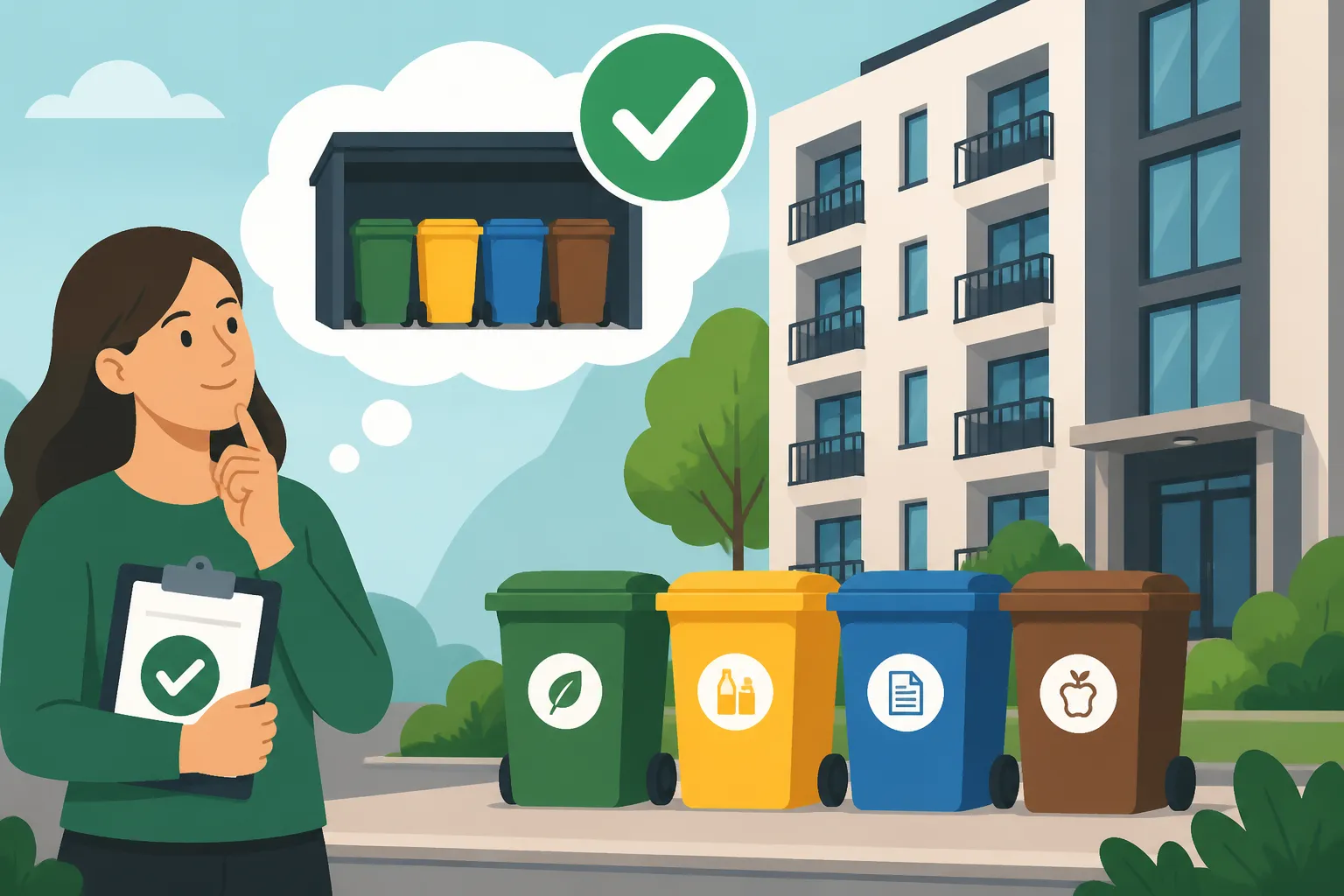
- In a locked enclosure within the courtyard: Many newer or renovated buildings have secure, sometimes even underground, bin areas to keep the courtyard tidy and prevent unauthorised dumping. You might need a specific key, a chip card, or a code to access these.
- In a dedicated rubbish room on the ground floor: Less common but still found, especially in older buildings, is a small room or alcove specifically for bins.
- Along the street nearby: In some cases, especially with older buildings or those with limited space, the communal bins might be situated on a public street corner within a short walking distance of your apartment.
You'll usually find several bins for different categories of waste. These are clearly marked with universal symbols and colours (though the colours can sometimes vary slightly by municipality or waste company). Expect bins for:
- Mixed municipal waste (likutinės atliekos / buitinės atliekos): For everything that can't be recycled or separated. This is usually a dark grey or black bin.
- Plastic and metal (plastikas ir metalas): Often a yellow or orange bin.
- Paper and cardboard (popierius ir kartonas): Usually a blue bin.
- Glass (stiklas): Typically a green bin.
- Organic/compostable waste (žaliasis / biologiškai skaidžios atliekos): Less common in apartment buildings but gaining traction; might be a brown bin.
It’s not uncommon for these areas to be under surveillance or for bins to be locked to prevent illegal dumping by non-residents or businesses. This is where your building administrator comes in – they hold the key (literally and figuratively!) to accessing these facilities.
Renting vs. Owning: Who Pays What?
The financial aspect of waste collection in apartment buildings is generally straightforward, but it's important to understand how it flows.
- For renters: When you rent an apartment, the waste collection fee is almost always included in your broader komunaliniai mokesčiai (utility bills). Your landlord pays the building administrator, who then passes on the cost to you as part of your monthly communal charges. This means you don't typically see a separate "waste collection" line item directly from a waste company; it's bundled. This simplifies things for you, but also means you're reliant on your landlord or administrator for information. To understand more about what else might be included in these charges, you can read "How Do I Pay My Utility Bills in Lithuania?".
- For owners: If you own your apartment, you will directly pay the building administrator (or bendrija) for waste collection as part of your overall building maintenance fees. These fees cover a range of services from stairwell cleaning to minor repairs and, of course, waste management. This payment usually happens monthly or quarterly. The administrator then pays the waste management company.
In both scenarios, the crucial takeaway is that the responsibility for contracting and paying the waste management company rests with the building's management, not individual residents. Your role is primarily to sort your waste correctly and dispose of it in the designated communal bins.
Practical Steps to Ensure Your Waste is Properly Collected
Once you understand the system, getting your waste properly collected becomes much simpler. It’s all about getting the right information and developing good habits.
Getting the Lowdown from Your Landlord or Building Admin
This cannot be stressed enough: your landlord or building administrator is your ultimate guide in the waste collection maze. They hold all the practical knowledge you need. Don’t be shy about asking – it’s a perfectly normal thing to inquire about, and they’ve likely answered it countless times for new residents, expat or otherwise.
Here’s a checklist of questions to ask, perhaps even preparing a simple message to send (using a translation tool if needed):
- "Kur yra šiukšlių konteineriai?" (Where are the waste containers?): Find out the exact location of the communal bins. Is it in the courtyard, a dedicated room, or down the street?
- "Ar reikia rakto ar kortelės norint prieiti prie konteinerių?" (Do I need a key or card to access the containers?): If the bins are in a locked area, ensure you get the necessary access key, chip, or code.
- "Kada išvežamos šiukšlės?" (When is the trash collected?): While not strictly necessary for communal bins (they're usually emptied regularly), knowing the schedule can help you avoid overflowing bins and ensure you don't accidentally put out special waste on the wrong day.
- "Kokio tipo atliekas reikia rūšiuoti ir į kokius konteinerius?" (What types of waste need to be sorted and into which containers?): This is crucial for proper recycling. Ask for a breakdown of what goes into each colored bin. Often, the bins themselves have clear instructions, but a verbal explanation or a diagram from your landlord can be invaluable.
- "Ką daryti su didelėmis atliekomis, tokiais kaip baldai ar elektronika?" (What should I do with bulky waste, such as furniture or electronics?): These items cannot go into the regular communal bins. Your administrator will know about specific municipal collection points or special arrangements.
- "Kas yra atsakingas už konteinerių valymą ir priežiūrą?" (Who is responsible for cleaning and maintenance of the containers?): This helps you know who to contact if there’s an issue, like a broken lid or an overflowing bin.
If you're a new arrival and still getting your internet sorted, having an eSIM from a provider like Airalo can be incredibly helpful. It allows you to stay connected and use translation apps or email your landlord these questions without relying on spotty Wi-Fi.
Mastering the Art of Lithuanian Recycling
Lithuania takes its recycling seriously, and you should too. It’s not just about being eco-conscious; it’s about participating in the community's efforts. Here’s a general guide to the common recycling categories, but always confirm with your building administrator as there can be local variations.
| Waste Category | Typical Bin Color/Marking | What Goes Inside | What DOES NOT Go Inside |
|---|---|---|---|
| Plastikas ir Metalas (Plastic & Metal) | Yellow/Orange | Plastic bottles, packaging, bags, metal cans, foil, Tetra Paks (cartons) | Dirty packaging, hazardous waste containers (e.g., paint cans), toys, electronics, medical waste |
| Popierius ir Kartonas (Paper & Cardboard) | Blue | Newspapers, magazines, cardboard boxes (flattened), paper bags, egg cartons | Dirty or greasy paper (pizza boxes), wet paper, nappies, laminated paper |
| Stiklas (Glass) | Green | Glass bottles, jars (rinsed, no lids) | Ceramics, porcelain, window glass, mirrors, light bulbs, heat-resistant glass |
| Buitinės / Likutinės Atliekos (Household / Residual Waste) | Grey/Black | Non-recyclable waste, food scraps (if no organic bin), dirty packaging, hygiene products | Recyclables, hazardous waste, construction debris, bulky items |
| Žaliasis / Biologiškai Skaidžios Atliekos (Organic / Biodegradable Waste) | Brown (less common in apts) | Food scraps, fruit/vegetable peels, coffee grounds, tea bags | Meat, dairy, fats, bones (unless specified), plastic bags (even biodegradable) |
Practical Tips for Sorting:
- Rinse containers: Lightly rinse plastic, metal, and glass containers to remove food residue. This prevents odors and contamination.
- Flatten cardboard: Always flatten cardboard boxes to save space in the bins.
- Remove caps/lids: For plastic bottles and glass jars, remove the caps and lids. Plastic caps usually go with plastic, metal lids with metal, but check local rules.
- Keep a multi-bin system at home: Dedicate separate small bins or bags in your kitchen for plastic, paper, glass, and general waste to make sorting easier.
Remember, proper sorting helps the recycling process run smoothly and reduces the amount of waste sent to landfills. For a more exhaustive breakdown, you might want to consult "How Do I Set Up Waste and Recycling Collection in Lithuania?".
Troubleshooting Common Waste Collection Issues
Even with the best intentions, issues can arise. Knowing who to turn to can save you a lot of frustration.
- Overflowing Bins: If the communal bins are consistently overflowing, the first step is to contact your building administrator. They are responsible for liaising with the waste management company to arrange more frequent collections or request additional bins. Taking a photo of the overflowing bins can be helpful evidence.
- Missing or Damaged Bins: If a bin is missing, broken, or not properly maintained, again, inform your building administrator. They will contact the waste company or arrange for repair/replacement.
- No Access to Locked Bins: If you weren't given a key, chip, or code, or it's not working, contact your administrator immediately. You can't dispose of your waste if you can't get into the bin area!
- Illegal Dumping: Unfortunately, illegal dumping (when people leave rubbish next to full bins or in undesignated areas) can be an issue. If you witness it, or see persistent illegal dumping, report it to your building administrator. They may have surveillance or be able to take measures. For severe or persistent problems, you might need to involve the local municipality (via their public services department), but this should be a last resort after exhausting options with your administrator.
- Language Barrier: If you're struggling with the language, remember your landlord is your best advocate. You can also use online translation tools for written communication. Often, the younger generation in Lithuania speaks excellent English, so a friendly neighbour might also be able to help bridge the gap.
Beyond the Bins: Special Waste and Community Efforts
Not everything can be tossed into the everyday communal bins. There are special categories of waste that require dedicated disposal methods, and understanding these is another layer of being a responsible resident. Plus, embracing the community spirit can make waste management a little easier and more impactful.
Bulky Waste, Electronics, and Hazardous Materials
These are the items that absolutely cannot go into your regular apartment building bins. Trying to shove an old chair or a broken TV into the general waste bin is a big no-no and can result in fines for your building (which will then be passed on to residents).
- Bulky Waste (Didelių gabaritų atliekos): This includes old furniture (sofas, tables, mattresses), large carpets, and other items that are too big for the standard bins. Each municipality has dedicated didelių gabaritų atliekų surinkimo aikštelės (bulky waste collection sites). For instance, in Vilnius, there are several such sites, including one on Didlaukio g. These sites are typically free for residents to drop off items, but you usually need to show proof of residency (like your Lithuanian residence permit or ID with your address). Your building administrator can tell you the closest one and sometimes even arrange for special collections for the entire building, often for a fee.
- Electronics (Elektronikos atliekos): Old TVs, computers, phones, refrigerators, washing machines, and even small appliances like toasters fall into this category. These contain valuable materials that can be recycled, as well as hazardous components. You can usually drop them off at the bulky waste collection sites. Some electronics stores also have collection points for smaller items when you purchase a new one.
- Hazardous Materials (Pavojingos atliekos): This is a critical one. Items like old paints, solvents, batteries, expired medications, motor oils, and certain cleaning products cannot be thrown in any regular bin.
- Batteries: Small battery collection boxes are common in supermarkets, post offices, and electronics stores.
- Expired Medications: Most pharmacies (vaistinė) have collection bins for expired or unused medicines. This is another crucial aspect of Understanding the Lithuanian Pharmacy (Vaistinė) System and Opening Hours.
- Paints, Oils, Solvents: These must go to designated hazardous waste collection points, which are typically located at the larger bulky waste sites.
Always check with your building administrator or the municipal waste management website for the precise locations and rules for these special waste types. Don't guess, as improper disposal can harm the environment and lead to penalties.
Community Engagement and Expat Initiatives
You're not alone in navigating this. The expat community in Lithuania is vibrant and often shares practical advice on day-to-day living, including waste management.
- Expat Facebook Groups: Groups like "Expats in Vilnius," "Expats in Kaunas," or specific nationality groups are treasure troves of practical information. A quick post asking about recycling rules or where to take a specific item will often yield helpful responses from fellow expats who have already figured it out.
- Local Initiatives: Keep an eye out for local community clean-up days (švarinimosi akcijos). These are excellent opportunities to meet locals, contribute to your neighbourhood, and learn more about local environmental efforts. Your building administrator might even circulate information about these.
- Municipal Apps/Websites: Some larger municipalities are developing apps or have user-friendly sections on their websites dedicated to waste management, including maps of collection points and detailed sorting guides. While often in Lithuanian, they might have English options or can be navigated with a translation tool.
Engaging with your local community, both expat and Lithuanian, can provide invaluable support and practical tips that official guides might miss. It’s also a great way to feel more settled and contribute to your new home.
Reducing Your Waste Footprint in Lithuania
Beyond just sorting, living sustainably is about reducing what you consume and discard. As an expat, this can be an exciting opportunity to embrace new habits.
- Reusable Bags: This is a given these days, but always have a reusable shopping bag with you when heading to shops like IKI, Maxima, or Rimi. Plastic bags are available but come with a small fee, which acts as a gentle nudge towards reusables.
- Bulk Buying: For staples like grains, nuts, and some detergents, consider buying in bulk. Some markets and specialty stores offer bulk options, reducing packaging waste.
- Minimizing Packaging: When grocery shopping, choose products with minimal packaging where possible. Opt for fresh produce over pre-packaged items.
- "No-Plastic" Movement: More and more small businesses and cafes in larger cities like Vilnius are embracing a "no-plastic" ethos. Support them where you can. Bringing your own reusable coffee cup is a small but impactful gesture.
- Donating Usable Items: Before throwing out old clothes, books, or household items, consider donating them. There are charity shops and donation points in most cities. This is a great alternative to taking items to bulky waste sites.
Adopting these habits not only helps reduce the burden on Lithuania's waste management system but can also contribute to a lower cost of living. For more tips on managing your expenses in general, check out "The Complete Guide to Cost of Living in Lithuania for Expats (2026)".
By understanding the local system, asking the right questions, and being a mindful participant, you'll find that setting up and managing waste collection in your Lithuanian apartment building is just another step in making this wonderful country feel like home.
Important Disclaimer
Please remember that waste management rules and regulations in Lithuania can be subject to change, and specific procedures may vary slightly depending on your municipality and apartment building's administrator or homeowners association. This guide provides general information and best practices. Always confirm the most current and specific details with your landlord, building administrator, or relevant local authorities to ensure accurate compliance.