How Does the Techninė Apžiūra (Roadworthiness Test) Work in Lithuania?
Let's face it, getting your head around vehicle regulations in a new country can feel like trying to solve a Rubik's Cube blindfolded. You've navigated the joys of How to Register a Vehicle with Regitra in Lithuania, perhaps even successfully exchanged your driving licence, but now there's another bureaucratic beast lurking: the Techninė Apžiūra, Lithuania's mandatory roadworthiness test. It's not just a box to tick; it's a critical part of car ownership here, and believe me, you don't want to skip it. This guide is here to unpack everything you need to know, from the moment you consider buying a car to sailing through your annual inspection, ensuring you stay legal and safe on Lithuania's beautiful roads.
What Exactly is the Techninė Apžiūra (TA)?
When you hear Techninė Apžiūra, think of it as Lithuania's version of an MOT, vehicle inspection, or roadworthiness test. It's a non-negotiable, regular check-up for your car to ensure it meets safety, environmental, and technical standards. Unlike some countries where these checks might be less rigorous or easily skirted, Lithuania takes its road safety seriously, and the TA is a cornerstone of that commitment.
The Purpose Behind the "Roadworthiness Test"
The primary goal of the Techninė Apžiūra is to keep unsafe vehicles off the road. It’s about protecting everyone – you, your passengers, other drivers, and pedestrians. Imagine the horror of faulty brakes, worn-out tires, or a chassis that's seen better days. The TA aims to catch these issues before they become tragic accidents. Beyond safety, there's an environmental aspect too. Emissions testing is a crucial part of the inspection, ensuring your vehicle isn't pumping out excessive pollutants, which, let's be honest, is a concern for all of us living here. It also acts as a quality control for the used car market; knowing a vehicle has a valid TA gives buyers some peace of mind. For those arriving in Lithuania and perhaps using services like Sirelo to bring their household goods, getting your vehicle up to scratch for the TA is just another step in fully settling in.
What Makes it Different from Your Home Country?
While the core concept of a roadworthiness test is universal, the specifics in Lithuania might differ from what you're used to. For starters, the inspections are conducted by specific, government-authorized companies (such as Valstybinė kelių transporto inspekcija, though the actual inspections are done by private companies licensed by them) rather than smaller, independent garages that might also do repairs. This separation of inspection and repair is designed to ensure impartiality – the inspector isn't trying to drum up business for their own repair shop. The level of detail in the inspection can also be quite thorough, sometimes catching things you might not have even considered. The system is also heavily digitalized; your TA results are immediately updated in the national database, linked to your vehicle's registration.
Your Techninė Apžiūra Checklist: When and Where to Go
Understanding the frequency and logistics of the Techninė Apžiūra is crucial for any car owner in Lithuania. Miss your deadline, and you could face fines, or worse, have your vehicle deemed unfit for the road, invalidating your insurance.
How Often Do I Need a TA?
The frequency of your Techninė Apžiūra depends on the age and type of your vehicle. It’s not a one-size-fits-all situation, so pay close attention:
- Brand New Cars: Lucky you! If your car is fresh off the production line, it generally gets a grace period. For passenger cars (M1 category), the first Techninė Apžiūra is due 3 years after its initial registration date.
- After the First Inspection: Once that initial 3-year period is over, your car will need to undergo a Techninė Apžiūra every 2 years. This is the most common interval for most passenger vehicles.
- Older Cars: There isn't a separate, more frequent schedule for significantly older cars beyond the standard 2-year cycle for passenger vehicles, but of course, older cars often require more maintenance to pass.
- Commercial Vehicles, Taxis, and Public Transport: These vehicles have much stricter and more frequent inspection schedules, often annually or even semi-annually, due to their intensive use and public safety implications. If you're running a business that involves vehicle transport, you'll need to check the specific regulations.
It's absolutely vital to keep track of your TA expiry date. You'll find it on your inspection sticker (usually on the windshield) and on your vehicle registration documents. Don't wait until the last minute! I always set a reminder on my phone a month in advance.
Finding an Inspection Station and Booking Your Appointment
The process of finding a station and booking is quite streamlined, though knowing a bit of Lithuanian helps. There are numerous official Techninė Apžiūra stations scattered across Lithuania, often referred to as TA centres or techninės apžiūros centras. Larger cities like Vilnius, Kaunas, and Klaipėda will have several options.
How to find one:
- Online Search: The easiest way is to use Google Maps or navigate to the official Lithuanian Techninė Apžiūra association website (www.vta.lt or www.tuvlita.lt). These sites usually have a map and a list of all accredited stations.
- Booking: Many centres offer online booking, which is a lifesaver if your Lithuanian isn't fluent yet. You can often select a date and time that suits you. If you prefer to call, be prepared for a potential language barrier, though many larger city centres will have English-speaking staff. Make sure you have your vehicle registration number (VIN) handy.
- Walk-ins: While some smaller centres might accommodate walk-ins, it's generally advisable to book an appointment, especially if you're going during peak hours (like Saturday mornings or late afternoons). Nobody wants to spend their precious time waiting in line, only to be told they're fully booked.
| Feature | New Passenger Cars (M1) | Existing Passenger Cars (M1) | Commercial Vehicles / Taxis | Failed Inspection |
|---|---|---|---|---|
| First Inspection | 3 years from initial registration | N/A | Specific to vehicle type (often 1 year) | N/A |
| Subsequent Interval | Every 2 years | Every 2 years | Annually or semi-annually | Within 30 days (free re-test for minor issues) |
| Common Checkpoints | Lights, brakes, tyres, emissions, chassis, safety, interior | Lights, brakes, tyres, emissions, chassis, safety, interior | More rigorous checks on specific commercial safety features | Focus on previously failed points |
| Documents Needed | Vehicle registration certificate, personal ID | Vehicle registration certificate, personal ID | Vehicle registration certificate, personal ID, other commercial documents | Inspection report, vehicle registration certificate, personal ID |
The Nitty-Gritty: What They Check During Your TA
This is where the rubber meets the road, quite literally. Understanding what inspectors are looking for can save you a lot of hassle and potential re-inspection fees. They are thorough, covering everything from under the hood to your tailpipe.
The Key Areas of Inspection
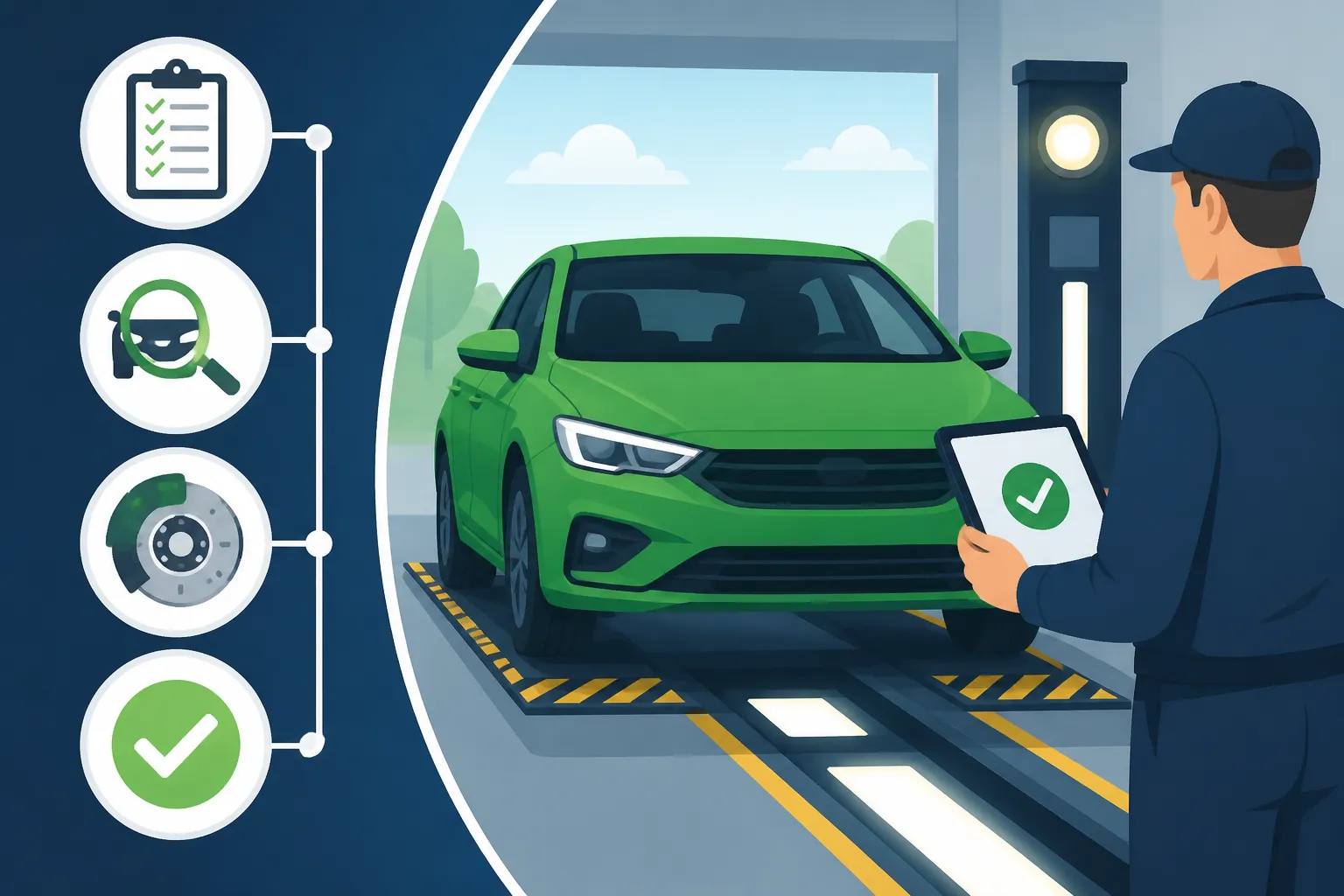
The Techninė Apžiūra is a comprehensive examination, leaving few stones unturned. Here’s a breakdown of the main categories:
- Lighting and Signaling: Every single light on your vehicle – headlights (including alignment), tail lights, brake lights, indicators, fog lights, and even your license plate illumination – must be fully functional and correctly aimed. They'll also check your hazard lights. A single blown bulb is often an immediate fail.
- Braking System: This is a big one for obvious safety reasons. They'll test the efficiency of your service brakes (foot pedal), parking brake, and check for any leaks in the brake lines, worn pads or discs, and even brake fluid levels. Don't neglect those squeaky brakes!
- Tires and Wheels: Worn tires are a major red flag. Inspectors will check tread depth (minimum 1.6 mm, but more is always better), tire pressure, ensure all wheel nuts are present and tight, and look for any damage, bulges, or cracks on the tire walls. The tires must also match, and be appropriate for the season (winter tires in winter, summer tires in summer).
- Steering and Suspension: They'll look for excessive play in the steering wheel, worn bushes, tie-rod ends, and ball joints. Any looseness here is a safety hazard. Suspension components like shock absorbers, springs, and linkages are also inspected for wear and damage.
- Chassis and Bodywork: Rust, especially on structural components, can lead to a failure. They'll examine the vehicle's frame for any damage, corrosion, or modifications that aren't road-legal. Sharp edges on bodywork that could injure pedestrians are also a no-go.
- Exhaust and Emissions: Your vehicle's exhaust system must be intact, without leaks, and securely mounted. The emissions test measures pollutants in your exhaust gases, ensuring they meet EU standards. Older diesel cars often struggle here if not properly maintained.
- Interior and Safety Features: Seatbelts (all of them!) must be fully functional. The horn, windscreen wipers, and washers must work. Your rearview mirrors must be intact, and the windshield itself must not have any cracks or chips that obstruct the driver's view. Even your speedometer needs to be working correctly.
- Fluids and Leaks: While not always a direct fail, significant oil or fluid leaks from the engine, transmission, or differentials will be noted and could potentially lead to a failure, especially if they pose an environmental risk.
Common Reasons for Failing the TA
It’s easy to get overwhelmed by the list above, but some issues crop up more frequently for expats, perhaps because we're used to different standards or overlook simple things.
- Lighting Issues: This is probably the number one reason for re-inspection. A single faulty bulb – whether it’s a headlight, brake light, or even a license plate light – will typically result in a fail. Double-check everything before you go.
- Worn Tires: Especially if you're not used to Lithuania's strict seasonal tire requirements. If you go for your TA in winter with summer tires, or vice versa, you'll fail. Make sure your tread depth is sufficient.
- Rust and Corrosion: Lithuanian winters can be tough on vehicles. Rust on the chassis or structural components is a serious safety concern and a common reason for failure, especially on older cars.
- Excessive Emissions: If your car is older or hasn't been serviced recently, it might struggle with the emissions test. A good oil change and perhaps a fuel system cleaner can sometimes help, but persistent issues might point to deeper engine problems.
- Windshield Cracks: Any crack or chip in the driver's direct line of sight will usually lead to a fail. Get these repaired before your appointment.
- Faulty Brakes: Any imbalance in braking force between wheels, or significantly worn pads/discs, will not pass. It's a critical safety item.
Oh No, It Failed! Navigating a Failed Techninė Apžiūra
It happens. Even with the best preparation, your car might still get a red flag. Don't panic; it's not the end of the world, but it does mean a bit more legwork.
Understanding the Inspection Report
If your vehicle doesn't pass, the inspector will issue a detailed report outlining all the deficiencies. This report is your roadmap to getting your car fixed. It will categorize faults into:
- Minor Defects (Maži Trūkumai): These are usually noted but don't prevent the car from passing. You're advised to fix them but aren't forced to re-inspect.
- Major Defects (Dideli Trūkumai): These are serious enough to fail the inspection. Your vehicle is not roadworthy, and you'll need to fix them and undergo a re-inspection.
- Dangerous Defects (Pavojingi Trūkumai): These are critical safety issues that make the vehicle extremely dangerous to drive. In severe cases, the inspector might even recommend that the vehicle not be driven until fixed.
The report will clearly state which category your faults fall into. If you don't speak Lithuanian, try to bring a friend or use a translation app. Having a reliable mobile data connection can be invaluable here – a service like Airalo can ensure you stay connected without roaming worries, helping you translate the report on the spot.
Rectifying Issues and Re-inspection
Once you have your report, the clock starts ticking. You typically have 30 days to fix the identified problems and return for a re-inspection.
- Get it Fixed: Take your report to a trusted mechanic. If you don't have one, ask for recommendations from other expats or local friends. Explain clearly what needs to be done based on the report. Get a quote before agreeing to any work. Remember, the inspection stations themselves don't usually offer repair services, so you'll need a separate garage.
- The Re-inspection: When you return for the re-inspection, they will usually only check the specific items that caused the initial failure. This re-test is often cheaper, or sometimes even free, if you return within the 30-day window. Make sure you bring your original inspection report with you.
- Passing the Re-inspection: If everything is fixed, congratulations! You'll get your new TA sticker and certificate, valid for the next period.
- If You Don't Make the Deadline: If you can't get the repairs done and return within 30 days, or if you fail the re-inspection, you'll have to pay for and undergo a full Techninė Apžiūra again. So, it's in your best interest to get things sorted quickly.
This whole process can be a bit frustrating, but it's a necessary evil. Keep in mind that a failed TA means your car really does have a safety issue that needs addressing.
Pro Tips for a Stress-Free Techninė Apžiūra
Here are a few tips to make the Techninė Apžiūra less of a headache.
Preparing Your Vehicle
A little proactive effort goes a long way. Before your appointment, do your own quick check:
- Lights, Lights, Lights: Get someone to help you check every single bulb: headlights (low and high beam), fog lights, indicators, hazard lights, brake lights (including the high-mounted one), reverse lights, and license plate lights. Don't forget to check your headlight alignment too – sometimes a bumpy road can knock it off.
- Tires: Check all four tires for adequate tread depth (use a 1-euro coin if you don't have a gauge – if you can see the gold band, your tread is likely too low), correct pressure, and any bulges or cracks. Ensure you have the correct seasonal tires mounted.
- Wipers and Washers: Make sure your wipers clear the windshield effectively and that your washer fluid reservoir is full.
- Horn: Give it a toot. Simple, but overlooked.
- Seatbelts: Pull each one out to ensure it retracts properly and locks when pulled sharply.
- Warning Lights: If you have any warning lights on your dashboard (like check engine, ABS, airbag), get them diagnosed and fixed before the inspection. This is an automatic fail.
- Cleanliness: While not technically part of the inspection, a clean car (inside and out) shows you care about your vehicle. It might not get you a pass, but it leaves a good impression.
- No Loose Items: Remove any clutter from your trunk or passenger areas, especially if it could obstruct access or indicate a lack of maintenance.
Taking an hour to do these basic checks yourself can save you a world of pain and potential re-inspection fees.
Language and Communication at the Station
This can be a real sticking point for many expats. While English is becoming more common, especially in cities like Vilnius and Kaunas, don't assume everyone at the Techninė Apžiūra station will be fluent.
- Bring a Friend: If your Lithuanian isn't up to par, and you have a friend who can translate, bring them along. It makes understanding the process and any potential issues much smoother.
- Translation Apps: Have a reliable translation app on your phone. Services like Google Translate can be invaluable for understanding instructions or the inspection report. Just make sure your phone has enough battery and a good internet connection. This is where having a reliable eSIM from a provider like Airalo can really come in handy, ensuring you're connected no matter where you are in Lithuania.
- Be Polite and Patient: A smile and a "Laba diena" (Good day) go a long way. Even if there's a language barrier, a positive attitude can smooth things over. Remember, they're just doing their job, ensuring road safety.
Essential Documents to Bring
Without the right paperwork, you won't even get past the gate. Make sure you have these with you:
- Vehicle Registration Certificate (Transporto Priemonės Registracijos Liudijimas): This is the main document for your car.
- Your Personal Identification: Your passport or Lithuanian ID card (Asmens Tapybės Kortelė) is usually sufficient.
- Previous Techninė Apžiūra Certificate (if applicable): While they usually have this in their system, it's good practice to bring your old certificate.
- Proof of Insurance (usually not explicitly asked for during TA, but always have it with you when driving).
Making sure you have all these documents ready will prevent any last-minute scrambling. Dealing with car registration and inspections is part of the bigger picture of Driving in Lithuania: Licences, Registration and Rules for Expats (2027), and the more prepared you are, the smoother your integration into Lithuanian life will be.
Disclaimer
Please note that while I strive to provide accurate and up-to-date information, regulations and procedures can change. This guide is intended for informational purposes only and should not be considered legal or official advice. Always consult the official Lithuanian government websites (such as Regitra and the Lithuanian Road Administration) or a legal professional for the most current and specific information regarding your situation.