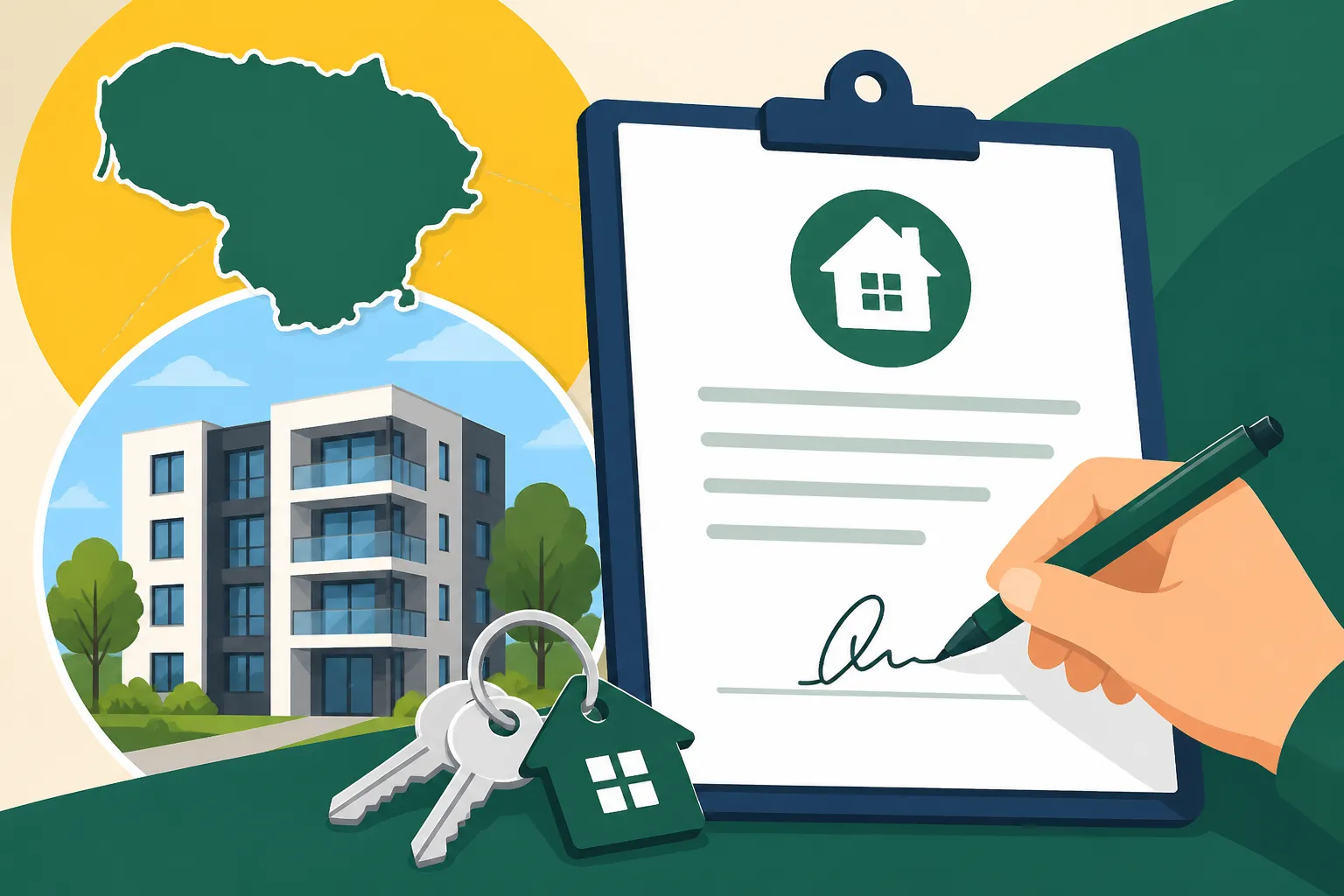
How Do I Sign a Rental Contract (Nuomos Sutartis) in Lithuania?
Moving to a new country like Lithuania often feels like navigating a maze blindfolded, especially when it comes to the nitty-gritty of daily life, like finding a roof over your head. One of the biggest hurdles many expats face is signing a rental contract, or as it's known here, a nuomos sutartis. This guide will walk you through everything you need to know, from the initial search to the final signature and beyond, ensuring you're well-prepared for this crucial step in settling into your new Lithuanian home.
The Initial Hurdles: Finding Your Place and What to Expect
When you first arrive in Lithuania, the rental market can seem a bit opaque, especially if you're not fluent in Lithuanian. It's not just about finding a place you like, but understanding the underlying processes and expectations that might differ significantly from what you're used to back home.
Navigating the Rental Market as an Expat
The search for a suitable rental apartment in Lithuania, particularly in bustling cities like Vilnius or Kaunas, often starts online. Popular Lithuanian real estate portals like Aruodas.lt and Skelbiu.lt are your go-to, though you'll find more options if you can use a browser's translation feature. Be prepared to see listings almost exclusively in Lithuanian, which can be frustrating, to say the least. Many landlords or agents might not speak English, adding another layer of complexity.
Working with a local real estate agent who caters to expats can be a huge time-saver and stress-reducer. While it comes with an agent's fee (typically one month's rent), their expertise in local laws, negotiation skills, and language capabilities are often invaluable. They can help you sift through the listings, arrange viewings, and communicate effectively with potential landlords. Don't be shy about asking for recommendations for English-speaking agents in expat groups or forums – word-of-mouth is gold here. For those moving a lot of belongings, finding a reliable moving company through platforms like Sirelo that can help coordinate your international move smoothly before you even dive deep into rental contracts, can be a great first step.
The rental market itself is fairly dynamic, especially in prime locations. Demand can be high, particularly for well-maintained, modern apartments. It's not uncommon for desirable properties to be snapped up quickly, so be ready to act fast once you find something that fits your needs. You might be surprised by the variety of apartments, from Soviet-era blocks to sleek new developments. What you should expect is that landlords usually prefer long-term tenants, typically looking for a minimum one-year contract. If you're wondering, "How Much Does It Cost to Rent an Apartment in Vilnius in 2026?", know that prices vary widely based on location, size, and amenities. For more detailed insights, you might want to read our guide on How Do I Find a Long-Term Rental in Kaunas?.
Understanding Basic Rental Terminology
Before you even get to a contract, it helps to understand some key terms you'll encounter. This is where the local lingo can feel like another language entirely, which, well, it is!
- Nuomos sutartis: This is the rental contract itself. It’s the official document that legally binds you and your landlord.
- Nuomininkas: That's you, the tenant.
- Nuomotojas: The landlord, or the property owner.
- Butas: An apartment.
- Kaina: The price, referring to the monthly rent.
- Komunaliniai mokesčiai: These are your utility bills (heating, water, electricity, waste, etc.). It’s crucial to clarify whether these are included in the rent or paid separately. More often than not, they are paid separately and can add a significant amount to your monthly expenses, especially during the colder months when heating costs can be substantial. For a deeper dive, check out How Do I Understand My Komunaliniai Mokesčiai (Utility Bills) in Lithuania?.
- Užstatas/Depozitas: This is the security deposit. Typically, it’s one or two months' rent, though sometimes three, and it’s held by the landlord to cover any damages or unpaid rent. You'll want to know How Much Deposit Do Landlords Require in Lithuania?.
- Terminas: The duration or term of the contract.
- Protokolas: A handover protocol or acceptance act. This document is essential and records the condition of the apartment and its contents at the time you move in. It’s your safeguard against future disputes over damages.
It's common for rental agreements in Lithuania to be signed for a minimum of one year. Shorter terms exist but are less common and often come with higher rents. Make sure you understand the minimum lease period before committing.
Deciphering the Nuomos Sutartis: Key Sections to Scrutinize
The nuomos sutartis is the cornerstone of your rental agreement, and understanding every clause is paramount. Unlike some countries where contracts are fairly standard and simple, Lithuanian rental agreements can be quite detailed and might contain clauses that are unfamiliar to you. Never sign anything you don't fully comprehend, even if it feels awkward to ask for clarification.
Tenant and Landlord Obligations and Rights
This section is vital as it defines what both parties are expected to do and what rights they hold. It might seem like common sense, but having it explicitly stated in the contract prevents misunderstandings later.
As a tenant (nuomininkas), your primary obligation is to pay rent and utilities on time. The contract will usually specify the payment dates and methods. You are expected to keep the property clean and in good condition, allowing for normal wear and tear. Subletting is usually forbidden unless explicitly permitted in writing by the landlord. You also have a right to peaceful enjoyment of the property, meaning the landlord can't just barge in whenever they please. They typically need to give reasonable notice (usually 24-48 hours) for inspections or repairs, except in emergencies. Our guide on Understanding Tenant and Landlord Rights in Lithuania provides more depth here.
The landlord (nuomotojas), in turn, is responsible for ensuring the property is fit for habitation and for carrying out major structural repairs. They must respect your privacy and not interfere with your use of the property as long as you adhere to the contract terms. They are also obligated to provide you with all necessary details for utility payments, such as meter readings if required, or invoices.
One crucial aspect often overlooked by new arrivals is the importance of declaring your place of residence (gyvenamoji vieta). Your landlord's permission to declare your residence at the apartment address is often a clause within the rental agreement. Without it, you can't register for an Asmens Kodas (personal code) or many other essential services. If you’re an expat, this is a non-negotiable item. You can find more information about this in our article How Do I Declare My Place of Residence in Lithuania?.
Rent, Deposits, and Utility Payments
This is often the most straightforward, yet most important, part for obvious reasons.
The monthly rent (kaina) should be clearly stated, along with the currency (Euros, of course) and the exact payment date. Most landlords prefer bank transfers, so having a local bank account set up is highly advisable. While you might use services like Revolut or Wise initially, a traditional Lithuanian bank account makes life easier.
The security deposit (užstatas/depozitas) is typically one or two months' rent. The contract should specify the amount, when it's due, and under what conditions it will be returned to you at the end of the tenancy. It's good practice to have a clause stating that the deposit will be returned within a certain number of days after you move out, provided there are no damages and all bills are settled. Some landlords might try to keep the deposit for minor issues, so ensure that the initial handover protocol is meticulously detailed.
Utility payments (komunaliniai mokesčiai) are a common source of confusion and potential conflict. The contract must specify who is responsible for which utilities. In most cases, the tenant pays for electricity, gas, water, heating, internet, and sometimes building management fees. Heating bills, especially during the long Lithuanian winters, can be shockingly high, so be prepared for these fluctuations. Some landlords might include a fixed amount for utilities in the rent, which can simplify budgeting but might mean you're paying more than you consume or less than actual usage during cold months. Always clarify this explicitly. Knowing How Do I Set Up Electricity After Moving Into a Lithuanian Apartment? will be useful here.
Table: Common Rental Costs in Lithuania
| Cost Type | Typical Amount | Frequency | Notes |
|---|---|---|---|
| Monthly Rent | Varies widely (e.g., €400-€900 for 1-2 bed in Vilnius) | Monthly | Depends on location, size, and amenities. |
| Security Deposit | 1-3 months' rent | Once (upfront) | Returned at tenancy end, pending property condition and bill payments. |
| Utilities (Komunaliniai Mokesčiai) | €80-€250+ (higher in winter) | Monthly | Includes heating, water, electricity, gas, waste. Heating can be very expensive. |
| Internet & TV | €15-€30 | Monthly | Separate contract with a provider (e.g., Telia, Bitė, Tele2). |
| Agent Fee | 1 month's rent + VAT | Once (upfront) | If using a real estate agent. Some charge 50% of monthly rent. |
Duration, Termination, and Extension Clauses
The term (terminas) of your nuomos sutartis is usually for a fixed period, commonly one year. It's crucial to understand what happens when this term expires.
Does the contract automatically renew? Does it switch to a month-to-month agreement? Or does it simply end, requiring you to vacate the property? The contract should clearly outline the notice period required for either party to terminate the agreement or to express an intention not to renew. Typically, this is one to three months.
Early termination clauses are also important. Life happens, and you might need to leave before your contract is up. Some contracts allow for early termination with a penalty (e.g., forfeiting your deposit or paying an additional month's rent), while others might require you to find a suitable replacement tenant. Always clarify this beforehand to avoid nasty surprises. It's a clause many expats regret not fully understanding later on.
The Signing Day: What to Bring and Common Pitfalls
The day you sign your nuomos sutartis is a big step. It’s exciting, but it’s also when you need to be at your most vigilant. Don't let the excitement overshadow the need for careful review.
Required Documents and Translations
For most expats, the main document you'll need is your passport or national ID card. If you're from a non-EU country, you might also need to show your residence permit. Landlords typically need to verify your identity and legal right to reside in Lithuania.
You might also be asked for proof of income, especially if you're signing a longer-term lease or a more expensive property. This could be a letter from your employer, recent pay slips, or bank statements. If you're coming to Lithuania as an employee, getting an "Asmens Kodas" (personal code) is crucial for almost everything, including signing contracts and getting paid. It's worth reviewing How Do I Get an Asmens Kodas Before Renting an Apartment in Lithuania? for details on this.
Crucially, unless you are fully proficient in Lithuanian legal terminology, insist on having an English translation of the contract. While the legally binding document will always be in Lithuanian, a full, clear English translation allows you to understand every clause. If the landlord or agent cannot provide one, consider hiring a professional translator or a legal consultant to review the contract with you. It might seem like an extra expense, but it's a small price to pay for peace of mind and to prevent potential disputes down the line. Remember, the goal is to fully understand What Documents Do I Need to Rent an Apartment in Lithuania?.
The Importance of a Handover Protocol
This is where many expats (and even locals) make a critical mistake. The handover protocol, or priėmimo-perdavimo aktas, is a document that details the condition of the apartment and its contents at the time you move in. It typically includes:
- Detailed list of furniture and appliances: Every chair, table, fridge, and oven should be listed.
- Condition of the property: Any existing damages, scratches on the floor, marks on walls, broken fixtures, etc., should be noted. Take photos or even a video timestamped on your phone!
- Meter readings: Crucial for electricity, gas, and water to ensure you're only paying for your consumption.
Do not sign the handover protocol until you have thoroughly inspected the entire property. Walk through every room, open every cupboard, check all appliances. If you notice a scratch on the wall that isn't listed, point it out and have it added. Take pictures or videos of everything, especially any existing flaws. This document is your shield when you move out. Without it, the landlord could claim damages that were already there, and you'd have no proof to dispute it. It sounds tedious, but it can save you hundreds, even thousands, of euros from your deposit.
Dealing with Language Barriers and Legal Assistance
Lithuanian can be a challenging language, and legal jargon is difficult even for native speakers. If you're dealing directly with a landlord who doesn't speak English and you don't speak Lithuanian, a language barrier can easily lead to misunderstandings. Bring a trusted friend who speaks Lithuanian, or better yet, a professional translator or a legal advisor experienced in Lithuanian property law.
Don't feel pressured to sign anything on the spot. Take the contract home, review it carefully with your English translation, and ask as many questions as you need to. A legitimate landlord or agent will understand your need for clarity. If they rush you or refuse to provide explanations, it could be a red flag. Consulting with a local lawyer can offer an extra layer of protection, particularly if the terms seem unusually complex or restrictive. For general moving support, platforms like Sirelo can connect you with international movers who understand the complexities of relocating to new countries and managing personal belongings.
After the Ink Dries: Your Responsibilities and Next Steps
Congratulations, you've signed your nuomos sutartis! But the journey isn't quite over. There are crucial steps to take immediately after moving in to ensure you're fully settled and legally compliant.
Declaring Your Residence and Setting Up Utilities
As mentioned, declaring your place of residence is probably one of the most important administrative tasks after signing your rental agreement. This formal registration links you to your address and is essential for obtaining your Asmens Kodas (if you don't already have it), accessing healthcare, and other public services. You typically do this at the Migracijos departamentas (Migration Department) or through the Elektroniniai valdžios vartai (E-Government Gateway) if you have an e-signature. This is a critical step that you cannot skip. More information is available in the guide Declaring Your Place of Residence in Lithuania: The Complete Guide.
Next up are the utilities. While your landlord might handle the initial setup, you'll often be responsible for putting the utility accounts into your name. This includes electricity (usually through ESO), water (through local municipal providers), gas, and waste management. It's often easier to do this once you have your Asmens Kodas and have declared your residence. Be sure to clarify with your landlord exactly how this process works. Sometimes the landlord keeps the utility accounts in their name and simply sends you the bills, which is common. However, if they are transferred to your name, you are directly responsible. Our detailed guide, The Expat Guide to Setting Up Utilities in Lithuania, covers this extensively.
Finally, getting connected! Setting up home internet and possibly TV is another priority. Lithuania boasts excellent internet speeds, and providers like Telia, Bitė, and Tele2 offer various packages. You'll need to arrange installation, which can sometimes take a few days or weeks. In the meantime, having a local SIM card with a decent data plan is a lifesaver. Providers like Airalo offer eSIMs for instant connectivity, which can be invaluable for navigation, communication, and keeping up with administrative tasks while you wait for your home internet to be installed. Our guide on How Do I Set Up Internet and Mobile Service in Lithuania? can provide more specific details.
Understanding Maintenance and Repairs
Even with a comprehensive contract, maintenance and repairs can become a point of contention. The nuomos sutartis should delineate responsibilities:
- Tenant's responsibility: Generally, minor repairs resulting from everyday use, keeping the property clean, and maintaining appliances you own. For example, changing light bulbs or cleaning clogged drains.
- Landlord's responsibility: Major structural repairs, issues with the building's infrastructure (heating system, plumbing, roof), and repairs to appliances that came with the apartment due to normal wear and tear.
Always report any issues to your landlord in writing (email is usually sufficient) as soon as they arise. This creates a paper trail and protects you from being blamed for deferred maintenance. If an emergency repair is needed, the contract should outline the procedure. For non-urgent repairs, a reasonable timeframe for the landlord to address the issue should be expected. If your landlord is unresponsive, knowing your tenant rights, as detailed in Understanding Tenant and Landlord Rights in Lithuania, becomes even more crucial.
Remember, clear communication and a thorough understanding of your nuomos sutartis are your best tools for a smooth and stress-free rental experience in Lithuania. Don't be afraid to ask questions, seek clarification, and ensure every detail is understood before you put pen to paper.
Disclaimer
The information provided in this guide is for general informational purposes only and does not constitute legal, financial, or professional advice. While we strive to provide accurate and up-to-date information, laws and regulations in Lithuania can change rapidly. Always consult with a qualified legal professional, real estate agent, or relevant authority for advice tailored to your specific situation.