Understanding Emergency Numbers (112) and Ambulance Care in Lithuania
Waking up at 3 AM in a dark apartment in Vilnius with a crushing pain in your chest or watching a loved one lose consciousness in a park in Kaunas is a nightmare for anyone, but for an expat, it is layered with the terror of a language barrier and an unfamiliar system. This guide provides a comprehensive breakdown of how to use the 112 emergency line, what happens when the ambulance arrives, and how to navigate the financial side of emergency care in Lithuania.
The Universal Emergency Number: Dialing 112 in Lithuania
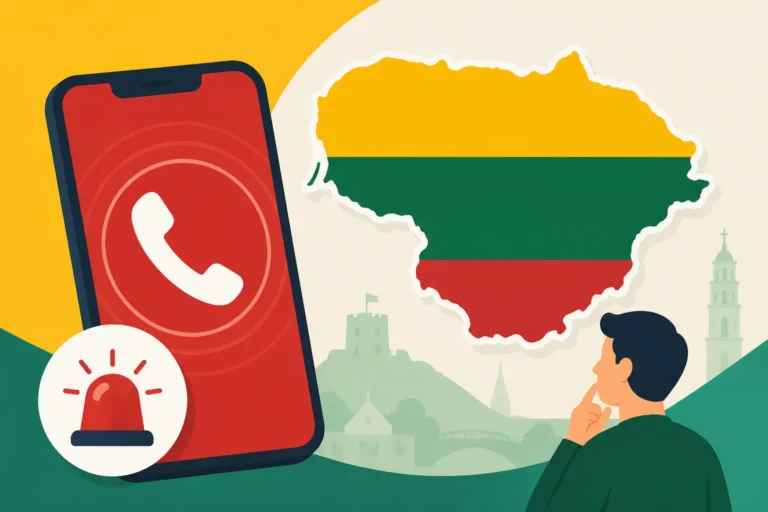
When you are in the heat of a crisis, your brain often reverts to the numbers you grew up with, whether that is 911 or 999. In Lithuania, and across the European Union, the magic number is 112. This is a unified emergency response system that handles everything from medical crises and fires to police intervention. It is a robust system, but knowing how to interact with it can significantly reduce your stress levels during a high-stakes moment.
When to Call and What to Expect
The 112 service is strictly for life-threatening or highly urgent situations. In Lithuania, the dispatchers are trained to filter calls efficiently. If you call because you have a mild fever or a stubbed toe, they will likely redirect you to your family doctor or a 24-hour pharmacy. However, for instances of severe trauma, unconsciousness, severe allergic reactions, or suspected heart attacks, 112 is your primary lifeline. When you dial, the call is free from any mobile or landline, even if your phone does not have a SIM card or the screen is locked.
The first thing you will hear is a standard greeting in Lithuanian. Do not panic. The dispatchers are accustomed to the growing international community in cities like Vilnius and Klaipėda. If you start speaking English immediately, they will usually attempt to communicate in English or transfer you to a colleague who can. Be prepared for a very direct, almost clinical tone; Lithuanian emergency services prioritize speed and factual accuracy over "bedside manner" on the phone. If you are struggling with the language, check What Is the Emergency Phone Number in Lithuania to understand more about the technical side of the dispatch.
Overcoming Language Barriers with Operators
While English proficiency is high among younger Lithuanians, the dispatcher answering your 112 call might be more comfortable with Lithuanian or Russian. If you find yourself in a situation where the operator doesn't seem to understand your English, try to use high-impact, simple words: "Medical help," "Ambulance," "No breathing," or "Bleeding."
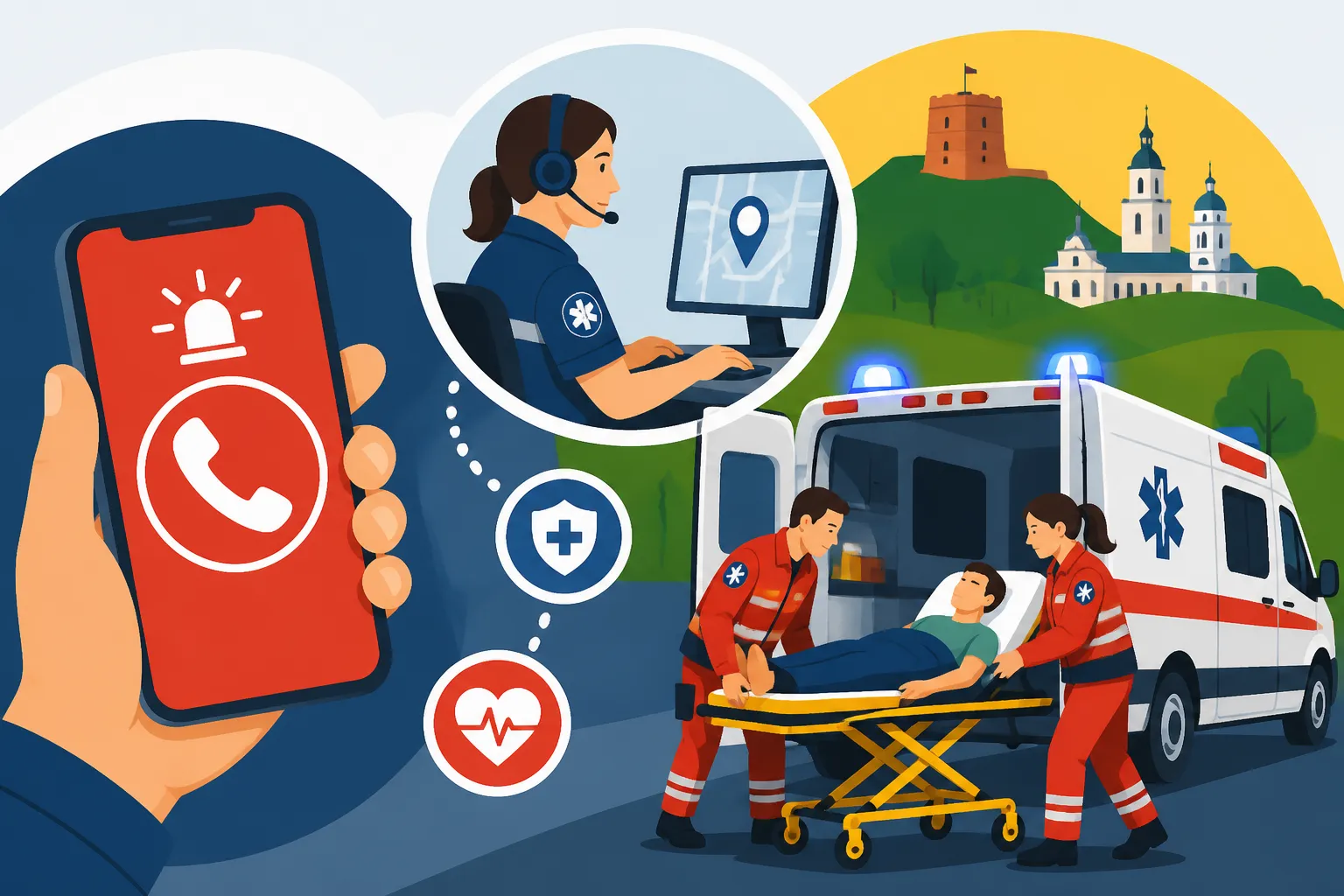
One of the most helpful tools for expats is the "112 Lithuania" mobile app. It allows you to send your GPS coordinates directly to the dispatch center, which is a literal lifesaver if you are in a forest in Anykščiai or a nameless street in a new development. Even if you can't describe where you are in Lithuanian, the app does the heavy lifting for you. Always have your address written down near your door or saved in your phone’s notes in the local format, as pronunciation can be tricky during a panic.
Information the Dispatcher Will Need
Once you have established the need for medical assistance, the dispatcher will ask a series of rapid-fire questions. You need to stay as calm as possible to provide: the exact address of the emergency (including apartment number and door codes), the phone number you are calling from, a brief description of what happened, and how many people are injured.
They will also ask about the patient’s age and whether they are conscious or breathing. In Lithuania, the dispatcher might stay on the line with you to provide first-aid instructions until the ambulance arrives. It is vital that you do not hang up until they tell you to do so. If you are a newcomer still figuring out the basics, reading about Emergency Medical Care in Lithuania: What Every Expat Needs to Know can give you a better sense of the protocols used by these dispatch teams.
Ambulance Services (Greitoji Medicinos Pagalba) Explained
The Lithuanian ambulance service, known locally as "Greitoji medicinos pagalba" (often abbreviated as GMP), is a highly professional network of mobile medical units. You will recognize them by their distinct white vans with yellow and red reflective stripes. Seeing them weave through the narrow cobblestone streets of Vilnius Old Town is a testament to the drivers' skill.
The Different Types of Response Units
Not every ambulance in Lithuania carries the same level of equipment or staff. Depending on the information you provided to the 112 operator, they will dispatch either a Basic Life Support (BLS) unit or an Advanced Life Support (ALS) unit. A BLS unit typically consists of two highly trained paramedics who handle non-life-threatening but urgent situations.
An ALS unit, on the other hand, often includes a specialized emergency physician or a senior nurse with advanced certifications. These units are mobile intensive care rooms, equipped to handle cardiac arrests, severe trauma, and complex pediatric emergencies. If you see multiple ambulances arriving, it usually means the situation has been escalated to ensure the highest level of care. Understanding this distinction helps manage expectations when the team starts working on the patient.
Triage and Treatment on the Scene
When the crew arrives, they will immediately begin a process of triage. In Lithuania, the medical culture is very focused on stabilization at the scene. Unlike some systems that "scoop and run," Lithuanian paramedics may spend a significant amount of time in your living room or on the sidewalk administering IV fluids, performing EKGs, or stabilizing fractures before they even think about moving the patient to the vehicle.
This can be unnerving for expats who expect an immediate dash to the hospital. Rest assured, they are following strict medical protocols. If you have your residency documents or How Lithuania's Health Insurance Fund (VLK/PSDF) Works: A Full Overview information ready, now is the time to gather it, though life-saving care will never be delayed because of paperwork. They will ask about allergies, current medications, and the "Asmens kodas" (personal code) of the patient if available.
Transport to a Hospital (Ligoninė)
If the paramedics determine that the patient requires further observation or surgery, they will transport them to the nearest appropriate hospital. In Lithuania, the "nearest" hospital is defined by the type of emergency. For example, a major trauma in Kaunas will likely head straight to the Kaunas Clinics (Kauno klinikos), which is one of the most advanced medical facilities in the Baltics.
During transport, one family member is usually allowed to ride in the front of the ambulance, but this is at the discretion of the crew and depends on the severity of the patient's condition. Once you arrive at the hospital's emergency department (Skubiosios pagalbos skyrius), the patient is handed over to the hospital staff. For a deeper look at what to expect once you pass those hospital doors, check out our guide on Understanding Hospital Care at a Lithuanian Ligoninė.
Costs, Coverage, and Insurance Logistics
The financial aspect of emergency care is where many expats feel the most vulnerable. Lithuania has a universal healthcare system, but "universal" has very specific definitions depending on your residency status and insurance type.
Public Health Insurance (PSD) and Emergency Care
If you are legally employed in Lithuania or are a self-employed person paying monthly "PSD" (Privalomasis sveikatos draudimas) contributions, your emergency ambulance ride and subsequent life-saving hospital care are covered 100% by the State Health Insurance Fund (VLK). You will not receive a bill for the ambulance or the emergency room doctors.
However, the "free" aspect only applies to "necessary care." This is a legal term in Lithuania that covers conditions where a delay would cause grave danger to the patient’s health or life. If it turns out your emergency wasn't actually an emergency (according to their strict criteria), there is a small possibility you could be charged for the visit, though this is rare for ambulance-transferred cases. You can read more about these potential costs in The Cost of Healthcare in Lithuania: A Complete Breakdown for Foreigners (2026).
Private Insurance and Travel Coverage
For those who are in Lithuania on a temporary basis, such as digital nomads, tourists, or those waiting for their residency permits to be processed, the situation is different. Without PSD, you are essentially a private patient. This is where having a robust plan from a provider like SafetyWing becomes essential.
If you are a nomad moving between countries, SafetyWing offers the kind of flexible medical coverage that can reimburse the high costs of private emergency transport or hospital stays that non-residents face. In an emergency, the hospital will still treat you—Lithuanian law requires it—but they will issue a bill afterward. Having SafetyWing means you aren't stuck paying thousands of euros out of pocket for a week-long stay in a Lithuanian "Ligoninė." It provides a bridge until you are fully integrated into the local Sodra system.
Out-of-Pocket Costs for Non-Residents
For those without any insurance, the costs can add up, though they are generally lower than in the United States. An ambulance call-out for a non-insured person can cost between 60 to 150 EUR, depending on the municipality and the level of care provided. Hospitalization costs per day can range from 200 to 800 EUR depending on the intensity of the care.
It is a common misconception that EU citizens are automatically covered for everything. While the EHIC card is vital, it only covers "necessary" care under the same conditions as locals. If you are an expat from outside the EU, the risk is much higher. Using a nomad-friendly insurance like SafetyWing ensures that even if you haven't secured your "Asmens kodas" yet, you aren't one accident away from financial ruin.
| Service Type | Covered by PSD? | Covered by EHIC? | Typical Private Cost (Est.) |
|---|---|---|---|
| 112 Dispatch Call | Yes (Free) | Yes (Free) | Free for all |
| Ambulance Transport | Yes | Yes (Necessary only) | 60 – 150 EUR |
| ER Consultation | Yes | Yes | 40 – 100 EUR |
| Emergency Surgery | Yes | Yes | 1,000 – 5,000+ EUR |
| Intensive Care (Per Day) | Yes | Yes | 500 – 900 EUR |
Navigating the Polyclinic vs. Emergency Room
A common mistake new residents make is treating the Emergency Room (ER) like a walk-in clinic. In Lithuania, there is a very clear hierarchy of care, and bypassing it can lead to long wait times or frustration.
When to Visit a Poliklinika Instead
The "Poliklinika" (Polyclinic) is the backbone of the Lithuanian health system. If you have a high fever, a painful but non-life-threatening infection, or a minor injury, your first stop should always be your registered family doctor at the local polyclinic. Most polyclinics have "duty doctors" who can see patients with acute symptoms on the same day without a prior appointment.
By going to the polyclinic, you save the ER for true emergencies. If you show up at a hospital with a sore throat, you might wait 6 to 10 hours because the staff will prioritize ambulance arrivals and trauma cases. Understanding the Role of the Polyclinic (Poliklinika) in Lithuania is key to managing your health without the drama of an ER visit.
Finding After-Hours Care
What happens when the polyclinic is closed? On weekends and public holidays, each polyclinic has an arrangement with a specific hospital or another clinic to provide "after-hours" care for their patients. You can usually find this information posted on the door of your polyclinic or on their website.
For expats, this is often the most confusing part of the system. If you are insured via SafetyWing or another private provider, you might also have the option of visiting a private 24-hour clinic like "InMedica" or "Baltic American Clinic" in Vilnius, where the wait times are shorter and English is the primary language of communication. These private centers are excellent for "urgent but not emergency" care.
Emergency Dental and Specialized Crisis Care
Dental emergencies follow a different path. Most standard hospitals in Lithuania do not have a dentist on staff at night. Instead, there are specific "Emergency Dental" clinics (usually one per major city) that handle acute pain or trauma after hours. In Vilnius, the Žalgiris Clinic is the primary hub for maxillofacial and dental emergencies.
Mental health crises also have dedicated pathways. If someone is experiencing a psychiatric emergency, you can still call 112, but the patient may be taken to a specialized psychiatric hospital rather than a general one. Knowing how to access these specific services is a crucial part of your expat safety net.
Practical Tips for Expats in a Medical Crisis
Preparation is the best antidote to the chaos of an emergency. When you are healthy and calm, take a few hours to set up your "emergency kit."
Keeping Medical Records Accessible
Lithuania uses a centralized electronic health system called "E-Sveikata." Most of your local records, prescriptions, and test results are stored there. However, if you are new to the country, your history in E-Sveikata will be a blank slate. Keep a physical or digital folder containing your blood type, major past surgeries, and a list of all current medications (using their generic chemical names, not just brand names).
When the ambulance arrives, handing this paper to the doctor can bypass minutes of confused translation. If you have a complex medical history, it is also worth discussing with your family doctor How to Handle a Medical Emergency Abroad with Lithuanian Insurance to ensure you know how your specific conditions are managed under local protocols.
Communication Strategies for Non-Lithuanian Speakers
If you find yourself alone in a hospital and no one speaks English, use technology. Google Translate’s "Conversation Mode" is surprisingly effective for basic medical questions. Use simple sentences: "Where is the pain?" "I need a translator," or "Call my spouse."
Another tip: ask for the "Budintis gydytojas" (doctor on duty). In larger hospitals, there is almost always a younger doctor on the team who speaks excellent English. Be patient but persistent. Lithuanians can sometimes appear brusque, but it is rarely personal; it is simply a focus on efficiency.
Follow-up Care and Sick Leave Certificates
After the emergency is over and you are discharged, the work isn't quite done. You will need a "Nedarbingumo pažymėjimas" (sick leave certificate) if you have a job. In Lithuania, this is handled electronically through Sodra, but it must be initiated by a doctor. If you were treated in the ER, ensure they have recorded your visit so your family doctor can issue the certificate the following day.
Detailed information on this process can be found in our guide on Understanding Sick Leave (Nedarbingumo Pažymėjimas) and Sick Pay in Lithuania. Additionally, any prescriptions you were given will likely be "E-receptas" (electronic prescriptions), which you can pick up at any pharmacy by showing your ID or residence card.
Emergency Contacts and Resources Table
| Resource | Contact / Location | Best For |
|---|---|---|
| General Emergency | 112 | Fire, Police, Life-threatening medical |
| Medical Information | 113 | Non-emergency medical advice (Lithuanian) |
| Poison Control | +370 5 236 20 52 | Accidental ingestion of toxins |
| Vilnius ER | Šiltnamių g. 29 (RVUL) | Major trauma and adult emergencies |
| Kaunas ER | Eivenių g. 2 (Kauno klinikos) | Comprehensive emergency care |
| Klaipėda ER | Liepojos g. 41 | Regional emergencies and trauma |
| SafetyWing Support | Online Portal | Insurance claims and private care guidance |
Living in Lithuania as an expat is an adventure, and like any adventure, it comes with risks. By understanding the 112 system, the role of the ambulance, and how your insurance—whether it's the state PSD or a flexible plan like SafetyWing—protects you, you can navigate even the scariest medical moments with confidence.
Disclaimer
The information provided in this article is for general informational purposes only and does not constitute professional medical or legal advice. While we strive to keep the information up to date and correct, the healthcare system and regulations in Lithuania are subject to change. Always consult with a qualified medical professional or the relevant Lithuanian authorities regarding your specific health situation or insurance requirements.