How Do I Set Up Waste Collection and Recycling in Lithuania?
Oh, the joys of setting up life in a new country! I remember staring at those oddly colored bins in my apartment building for the first time, utterly baffled, trying to decipher cryptic Lithuanian labels. Waste collection and recycling in Lithuania can feel like a labyrinth, especially when you’re used to a different system back home and navigating everything through a language you’re just learning. But don't you worry, my friend, because this guide is here to untangle the confusion and walk you through exactly how to set up and manage your waste collection and recycling in Lithuania, so you can contribute to a cleaner environment without losing your mind.
Understanding Lithuania's Waste Management System
Before we dive into the nitty-gritty of bins and schedules, let's get a handle on the broader picture of how waste is managed here in Lithuania. It’s not always as straightforward as it might seem, and it’s certainly different from a lot of other places.
The Municipal Approach to Waste
One of the first things you need to understand is that waste management in Lithuania is primarily a municipal affair. What does that mean for you? It means that while the general principles of separating waste are the same across the country, the exact rules, the specific companies, and even the nuances of how bins are managed can vary slightly depending on whether you’re in bustling Vilnius, historic Kaunas, coastal Klaipėda, or a quieter, smaller town. This decentralization is often a source of mild headaches for newcomers, as advice from a friend in one city might not perfectly apply to your situation in another.
Usually, it's either the local municipality itself that directly manages waste services through its own company, or they contract out these services to private companies. In larger cities like Vilnius, you'll commonly encounter names like Ecoservice or VSA Vilnius, which are significant players in the waste management landscape. These companies are responsible for providing the bins, collecting the waste, and generally keeping things moving. Navigating their websites, often primarily in Lithuanian, can be a challenge, but their customer service might have English-speaking staff. It’s always worth a try!
Compulsory Waste Fees and How They Work
Here's another point that often catches expats off guard: waste collection isn't a separate bill you sign up for; it’s covered by a compulsory municipal fee, known as rinkliava. This isn't a voluntary payment; it’s something every household contributes to, ensuring that the waste infrastructure operates for everyone. You might not see a line item for "waste collection" on your utility bill, but rest assured, you're paying for it.
The way this fee is calculated can vary by municipality and even by property type. Sometimes it’s based on the size of your property (per square meter), sometimes it’s calculated per person registered at the address, and sometimes it’s a flat rate. For example, in Vilnius, the annual waste fee is usually paid by the property owner, but in rental agreements, it's often passed on to the tenant as part of the communal costs. This is one of those classic Lithuanian quirks that requires a bit of digging to fully grasp, and it's certainly a part of the broader discussion on Understanding Utility and Communal Costs (Komunaliniai Mokesčiai) in Lithuania. As a new resident, once you’ve Declaring Your Place of Residence in Lithuania: The Complete Guide, your information will typically be passed to the relevant municipal or contracted waste company, and you’ll start receiving bills or see the charge incorporated into your communal statements. It's not uncommon to receive a bill directly from the waste company even if your landlord pays other utilities. Keep an eye out for official-looking envelopes!
Setting Up Waste Collection for Your Home
Now, let's get practical. How you set up waste collection largely depends on the type of dwelling you call home in Lithuania.
Apartment Buildings: Shared Bins and Responsibilities
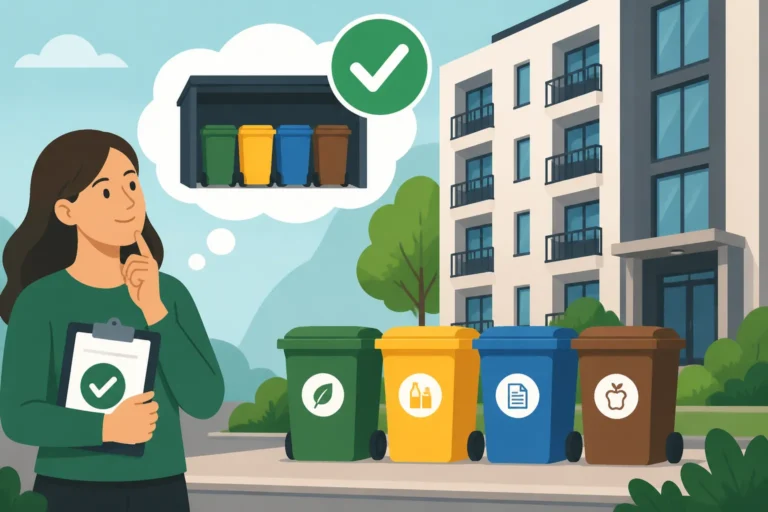
If you’re living in an apartment building, you’re in luck in one sense: you usually don't need to arrange individual contracts or order your own bins. Most apartment buildings have communal waste collection points, often located outside the building or in a designated basement area. These collection points will typically feature several large bins, each clearly marked for different types of waste.
You'll usually find:
- Mixed waste (or general waste) bins: Often grey or black, this is for anything that can't be recycled.
- Paper and cardboard bins: Usually blue.
- Plastic and metal packaging bins: Often yellow or green.
- Glass bins: Typically green or white.
- Organic waste bins: These are becoming more common, especially in larger cities, and are usually brown. However, they're not universally available yet, so don't be surprised if your building doesn't have one.
The responsibility for ensuring these bins are present, appropriately sized, and emptied regularly usually falls to the building administrator (pastato administratorius) or the residents' association (bendrija). So, if you’re new to an apartment, your best bet is to ask your landlord, building manager, or even a friendly neighbor. They’ll be able to point you to the right bins and explain any specific rules for your building. It can be a bit intimidating at first, especially if you're not fluent in Lithuanian, but most people are understanding and willing to help. This kind of communal setup is part of the overall experience of living in an apartment here, and it’s something to factor in when you're looking at How Much Does It Cost to Rent an Apartment in Vilnius in 2026?.
Private Houses: Individual Contracts and Bins
For those living in a private house, the process is a bit more hands-on. You’ll generally need to arrange your own waste collection services directly with a waste management company. If you're buying a property, the previous owner might have an existing contract that you can transfer. If you're renting, your landlord should have this set up, but it's always good to clarify.
Common waste management companies include the aforementioned Ecoservice and VSA Vilnius, as well as others depending on your municipality. Here's a general outline of the process:
- Identify Local Providers: Check your municipality's website (e.g., Vilniaus miesto savivaldybė for Vilnius) to see which waste management companies are authorized or recommended for your area.
- Contact the Company: Reach out to your chosen waste company. This is where the language barrier can sometimes be a bit of a hurdle. Prepare to use online translation tools or ask a Lithuanian-speaking friend for help. Be ready to provide your address, personal code (Asmens Kodas – if you don’t have one, you might need to sort that out first, as it’s essential for most official services, see How Do I Get an Asmens Kodas Before Renting an Apartment in Lithuania?), and details about your property.
- Order Bins: You’ll need to specify what kind of bins you need (mixed waste, recycling, possibly organic). They will deliver these to your property. Ensure you understand the size options and choose what's appropriate for your household.
- Set Up a Collection Schedule: The company will provide you with a schedule for when each type of bin will be emptied. Mixed waste is usually collected weekly or bi-weekly, while recycling might be less frequent.
- Sign a Contract and Set Up Payments: You'll sign a service contract and arrange for payment of the waste fees. This usually involves direct debit or monthly invoices.
It might sound like a lot, but once it's set up, it becomes a routine. Remember, patience is key here, and having a functioning mobile plan, perhaps with an eSIM from Airalo, can be really helpful for making calls and looking up information on the go during this initial setup phase.
The Importance of Declaring Residence for Waste Services
Regardless of whether you live in an apartment or a house, officially Declaring Your Place of Residence in Lithuania: The Complete Guide (your gyvenamoji vieta) is absolutely critical for linking you to municipal services, and waste collection is no exception. This declaration ensures that you are officially recognized as a resident at that address, making you eligible for local services and ensuring you are billed correctly for things like waste fees. Without a declared residence, you might run into issues with proving your entitlement to services or receiving your bills. It's one of the foundational steps in setting up your life in Lithuania.
Navigating Recycling in Lithuania
Recycling here is taken quite seriously, and the system is fairly comprehensive once you get the hang of it. The key is knowing what goes where.
The Colour-Coded Bin System
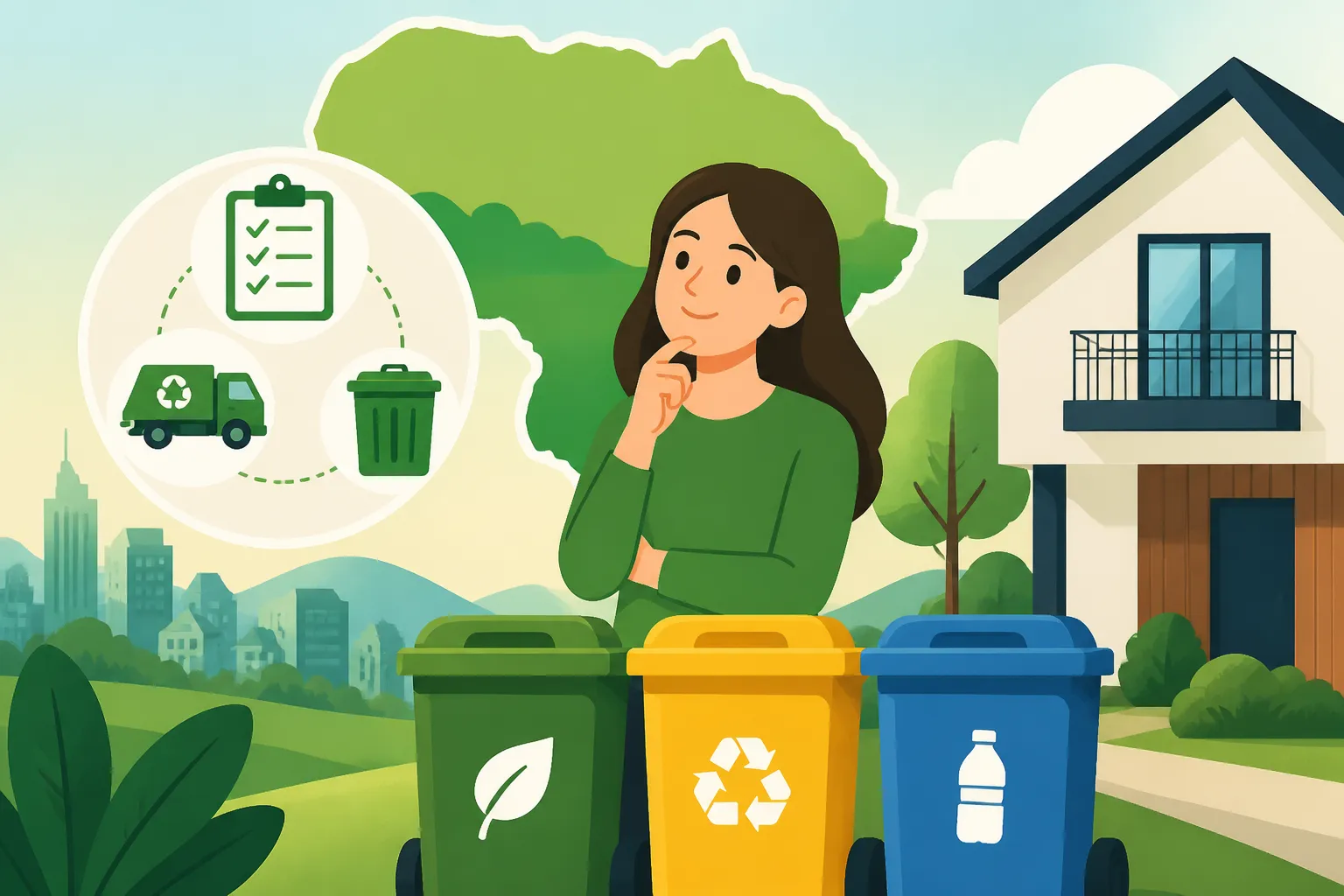
Lithuania employs a colour-coded system for recycling, which is pretty standard across the country, even if the bins themselves might look slightly different from one municipality to another. It takes a little practice to remember, but you'll get there, I promise!
Here’s a breakdown of the common bins:
-
Yellow or Green Bins for Plastics and Metals (Plastikas ir metalas):
- What goes in: This is for all your plastic packaging (PET bottles, HDPE containers like milk jugs and shampoo bottles, plastic bags, yogurt pots, plastic film), and metal packaging (aluminium cans, steel food cans). It’s generally a good idea to rinse out containers if they held food, and flatten them to save space.
- What doesn't go in: Dirty packaging, styrofoam, plastic toys, car parts, electronics, aerosols (unless explicitly stated as recyclable and empty), or any plastic that isn't packaging.
- Expat tip: This bin often feels like a catch-all for many items, but resist the urge to throw in everything plastic. If it's not packaging, it probably belongs in mixed waste or a special collection.
-
Blue Bins for Paper and Cardboard (Popierius ir kartonas):
- What goes in: Newspapers, magazines, advertising flyers, clean cardboard boxes (flattened, please!), paper bags, egg cartons, office paper.
- What doesn't go in: Soiled paper (like pizza boxes with grease stains), greasy paper (e.g., from takeaways), paper towels, tissues, wet paper, beverage cartons (like Tetra Pak – these sometimes go with plastic/metal, but often in mixed waste depending on local rules, so check!).
- Expat tip: The biggest mistake people make here is putting greasy or wet paper products into the blue bin. "Clean and dry" is the mantra for paper recycling!
-
Green or White Bins for Glass (Stiklas):
- What goes in: Glass bottles (wine, beer, soft drinks), glass jars (jam, pickles), and other food-grade glass packaging. It's usually a good idea to rinse them out and remove lids (lids go with plastic/metal if they're plastic/metal, otherwise mixed waste).
- What doesn't go in: Ceramic items, porcelain, mirrors, window glass, drinking glasses, light bulbs, heat-resistant glass (like Pyrex). These have different compositions and cannot be recycled with regular glass.
- Expat tip: Don't try to recycle broken ceramics or old drinking glasses here. They contaminate the glass recycling stream!
-
Brown Bins for Organic Waste (Žaliosios ir maisto atliekos):
- What goes in: Food scraps (fruit and vegetable peels, coffee grounds, tea bags, leftover food), garden waste (grass clippings, small twigs, leaves).
- What doesn't go in: Meat, bones, dairy products, plastic bags, large branches, contaminated items.
- Expat tip: These bins are less common, especially in older apartment buildings. If you don't have one, food waste generally goes into the mixed waste bin. Composting at home is an alternative if you have a garden!
And finally, the Mixed Waste Bins (often grey or black) are for everything else that cannot be separated into the recycling categories mentioned above. Think hygiene products, dirty packaging, small broken items, and anything else you're unsure about. When in doubt, it’s often better to put it in mixed waste than to contaminate a recycling stream.
It genuinely takes time to get used to the system. Don't feel bad if you have to double-check the labels on the bins or use your phone's camera to translate at first. We’ve all been there!
Deposit Return System (Užstato Sistema) for Bottles and Cans
One of Lithuania's shining examples of effective recycling is its užstato sistema, or deposit return system. This system is brilliantly simple and highly effective for certain types of beverage packaging.
How it works:
When you buy a plastic bottle (PET), a glass bottle (for beer, cider, or soft drinks), or an aluminium can that is part of the system, you pay a small deposit – usually around 10 cents – on top of the product price. You'll see a distinctive "Užstato sistema" logo on the label of eligible items.
Once you’ve finished your drink, you simply return the empty, uncrushed container (with the label intact!) to a collection point. These are typically machines located at the entrance of most supermarkets (like Maxima, Iki, Rimi, Lidl, Norfa) or at special collection centers. The machine scans the barcode, confirms it's an eligible item, and then issues you a voucher for your deposit refund. You can use this voucher towards your next grocery purchase or exchange it for cash at the checkout.
This system has been incredibly successful in reducing litter and increasing the recycling rate for these specific items. It’s a habit you’ll quickly pick up, and it’s a great way to recover a few cents while doing your part for the environment!
Special Waste and Hazardous Materials
Not everything fits into the regular bins, and it’s important to know how to dispose of special waste correctly to avoid environmental harm or fines.
- Electronics (EEQ) and Batteries: Many large electronics stores (e.g., Topo Centras, Elektromarkt), supermarkets, and even some pharmacies have collection points for small electronics and used batteries. For larger items, you might need to take them to a designated large-scale waste collection point.
- Old Furniture and Large Items (Didelių gabaritų atliekos): You can't just leave an old sofa by the bin. Most municipalities have special large-scale waste collection sites (didelių gabaritų atliekų surinkimo aikštelės or DGASA) where residents can bring bulky waste, construction and demolition waste, and other items not suitable for regular collection. Check your municipality's website for locations and operating hours. Sometimes, they also organize mobile collection points throughout the year, so keep an eye out for announcements.
- Medicines: Expired or unused medications should never be flushed down the toilet or thrown in the regular trash. Take them to any pharmacy (vaistinė), and they will dispose of them safely.
- Hazardous Chemicals: Items like paints, solvents, motor oil, and other hazardous household chemicals must be taken to specialized collection points. Again, the DGASA are your go-to for these, or municipal hazardous waste collection events.
Always, always check your local municipality's website for the most up-to-date information on special waste disposal. It prevents potential harm and ensures you're compliant with local regulations.
Tips and Common Pitfalls for Expats
Even with a good understanding of the system, there are still a few things that can trip up new arrivals.
Language Barriers and Where to Find Information
This is probably the most significant hurdle for many expats. Official websites, forms, and even the labels on bins are predominantly in Lithuanian. While many younger Lithuanians speak excellent English, the administrative side of things often lags.
- Translation Tools Are Your Friend: Google Translate or DeepL will become invaluable tools for deciphering municipal websites or information from waste companies. Don't be shy about using them.
- Ask Your Landlord/Building Administrator: Seriously, these people are usually your best resource for hyper-local waste information. They deal with it daily and know the specifics for your building or area.
- Expat Groups and Forums: Online expat communities in Lithuania (on Facebook, Reddit, etc.) are fantastic for crowdsourcing information. Someone else has almost certainly had the same question as you. You might find some great local insights and even tips for setting up other services, perhaps related to How Do I Set Up Home Internet and TV in Lithuania?.
- Learn Some Key Terms: Even learning words like rūšiavimas (sorting/recycling), mišrios atliekos (mixed waste), plastikas (plastic), popierius (paper), stiklas (glass), and the names of local waste companies can make a big difference. This might even inspire you to delve deeper into Learning Lithuanian: A Complete Guide to Language Courses and Levels!
Understanding Different Regional Rules
I can't stress this enough: what applies in Vilnius might not be identical in Kaunas or Klaipėda. While the general colour-coding for recycling is consistent, the frequency of collections, the specific companies operating, and the availability of certain bins (like organic waste) can differ.
Always cross-reference general advice with your local municipality's official information. A quick search on your city's official website (e.g., vilnius.lt, kaunas.lt, klaipeda.lt) and looking for sections on "atliekų tvarkymas" (waste management) will usually yield the most accurate, up-to-date information for your specific area.
Dealing with Missed Collections or Irregularities
Things don't always run perfectly, even in a well-organized system. If you find that your bins haven't been emptied on schedule, or if you encounter any other irregularities, don't just stew in frustration.
- Check Your Schedule: First, double-check that you're looking at the correct collection schedule for your address and bin type. Sometimes holidays can shift schedules, or you might have simply mixed up the days.
- Contact the Waste Management Company: If it seems like a genuine missed collection, contact the waste management company directly. Their contact details should be on their website or on any invoices you receive. Be prepared to provide your address and explain the issue.
- Contact Your Building Administrator/Landlord: In apartment buildings, it’s often easier to report the issue to your building administrator, who can then deal with the waste company on behalf of all residents.
- Municipal Hotlines: Some municipalities have hotlines for reporting public service issues. Check their websites.
Remember, persistence pays off. It might take a call or two, and sometimes a bit of back-and-forth, but these issues are usually resolved. Just another one of those little hurdles to overcome when you’re building a new life abroad!
Setting up waste collection and understanding recycling in Lithuania might seem like a small detail in the grand scheme of moving, but it’s an essential part of settling into your new home and being a responsible resident. With a bit of patience, a willingness to ask questions, and perhaps a good translation app, you’ll be sorting like a local in no time.
Disclaimer
The information provided in this guide is for general informational purposes only and is subject to change. While we strive to keep the content accurate and up-to-date, waste management rules, fees, and service providers can vary significantly by municipality and may be updated by local authorities. It is always recommended to consult your local municipality's official website, your building administrator, or a waste management service provider directly for the most current and specific information applicable to your situation in Lithuania. We do not assume liability for any actions taken based on the information contained herein.