How Much Does Water Cost Per Month in Lithuania?
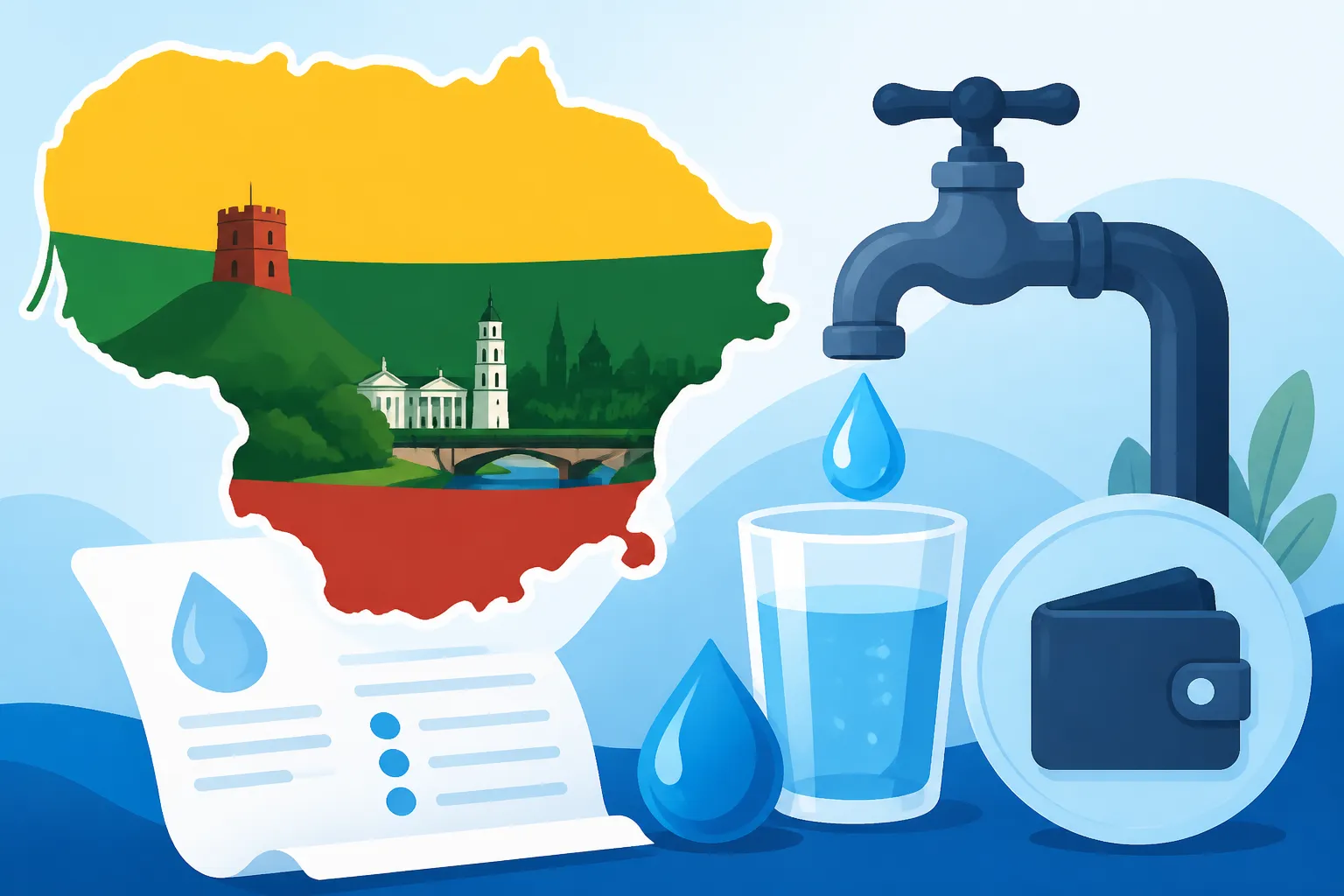
Ah, the monthly utility bill! It’s one of those delightful administrative riddles that every expat in Lithuania eventually faces, and water costs, in particular, can be quite the head-scratcher. You're not alone if you've stared at your komunaliniai mokesčiai (communal bills) wondering exactly what you're paying for and why the hot water section looks like it's written in hieroglyphs. This comprehensive guide is here to demystify your monthly water expenses in Lithuania, giving you a clear picture of what to expect and how to manage these vital costs.
Unpacking Your Monthly Water Bill: More Than Just the Tap
When you first arrive in Lithuania, particularly if you're coming from a country with a different utility billing structure, the breakdown of your water bill can feel unnecessarily complex. It's not just a simple charge for the cubic meters you use; there are layers, especially when it comes to hot water. Let's peel back those layers together.
Local Providers and Varying Tariffs: The Regional Factor
First things first, water services in Lithuania are managed by municipal companies, meaning your exact tariffs will depend on where you live. While the overall structure is similar, the precise cost per cubic meter can vary slightly from city to city. The big players you'll encounter are:
- Vilniaus Vandenys in Vilnius
- Kauno Vandenys in Kaunas
- Klaipėdos Vanduo in Klaipėda
- And similar regional providers in other municipalities.
These companies are primarily responsible for supplying cold water and managing wastewater. Hot water, as we'll dive into, is often a collaboration with a separate heating company.
Cold Water: Simple, Yet Essential
The cold water component of your bill is usually the most straightforward. You're charged based on the actual volume of cold water you consume, measured in cubic meters (m³). Your water meter, typically located in your bathroom or kitchen utility closet, meticulously tracks this usage.
For instance, in Vilnius, you can expect to pay around 1.26 EUR per cubic meter for cold water supply. In Kaunas, it's a bit lower, at roughly 1.17 EUR/m³, and in Klaipėda, around 1.00 EUR/m³. These figures usually include VAT and cover the cost of sourcing, purifying, and delivering potable water to your tap. This part of the bill is relatively predictable once you get a sense of your household's average consumption.
The Hot Water Conundrum: Heating, Circulation, and Hidden Fees
This is where many expats (and even some Lithuanians!) get a bit lost. Unlike cold water, hot water isn't typically just delivered to your apartment by the water company. Instead, your water provider supplies the cold water, but a separate heating company (like Vilniaus Šilumos Tinklai in Vilnius or Kauno Energija in Kaunas) then heats that cold water to distribute it to your building.
So, your hot water bill will generally have three distinct components:
- Cold Water for Hot Water: This is the cost of the cold water before it's heated. The tariff here is the same as your regular cold water tariff (e.g., 1.26 EUR/m³ in Vilnius). You're still paying the water company for the raw material.
- Heat Energy for Water Heating: This is the big one. It's the cost of the thermal energy required to transform that cold water into hot water. This charge is calculated based on the heat energy consumed (measured in kilowatt-hours, kWh or sometimes MWh) and the heating tariff set by the district heating company, which fluctuates monthly based on natural gas prices. Expect this to be the largest chunk of your hot water expense.
- Hot Water Circulation (Recirculation) Fee: This is often the most confusing and frustrating. Even if you don't use a single drop of hot water, you might still see a charge for "hot water circulation" or "recirculation." This fee covers the cost of maintaining the hot water system in your building, ensuring that hot water is always available at your tap without long waits. It pays for the constant movement of hot water through the pipes to prevent it from cooling down. This charge can be calculated in various ways: per apartment, per person, or even per square meter of your apartment, and it usually appears on your overall heating bill, not your water bill from Vilniaus Vandenys directly.
This separation means you'll likely have one bill from your water provider (e.g., Vilniaus Vandenys) covering cold water and sewage, and another, more complex bill from your heating provider (e.g., Vilniaus Šilumos Tinklai) that includes district heating for your apartment and the heating component for your hot water, plus any circulation fees. It takes some getting used to!
Sewage and Wastewater: The Cost of Disposal
No matter if it's hot or cold, once water goes down your drain, it becomes wastewater, and there's a charge for its collection and treatment. This sewage and wastewater treatment fee is typically applied to all water consumed – both cold water directly from the tap and the cold water that was heated for your hot water use.
This charge is also calculated per cubic meter. In Vilnius, the wastewater treatment cost is roughly 1.39 EUR/m³, in Kaunas about 1.25 EUR/m³, and in Klaipėda around 1.45 EUR/m³. So, for every cubic meter of water you use, you're effectively paying for its supply and its disposal.
To help you visualize, here's a table comparing approximate base tariffs for the major cities:
| City (Provider) | Cold Water Supply (EUR/m³) | Wastewater Treatment (EUR/m³) | Total Cold Water & Sewage (EUR/m³) |
|---|---|---|---|
| Vilnius (Vilniaus Vandenys) | ~1.26 | ~1.39 | ~2.65 |
| Kaunas (Kauno Vandenys) | ~1.17 | ~1.25 | ~2.42 |
| Klaipėda (Klaipėdos Vanduo) | ~1.00 | ~1.45 | ~2.45 |
Note: These prices are approximate and include VAT. Hot water heating costs are separate and depend on district heating tariffs, which fluctuate.
What Drives Your Water Usage and Expenditure?
Understanding the tariff structure is one thing, but knowing what actually makes your bill go up or down is another. Several factors play a significant role in your monthly water expenditure.
Your Household's Habits and Size: Personal Impact
This one seems obvious, but it's often the biggest driver. The number of people living in your apartment directly correlates with water usage. A single person will naturally use less than a family of four. Beyond just headcount, personal habits make a huge difference:
- Shower vs. Bath: Long, daily baths consume significantly more water than quick showers.
- Laundry Frequency: Running your washing machine several times a week, especially with smaller loads, adds up.
- Dishwashing Habits: Handwashing dishes with the tap running continuously uses more than a full dishwasher load or filling a basin.
- Toilet Flushing: Older toilets can use a surprising amount of water per flush compared to modern, dual-flush models.
Even if you're diligent about conserving, the more active people in your home, the higher your baseline usage will be. Many expats find their initial water bills higher than expected, simply because daily life requires a certain amount of water, regardless of how careful you are.
The Efficiency of Your Home: Appliances and Plumbing
The age and condition of your appliances and plumbing can silently inflate your water bill.
- Older Appliances: Washing machines and dishwashers from a decade or two ago often use significantly more water per cycle than their modern, energy-efficient counterparts. If your rental apartment comes with older appliances, be mindful of this.
- Leaky Faucets and Toilets: Even a slow drip from a faucet can waste hundreds of liters of water over a month. A constantly running toilet, even if it's just a trickle, can be an absolute disaster for your water bill. These issues are easy to overlook but can add substantial, unnecessary costs. It's worth a quick check for any drips or running sounds, especially in the toilet tank. Fixing a leak is one of the most effective ways to lower your water bill instantly.
Building Infrastructure and Central Heating's Role
The type of building you live in, particularly its age and heating system, heavily influences your hot water costs.
- Centralized Hot Water Generation: Most apartment buildings in Lithuania, especially older Soviet-era constructions, rely on centralized district heating systems for hot water. This means the hot water is generated in a central plant and circulated through the building's pipes. While convenient (instant hot water!), it can be less efficient. Heat losses occur as water travels through pipes, and the constant circulation incurs those recirculation fees we discussed.
- Older Buildings: Apartments in older buildings might have less efficient internal plumbing insulation, meaning more heat loss, and thus, potentially higher heating costs for hot water. They also often lack individual hot water meters, relying instead on communal usage calculations, though this is becoming less common.
These factors are often beyond your direct control as a renter, but understanding them helps explain why your neighbour in a brand-new apartment might pay less for similar usage.
Seasonal Swings: Winter's Impact on Hot Water
Lithuanian winters are no joke, and they dramatically affect your heating bills, which, as you now know, are intrinsically linked to your hot water costs.
- Higher Heating Demand: During the colder months (roughly October to April), the district heating system works harder to keep your apartment warm and to heat the water to a consistent temperature. This translates to higher charges for the heat energy component of your hot water.
- Increased Recirculation Costs: While the fixed recirculation fee might not change, the overall energy required to maintain hot water temperatures throughout a cold building can be higher.
- Longer Showers: Let's be honest, who doesn't enjoy a longer, hotter shower when it's -20°C outside? These comfort habits, while perfectly understandable, do contribute to higher consumption during winter.
So, if you notice your utility bills spike in winter, it's not just your apartment heating; your hot water consumption is likely a contributing factor due to both higher energy costs and potentially increased usage.
Mastering Your Water Bill: Strategies for Expats
Navigating utility bills in a new country can be daunting, but with a few proactive steps, you can gain control over your water costs. This is where staying connected, perhaps with an eSIM from providers like Airalo for instant data access, can be a lifesaver when you're setting up all your new accounts and trying to understand things online.
Decoding Your Bill and Monitoring Consumption
The first step to managing costs is understanding what you're being charged for. Your monthly bill will list your cold water and sewage usage, typically measured in cubic meters (m³). Pay close attention to these numbers.
- Monthly Meter Readings: Most water providers require you to submit your meter readings each month, often by a specific date. You can usually do this online through their customer portal (like Vilniaus Vandenys' e-services), via a mobile app, or by simply calling a helpline. If you don't submit readings, they might estimate your usage, which can lead to inaccuracies. Always make sure to submit your readings!
- Reading Your Meter: Water meters usually have a series of black digits (whole cubic meters) and sometimes red digits (liters or tenths of a cubic meter). For billing purposes, you typically only need to report the black digits. Get comfortable with this; it's a fundamental part of managing your bills.
- Tracking Your Usage: Keep a simple spreadsheet or note on your phone. Record your meter reading each month and the date. This helps you track trends, identify unusually high usage, and verify your bills.
Practical Water-Saving Tips for Your Lithuanian Home
Small changes in daily habits can lead to noticeable savings over time:
- Shorter Showers: Aim for quicker showers. Every minute counts!
- Turn Off the Tap: Don't let the water run while brushing your teeth, shaving, or scrubbing dishes.
- Full Loads Only: Wait until your washing machine and dishwasher are full before running them. Modern machines are quite efficient, but half-loads still consume water and energy.
- Fix Leaks Promptly: As mentioned, even minor drips can add up. If you notice a leak, inform your landlord or building administrator immediately. If you own your property, address it yourself.
- Install Aerators: These inexpensive devices can be screwed onto faucets to reduce water flow without sacrificing pressure, saving significant amounts of water.
- Collect Cold Shower Water: While waiting for your shower to heat up, collect the cold water in a bucket. You can use this for watering plants or flushing the toilet.
These tips are universal, but especially relevant in Lithuania where hot water heating can be quite expensive.
Communicating with Providers and Building Administrators
Don't be afraid to ask questions. Utility bills are confusing for many people.
- Building Administrator (Administratorius): For issues related to communal heating, hot water circulation, or general building maintenance affecting utilities, your building's administrator is your first point of contact. They manage the communal services and can explain specific charges.
- Water Provider Customer Service: If you have questions specifically about cold water supply, sewage, or your meter readings, contact your local water company (e.g., Vilniaus Vandenys). Many have English-speaking staff or online inquiry forms.
- Language Barrier: This can be a hurdle. If you're not fluent in Lithuanian, have a friend or colleague help you translate your bills or make calls. Online translation tools can also be useful when trying to decipher specific line items.
- Early Stages: When you first move in, especially if you're getting help from a moving service like Sirelo, remember to ask about setting up your utility accounts. Knowing this upfront will save you headaches later. For deeper insights into managing all your bills, check out our guide on How Do I Understand My Komunaliniai Mokesčiai (Utility Bills) in Lithuania?.
Weighing Independent Hot Water Solutions
For those who own their property, or if you're renting in a building that offers alternatives, considering an independent hot water heater (boiler or tankless system) can sometimes provide more control over your hot water costs.
- Individual Electric Boilers: These are common in some apartments, especially older ones or those without district heating. You heat your water using electricity as needed. This removes you from the complex district heating hot water component and circulation fees, but shifts the cost to your electricity bill. The effectiveness and cost-efficiency depend on the boiler's size, your usage habits, and electricity tariffs.
- Gas Boilers: If your apartment has a gas connection, an individual gas boiler can be a very efficient way to heat water on demand. This gives you complete control over your hot water supply, but requires proper installation and maintenance.
This option isn't available to all, particularly renters, but it's worth knowing that alternatives exist for some households seeking more autonomy over their hot water expenses. It's a significant decision, especially when considering the overall The Expat Guide to Setting Up Utilities in Lithuania.
Estimating Your Monthly Water Outlay in Lithuania
So, after all that, what can you actually expect to pay? It's tough to give an exact number, as it depends heavily on your usage, but we can provide some realistic ranges based on typical consumption and current tariffs.
Average Costs Across Different Household Sizes
Let's look at some hypothetical scenarios for apartments in Vilnius, using our approximate tariffs and average consumption figures:
- Single Person (Conservative User):
- Cold Water: 2-3 m³/month
- Hot Water: 1-2 m³/month
- Estimated Monthly Cost: 15 – 25 EUR (including cold water, sewage, and hot water heating, excluding fixed heating circulation fees)
- Couple (Moderate Users):
- Cold Water: 4-6 m³/month
- Hot Water: 2-4 m³/month
- Estimated Monthly Cost: 30 – 50 EUR (including cold water, sewage, and hot water heating, excluding fixed heating circulation fees)
- Family of 3-4 (Active Users):
- Cold Water: 7-10 m³/month
- Hot Water: 4-6 m³/month
- Estimated Monthly Cost: 50 – 80+ EUR (including cold water, sewage, and hot water heating, excluding fixed heating circulation fees)
These estimates are for the actual volumetric charges for water and its heating. Remember, the fixed hot water circulation fees and overall heating costs (which can be substantial in winter) are billed separately by your heating company and are not included in these water-specific figures. For a more holistic view of your monthly expenses, you might want to consult our guide on The Complete Guide to Cost of Living in Lithuania for Expats (2026).
Regional Price Differences: Vilnius, Kaunas, and Beyond
As we noted earlier, base tariffs for cold water and sewage do vary by municipality. While the differences might seem small per cubic meter, they can add up over a month.
- Vilnius: Tends to be slightly more expensive for cold water and sewage combined (~2.65 EUR/m³) compared to Kaunas. Hot water heating costs from Vilniaus Šilumos Tinklai are comparable to other major cities.
- Kaunas: Generally has slightly lower combined cold water and sewage costs (~2.42 EUR/m³).
- Klaipėda: Offers the lowest cold water supply tariff, but a slightly higher wastewater treatment cost, making its combined total for cold water and sewage competitive (~2.45 EUR/m³).
These variations mean that a household with identical consumption habits might pay a few euros more or less for water depending on their city. This is just one of the many factors contributing to the overall How Much Does It Cost to Rent an Apartment in Vilnius in 2026? versus other cities.
Case Studies: What Real Expats Pay
Let me tell you about my own experience and that of a few expat friends. When I first moved to Vilnius, I was living in a small, older studio apartment. My cold water and sewage bill from Vilniaus Vandenys was consistently around 8-10 EUR for my 2-3 m³ usage. However, the heating company's bill for the hot water portion (heating plus circulation) was often another 15-20 EUR, even in summer when apartment heating was off! That circulation fee felt like a phantom cost.
A friend, a couple living in a modern two-bedroom apartment in Kaunas, typically sees their combined cold water and sewage bill from Kauno Vandenys around 15-20 EUR. Their hot water heating and circulation part on the Kauno Energija bill adds another 25-35 EUR, peaking in winter. They've found that smart usage of their dishwasher and quicker showers has helped keep the volumetric costs down.
These real-world examples underscore the fact that the hot water component, especially the heating and recirculation, is often the most significant and variable part of your overall water expenses, making the seemingly straightforward question of "how much does water cost" much more nuanced.
Final Thoughts
Navigating your water costs in Lithuania, particularly the intricacies of hot water billing, can feel like a steep learning curve. But once you understand the dual-provider system (water company for cold water/sewage, heating company for hot water heating/circulation), and how your habits and building infrastructure play a role, it becomes much clearer. Don't be shy about monitoring your usage, reading your meters, and asking questions. With a bit of vigilance and some water-saving habits, you'll be well on your way to mastering this aspect of your Lithuanian living expenses.
Disclaimer
Please note that the information provided in this guide is for general informational purposes only and is subject to change. Utility tariffs, regulations, and administrative procedures in Lithuania can be updated frequently. While we strive to provide accurate and up-to-date information, it is always recommended to verify specific details with official sources, such as your local water and heating providers, or the relevant government institutions. This guide does not constitute professional advice.