How to Register Family Members for Health Insurance in Lithuania
Moving your family to Lithuania is a whirlwind of logistical challenges, but nothing induces more anxiety than the realization that your spouse or children might not be covered if a medical emergency strikes. I remember the sheer panic when my daughter developed a high fever just three days after we landed in Vilnius, before we even had our residency cards in hand. This guide solves that specific uncertainty by detailing exactly how to navigate the bureaucracy to ensure every member of your household is officially registered for health insurance.
The Foundation of Family Health Coverage in Lithuania
When you first arrive, the terminology can feel like an alphabet soup. You will hear about PSD, PSDF, VLK, and Sodra constantly. To get your family covered, you first need to understand that health insurance in Lithuania is based on the principle of compulsory participation. If you are a legal resident and you are working, you are paying into the system. However, your family members do not always "tag along" on your policy automatically. Each person is viewed as an individual unit within the state database.
The first thing you must realize is that the Lithuanian health system is highly centralized. Most of your interactions will be with the National Health Insurance Fund (known as VLK). Understanding How Lithuania's Health Insurance Fund (VLK/PSDF) Works: A Full Overview is essential because it dictates what services your family can access for free. Without a valid registration in this fund, even a simple visit to a pediatrician can result in a hefty bill that you’ll have to pay out of pocket.
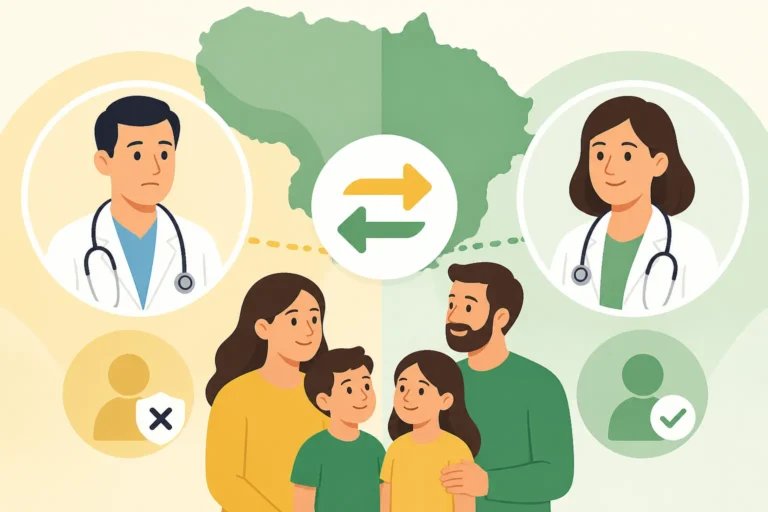
The administrative burden often falls on the person who has the "strongest" residency status—usually the person with the work contract. If you are here on a work visa, you are the anchor. But for your spouse and children to be recognized, they must also have their legal residency sorted. This is a common stumbling block. You cannot register a family member for state insurance until they have been issued their own residence permit and, crucially, have declared their place of residence in Lithuania.
The Importance of the Asmens Kodas for Every Family Member
You cannot do anything in the Lithuanian medical system without an Asmens Kodas (Personal Code). This eleven-digit number is the key to every door. When you apply for a temporary residence permit, this code is generated for you. Many expats try to register their spouse for health insurance using just a passport, only to be turned away at the clinic.
Every child, even a newborn, needs this code. If you are arriving with children, ensure their birth certificates are not only apostilled but also translated into Lithuanian by a certified translator. The system is digital, but the input depends on these physical documents being verified by a clerk at some point. For a deeper look at this specific requirement, check out How to Get Your Asmens Kodas (Personal Code) and Why It Matters for Healthcare.
Once the personal code is active, it links that individual to the national database. From that moment on, whenever they visit a doctor, the clinic simply enters the Asmens Kodas into the system to check if their insurance status is "Draustas" (Insured). If the system says "Nedraustas" (Uninsured), you are looking at private rates, which can be significantly higher, especially for specialized care or hospitalization.
Understanding Residency and the 90-Day Gap
There is a period of "limbo" that every expat family faces. You arrive, you apply for your permits, and then you wait. During this time, your family is effectively uninsured by the Lithuanian state. This is where most people feel the most vulnerable. Since the state won't cover you until the residence permit is issued and the PSD contributions start flowing, you need a backup plan.
It is wise to have a private policy like SafetyWing during this transition. SafetyWing acts as a safety net while the Lithuanian bureaucracy grinds through your paperwork. It’s particularly useful for families because it covers those unexpected "limbo" months when you are living in Lithuania but aren't yet "in the system." Without this, a simple trip to the emergency room for a broken arm could cost you thousands of euros while you wait for your official status to be updated.
Registering Children for Health Insurance
In Lithuania, children are the priority of the healthcare system. One of the best things about living here is that the state provides health insurance for all children who are residents, regardless of whether their parents are working or not. However, "being a resident" is the operative phrase. For a foreign child, this means having a valid residence permit and a declared address.
The registration is usually semi-automatic once the residence permit is granted, but as a veteran expat, I suggest never assuming the system has updated itself. You should contact your local Territorial Health Insurance Fund (TLK) to confirm that your child’s status is active. If you have recently welcomed a new member to the family, the process is slightly different; you should read How Do I Register My Newborn for Health Insurance in Lithuania? to ensure you don't miss the critical windows for newborn care.
Once registered, your child is entitled to a wide range of services, including dental care and vaccinations. The Lithuanian vaccination schedule is quite robust, and schools will often ask for a health certificate (Forma Nr. 027-1/a) before the academic year starts. Understanding Vaccination Schedules and Requirements in Lithuania will help you keep your child’s records up to date, which is a prerequisite for many state-funded childcare benefits.
Automatic vs. Manual Registration for Minors
For children of EU citizens, the process is relatively smooth if they have an EHIC card from their home country. However, for non-EU families, the "automatic" part of the registration only triggers once the Migration Department notifies the VLK of the child’s residency status. I’ve had friends wait weeks for this data transfer to happen.
If your child needs a doctor immediately and the system hasn't updated, you can take their residence permit and a translation of their birth certificate directly to the VLK office. They can manually flip the switch in the database. This is a "pro-tip" that can save you a lot of stress. Once they are in the system, you can then proceed to find a "Šeimos Gydytojas" or family doctor.
Documents Required for Foreign Children
Don't show up at the VLK empty-handed. You will need a specific folder of documents for each child. At a minimum, this includes:
- The child’s valid passport and residence permit (or the decision from MIGRIS).
- The original birth certificate with an Apostille (unless exempt by treaty).
- A certified Lithuanian translation of the birth certificate.
- Proof of declared residence (which you get from the Seniūnija or via the E-Government Gateway).
The translation is non-negotiable. Even if your birth certificate is in English, many clerks are strictly required to work only with Lithuanian documents. It might feel like an unnecessary hurdle, but it is the standard procedure across the country.
Insuring a Non-Working Spouse or Partner
This is where the rules get a bit more complex. Unlike children, who are covered by the state automatically, a non-working spouse is not necessarily covered just because you are. If your spouse is not employed in Lithuania, they are generally not contributing to the PSD through salary deductions.
However, there is a significant exception: if your spouse is staying at home to raise children. If you have a child under the age of 8, or at least two children under the age of 18, one parent can be covered by the state as a caregiver. This is a lifesaver for expat families where one partner is the primary earner and the other manages the household. To activate this, you must proactively apply at the VLK; it is never automatic for foreign residents.
If your spouse does not meet these criteria and is not working, they must pay for their own insurance. This can be done via Registering for Compulsory Health Insurance (PSD) in Lithuania (2027) which involves making monthly voluntary contributions to Sodra. These payments are currently around 64.50 EUR per month (subject to annual changes based on the minimum wage).
State-Funded Coverage for Caregivers
The "caregiver" status is one of the most generous parts of the Lithuanian system, but the paperwork is specific. You will need to provide the birth certificates of your children and proof that the other parent is not already using this status. Usually, the VLK will check the Sodra database to ensure the "caregiver" spouse isn't actually employed or receiving unemployment benefits.
If you are in this situation, I highly recommend reading Understanding PSD Contributions Through Sodra in Lithuania to see how these payments (or lack thereof) affect your long-term social guarantees. Being "insured by the state" as a parent means your spouse gets full access to the public healthcare system, including specialist visits and hospital stays, without paying the monthly PSD fee out of pocket.
Voluntary PSD Contributions for Unemployed Spouses
If you don’t have young children and your spouse isn't working, you must stay on top of the monthly PSD payments. If your spouse misses even one month of payment, their status becomes "Nedraustas," and any medical service they receive that month will be billed at full price. This is a common trap for new arrivals.
You pay these contributions directly to Sodra. You can set up a standing order in your Lithuanian bank account to ensure you never miss a deadline. If you’re still confused about the logistics of this, How Do I Add My Spouse to My Lithuanian Health Insurance? covers the manual steps to link your accounts and manage these payments efficiently.
| Family Member | Basis for Coverage | Action Required |
|---|---|---|
| Working Parent | Employment / Self-Employment | Automatic via Sodra deductions |
| Child (under 18) | State-insured resident | Confirm residency and declare address |
| Stay-at-home Parent | Raising child under 8 | Apply at VLK with birth certificates |
| Unemployed Spouse | Voluntary contributions | Pay monthly PSD to Sodra |
| EU Citizen Spouse | EHIC or S1 Form | Register S1 form with VLK |
Navigating the Registration Process at SODRA and VLK
The actual process of registration is split between two entities. Sodra handles the money (the contributions), while the VLK handles the "basket" of services (your actual insurance status). As an expat, you will likely spend more time on the VLK website or in their offices.
Most of these processes can now be done online if you have a Lithuanian bank account or a Mobile-ID, which allows you to log in to the E-Government Gateway. However, for the first-time registration of foreign documents, a physical visit to a VLK branch (Territorial Health Insurance Fund) is often necessary. They have offices in Vilnius, Kaunas, Klaipėda, Šiauliai, and Panevėžys.
While you are waiting for all these moving parts to align, don't leave your health to chance. Using a service like SafetyWing can provide the necessary medical coverage for your family during those first few months of administrative chaos. SafetyWing is specifically designed for people moving between countries, making it a reliable bridge while you wait for your "Draustas" status to turn green in the Lithuanian system.
Step-by-Step Guide for New Arrivals
- Declare Residency: As soon as you have your residence permits, go to the Seniūnija (local ward) or use the online portal to declare where you live. You cannot proceed without this.
- Verify Sodra Status: The working parent should check their Sodra account to ensure their employer is correctly paying PSD.
- Visit the VLK: Bring your family’s passports, residence permits, and translated birth/marriage certificates to the VLK office. Ask them to verify that your children and/or non-working spouse are in the system.
- Wait for the Update: It usually takes 2-3 business days for the system to update after the VLK processes your documents.
- Choose a Clinic: Once insured, you must "attach" your family members to a specific Poliklinika (public clinic) or a private clinic that has a contract with the VLK.
Linking Family Members in the E-Sveikata System
Lithuania uses a comprehensive electronic health record system called E-Sveikata. Once your family is insured, every prescription, referral, and doctor's note will be stored here. As a parent, you can link your children’s accounts to your own. This allows you to see their medical history and manage their "E-Receptas" (electronic prescriptions) from your smartphone.
Setting this up requires logging in via the How to Set Up Your Account on the Patient Portal in Lithuania guide. This is a game-changer for expat parents. No more carrying around paper records or trying to remember the name of the medicine the doctor prescribed last month—it’s all there in the portal.
Bridging the Gap and Private Alternatives
Even with the best planning, there is often a gap between arriving in Lithuania and being fully integrated into the public healthcare system. This gap can last anywhere from a few weeks to several months, depending on how fast the Migration Department processes your permits.
During this time, the public clinics will treat you as a "commercial" patient. This means you will pay the full rate for every consultation. While the costs are lower than in the US, they can still add up. A specialist visit might cost 60-100 EUR, and an MRI could be 200-400 EUR. Having supplemental insurance like SafetyWing during this period ensures that you aren't hit with unexpected bills while your residency is being finalized.
What to Do During the Waiting Period
If your child gets sick before your PSD is active, don't avoid the doctor. You can go to a private clinic like Northway, Kardiolita, or InMedica. These clinics are very expat-friendly and often have English-speaking staff. You will pay upfront, but the service is fast. If you have private insurance, you can then claim these costs back.
For EU citizens, the transition is easier. You can use your EHIC card for "necessary" care. However, the EHIC is not intended for long-term residency. If you are moving here permanently, you should eventually transition to the Lithuanian PSD system. You can learn more about the specifics of using European coverage in How to Use Your EHIC (ESDK) Card in Lithuania as an EU Citizen.
When Private Insurance Makes Sense for Families
Even after you are registered for the state PSD, many expat families choose to keep a private insurance policy or buy a local private health plan. The public system is high quality, but waiting lists for specialists can be long—sometimes several months for non-urgent issues.
Private insurance allows you to bypass these queues and see a specialist within days. It also often covers dental care more extensively than the state system. If you are curious about the price points for these plans, How Much Does Private Health Insurance for a Family Cost in Lithuania? provides a detailed breakdown of what to expect in terms of premiums and coverage.
Managing Family Health Logistics Post-Registration
Once the paperwork is finished and everyone is "Draustas," the real work of managing your family’s health begins. Your next priority is finding a good family doctor. In Lithuania, the "Šeimos Gydytojas" is the gatekeeper. You cannot see a specialist (like a cardiologist or a dermatologist) without a "Siuntimas" (referral) from your family doctor, unless you want to pay the full private price.
Finding a doctor who speaks English can be a challenge, especially in smaller towns. In cities like Vilnius and Kaunas, it is much easier. I recommend checking out The Expat Guide to Finding a Family Doctor (Šeimos Gydytojas) in Lithuania for tips on how to interview potential doctors and ensure they are the right fit for your children.
Choosing a Family Doctor for the Whole Household
It is usually easiest to have the whole family registered at the same "Poliklinika." This makes it simpler to coordinate appointments and ensures the doctor has a holistic view of your family's health environment. The Understanding the Role of the Polyclinic (Poliklinika) in Lithuania guide explains how these massive medical hubs work—they are often one-stop shops for everything from blood tests to X-rays.
When you register at a Poliklinika, you will fill out a form (Prašymas) for each family member. You are free to change your doctor or your clinic once a year for free (or more often if you pay a small administrative fee). Don't feel pressured to stay with the first doctor you find if the communication isn't working.
Understanding EHIC for Family Travel within the EU
Once your family is registered for PSD in Lithuania, you are entitled to a Lithuanian EHIC (Europos sveikatos draudimo kortelė). This is vital if you plan to travel within the EU. It ensures that if your child gets sick while you are on vacation in Italy or Spain, you will be treated under the same conditions as the locals.
You can order these cards for free through the VLK website for every member of your family. They are usually valid for several years and are sent to your declared address by post. It’s a small step that provides massive peace of mind for expat families who love to explore Europe.
Common Pitfalls and How to Avoid Them
The most common mistake I see expat families make is failing to update their residency status with the VLK after their residence permit is renewed. Your health insurance is tied to the expiration date of your permit. If you get a new permit, you must ensure the system is updated, or your insurance might "blink out" on the day your old permit expires.
Another pitfall is the "90/180 rule" for non-EU citizens. If you are here on a visa-free stay or a Schengen visa while waiting for your permit, you are generally not eligible for the state PSD. During these periods, SafetyWing is your best friend. It bridges that gap and satisfies the insurance requirements often asked for by the Migration Department during your application process.
Finally, always keep digital copies of all your translated documents. You never know when a new clerk or a different clinic will ask for proof of a birth certificate or a marriage license. Having these ready on your phone can save you a trip back home and another hour in a waiting room.
Disclaimer
This guide is intended for informational purposes only and does not constitute legal or professional medical advice. While every effort has been made to ensure the accuracy of this information for 2026, Lithuanian laws and regulations regarding healthcare and immigration are subject to change. Always verify the latest requirements with the National Health Insurance Fund (VLK), Sodra, or the Migration Department (MIGRIS) before making administrative decisions. The author is not responsible for any issues arising from the use of this information.