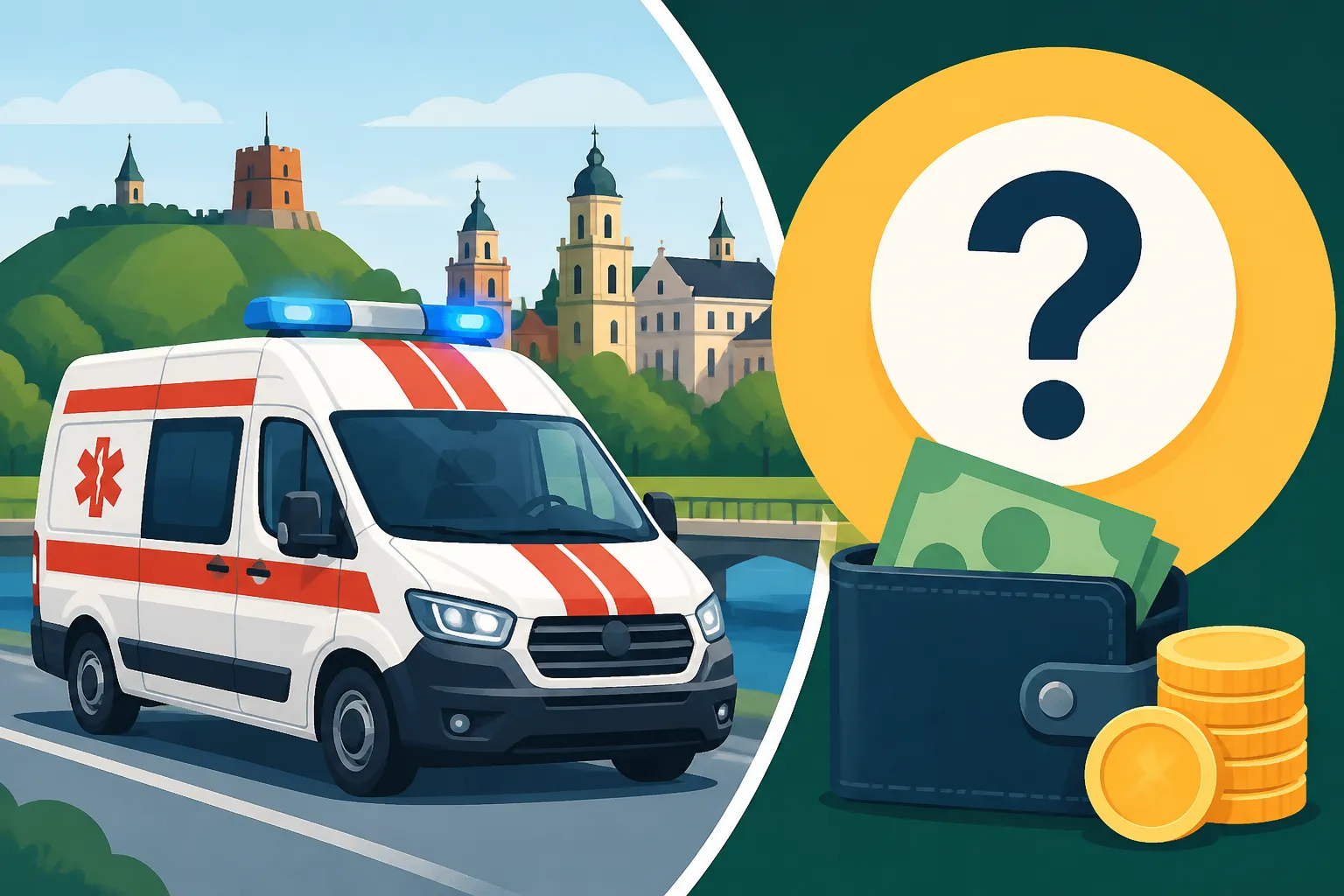
How Much Does an Ambulance (Greitoji) Cost in Lithuania?
One of the most paralyzing moments an expat can face is a medical crisis in a foreign country where you don't fully understand the billing system. If you find yourself needing to call an ambulance in Lithuania, your first thought—after the immediate health concern—is likely "How much is this going to cost me?" This guide explains the nuances of ambulance fees, who gets them for free, and what the bill looks like if you aren't covered by the national system.
Understanding the Lithuanian Emergency Response System
When you see those neon-yellow vans speeding through the streets of Vilnius or Kaunas, you are looking at the Greitoji Medicinos Pagalba (GMP), the state-funded emergency medical service. For those of us who have moved here from countries where an ambulance ride can cost as much as a used car, the Lithuanian system is a breath of fresh air, but it isn't a free-for-all. The system is designed to prioritize life-threatening situations, and the "cost" is almost entirely dictated by your insurance status and the urgency of the call.
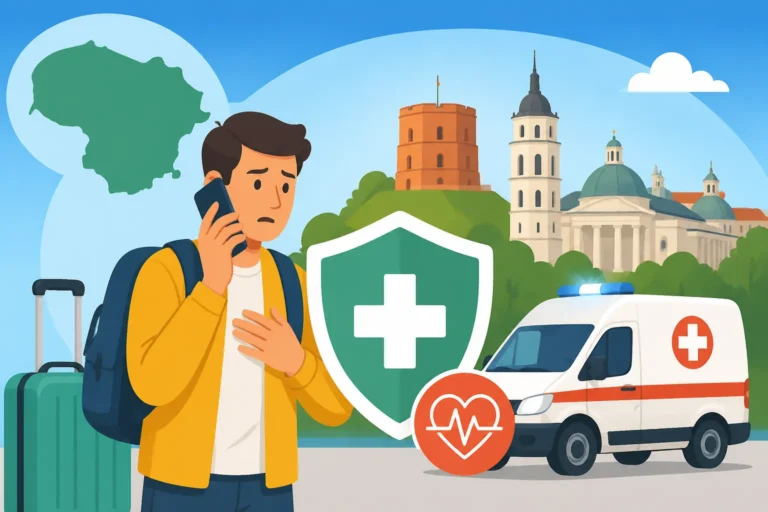
In Lithuania, emergency medical services are managed through a centralized dispatch system. If you are in trouble, you dial 112, the universal emergency number. This connects you to an operator who triages the call. It is important to realize that the GMP is funded by the Compulsory Health Insurance Fund (PSDF). If you are part of this "club," the ambulance visit and subsequent transport to a hospital usually cost you zero out of pocket. However, if you are a tourist, a newly arrived expat waiting for your paperwork, or someone who has let their insurance lapse, the financial side becomes a bit more complicated.
The Role of 112 and the Triage Process
The dispatchers in Lithuania are trained to determine if an ambulance is actually necessary. It is a common frustration among locals and expats alike that sometimes, if your condition isn't deemed "critical," the dispatcher might advise you to take a taxi to the nearest hospital or wait for your family doctor the next morning. This isn't out of cruelty; it’s a resource management strategy.
If they do send a "brigade" (the term used for the ambulance crew), they assess whether you need immediate stabilization on-site or if you need to be rushed to a Ligoninė (hospital). For a deep dive into how these facilities differ from your local clinic, see our guide on What Is the Difference Between a Poliklinika and a Ligoninė in Lithuania?. Understanding this distinction is vital because the ambulance will always take you to the emergency department of a hospital, not your local family doctor's office.
Who is Covered for Free Emergency Care?
The "free" aspect of the Greitoji is tied directly to the How Lithuania's Health Insurance Fund (VLK/PSDF) Works: A Full Overview. If you are an employee at a Lithuanian company, a self-employed person paying your monthly contributions, or a student from the EU, you are generally covered. The state considers emergency care a fundamental right for its insured residents.
If the situation is truly life-threatening—think heart attack, severe trauma, or unconsciousness—the ambulance will treat you regardless of your ability to pay at that exact moment. However, "treatment regardless of status" does not mean "treatment without a bill." If you are not insured, the hospital or the GMP service will eventually issue an invoice for the services rendered.
Cost Scenarios for Expats and Tourists
The actual "price tag" of an ambulance in Lithuania varies depending on whether you are an EU citizen, a legal resident with PSD, or an uninsured visitor. If you fall into the latter category, you are looking at "commercial" or "non-insured" rates, which are regulated by the Ministry of Health but can feel quite steep if you aren't prepared for them.
Costs for EU Citizens and EHIC Holders
If you are a tourist or a temporary visitor from another EU country, your primary tool for avoiding a bill is the European Health Insurance Card (EHIC). For a practical look at using this, check out How to Use Your EHIC (ESDK) Card in Lithuania as an EU Citizen. When you present this card to the ambulance crew or the hospital staff, the costs are settled between the Lithuanian health authorities and your home country’s health service.
For EU citizens, the ambulance ride is typically free, provided the emergency is genuine. If you don't have your EHIC card on you, you might be asked to pay the commercial rate upfront and then seek reimbursement from your home country later. This is why many veteran expats suggest keeping a photo of your EHIC on your phone at all times.
Costs for Non-EU Residents with PSD
For those of us who have gone through the process of Registering for Compulsory Health Insurance (PSD) in Lithuania (2027), the ambulance is covered as part of our monthly social security (Sodra) contributions. As long as your "PSD status" is active in the system, the ambulance crew will see this when they log your Asmens kodas (personal code) into their tablets.
There is a common misconception that you only get a free ambulance if you are admitted to the hospital. In reality, if the crew treats you at home and decides you don't need to be transported, it is still covered by the PSDF. However, if you call an ambulance for a non-emergency—like a mild fever that has lasted three days—you might be told that the visit is "unjustified." In rare cases, the service may attempt to bill for an unjustified call-out, though this is more of a deterrent than a frequent occurrence.
Costs for Uninsured Visitors and Commercial Rates
If you are visiting from outside the EU (e.g., the USA, Canada, or Australia) and do not have travel insurance, you will be billed for the ambulance. The cost is broken down into two main components: the "brigade" call-out fee and the transportation fee per kilometer.
As of 2024-2025, a standard ambulance call-out for an uninsured person typically ranges from 60 EUR to 120 EUR, depending on the complexity of the team sent (e.g., a simple paramedic team vs. a specialized reanimation team). On top of this, you may be charged a fee for every kilometer traveled if the hospital is far away. While this is significantly cheaper than in many Western countries, it can still be an unwelcome surprise. This is exactly why services like SafetyWing are popular among digital nomads and tourists. SafetyWing provides a safety net that covers these unexpected emergency costs, ensuring that a simple accident doesn't turn into a financial headache while you're exploring the Curonian Spit or Vilnius Old Town.
| Patient Status | Emergency Coverage | Typical Cost (Out of Pocket) |
|---|---|---|
| Lithuanian Resident (PSD) | Full Coverage | 0 EUR |
| EU Citizen (with EHIC) | Full Coverage | 0 EUR |
| Uninsured Non-EU Tourist | No Coverage | 60 – 150+ EUR |
| Insured Tourist (e.g., SafetyWing) | Reimbursed | 0 EUR (after claim) |
| Non-Urgent Private Transport | No Coverage | 50 – 200 EUR |
Navigating the Practicalities of Calling an Ambulance
When you dial What Is the Emergency Phone Number in Lithuania?, you need to be prepared for a very direct conversation. The dispatchers often speak English, especially in the larger cities like Vilnius, Kaunas, and Klaipėda, but the level of fluency can vary. It is helpful to know a few key phrases or at least have your address written down clearly.
What Happens When You Dial 112?
The operator will ask for your location first. This is crucial because even if the call drops, they know where to send help. They will then ask what happened. Be specific. Instead of saying "I feel sick," say "I have chest pains" or "My friend has fallen from a height and cannot move."
If the dispatcher determines that an ambulance is necessary, they will send the nearest available unit. In Lithuania, ambulances are categorized. Type A units are for basic transport and monitoring, while Type C units are mobile intensive care units. You don't get to choose which one comes, but the dispatcher will send the appropriate level of care based on your description. This is a key part of Emergency Medical Care in Lithuania: What Every Expat Needs to Know.
Non-Urgent Transport vs. Emergency Response
It is vital to distinguish between a life-threatening emergency and the need for medical transport. If you are a resident and need to get to a hospital for a scheduled surgery but cannot sit in a car, the Greitoji (112) is not the service to call.
There are private medical transport companies in Lithuania that handle "non-urgent" cases. These are always paid services, even for residents. Prices for private transport within a city usually start at around 50 EUR. If you use the 112 service for something that is clearly not an emergency, the crew might refuse to take you, or you might find yourself waiting for hours as they prioritize actual life-or-death cases.
How to Ensure You Are Covered
The best way to handle ambulance costs is to ensure you never have to pay them out of pocket. For expats, this means staying on top of your residency paperwork and ensuring your PSD contributions are always up to date. If you are in the "gap period"—the time between arriving in the country and receiving your residence permit—you are technically uninsured by the state.
Private Insurance Considerations
During this gap period, or if you are here on a tourist visa, having a private policy is essential. SafetyWing is a frequent choice for the expat community because it is designed specifically for people living between borders. If you end up in a Lithuanian ambulance, SafetyWing can cover the costs that the state system won't, provided the situation meets the policy's emergency criteria.
When choosing a policy, ask yourself: Is Private Health Insurance Worth It for Expats in Lithuania? Often, the answer is yes, specifically for the peace of mind regarding emergency transport and private hospital rooms. Even with state insurance, some expats choose to keep a private policy to cover "extra" costs that the PSDF doesn't fully reimburse.
Dealing with Invoices and Reimbursements
If you are uninsured and receive a bill from the GMP or the hospital, do not ignore it. The Lithuanian administrative system is quite efficient at tracking debt through your Asmens kodas or passport number. The invoice will usually arrive by post to your declared place of residence or be handed to you at the hospital.
If you have travel insurance like SafetyWing, you will need to pay the bill first and then submit the receipt, the medical report (which will likely be in Lithuanian), and a summary of the incident to your insurer. Most Lithuanian hospitals are used to providing these documents for foreign insurance companies, but you might need to ask specifically for a "medicinos išrašas" (medical extract) to explain why the ambulance was called. For more on the paperwork side of things, see Health Insurance in Lithuania: Compulsory, Private and Travel Options Explained.
In summary, while the Greitoji is a public service, its "free" nature is a benefit of being an insured resident. If you are just passing through, don't let the fear of a 100 EUR bill stop you from calling for help in a real emergency—but do make sure you have insurance like SafetyWing to handle the aftermath.
Disclaimer
The information provided in this guide is for informational purposes only and does not constitute legal or medical advice. Healthcare regulations and ambulance fees in Lithuania are subject to change by the Ministry of Health. Always verify your insurance status with the National Health Insurance Fund (VLK) or your private provider. In a medical emergency, always dial 112 immediately.