Understanding Maternity and Prenatal Care in Lithuania
Finding out you are expecting a baby is a whirlwind of emotions, but when you are living abroad, that joy is often quickly followed by a wave of administrative panic. Navigating a foreign medical system, understanding your insurance rights, and wondering if you will be able to communicate your birth plan in a language you haven't mastered yet is a massive hurdle. This guide is designed to dismantle those fears, providing a comprehensive roadmap to maternity and prenatal care in Lithuania, ensuring you and your baby are supported from the first ultrasound to the final paperwork.
The Structure of Maternity Care in Lithuania
The Lithuanian healthcare system is a hybrid of robust public services and a growing private sector. For most expats, the journey begins at the local poliklinika. The public system is surprisingly thorough, though it can feel a bit bureaucratic at times. If you are paying your taxes and are covered by Compulsory Health Insurance, most of your prenatal care, including specialist visits and the birth itself, will be covered. However, many expats choose to supplement this with private consultations to ensure they have more time with their doctor or a guaranteed English speaker.
The Role of the Family Doctor
In Lithuania, your primary point of contact for almost everything medical is your family doctor. As soon as that home test shows two lines, your first step should be to book an appointment with them. They are the gatekeepers of the system. They will officially confirm the pregnancy, begin your medical file, and issue the necessary referrals to an obstetrician-gynecologist (OB-GYN). If you haven't yet settled into a local clinic, you should look into How to Choose and Register with a Family Doctor (Šeimos Gydytojas) in Lithuania to get the ball rolling before you hit your second trimester.
The family doctor doesn't just handle the referral; they monitor your overall health throughout the pregnancy. They will check your blood pressure, manage any chronic conditions, and ensure your vaccinations are up to date. In the Lithuanian system, the relationship with your family doctor is long-term, as they will likely be the ones seeing your child after birth as well. It’s worth taking the time to find someone you feel comfortable with, as they will be the ones navigating the Understanding the E-Sveikata (E-Health) System in Lithuania portal on your behalf to log every milestone of your pregnancy.
Navigating the Polyclinic System
The poliklinika is a uniquely Soviet-legacy structure that has been modernized but still retains a specific rhythm. It is a large multi-specialty clinic where you will go for your blood tests, ultrasounds, and visits with your OB-GYN. While the interiors can sometimes feel a bit sterile or dated, the equipment in most major cities like Vilnius and Kaunas is state-of-the-art. The challenge for many expats is the "flow"—you might need to go to one room for a blood draw, another for an ultrasound, and a third to see your doctor, often on different floors.
One thing to keep in mind is that the public system operates on a strict schedule. You will be given specific windows for your appointments, and punctuality is expected. While you are navigating the early stages of the public system, you might find that some specialized screenings aren't immediately available. During these gaps, or if you are still waiting for your residency paperwork to process, having a backup like SafetyWing can provide a safety net for unexpected medical needs that fall outside the standard prenatal track. SafetyWing is often used by digital nomads and new arrivals who aren't fully integrated into the national system yet but need reliable coverage.
Considering Private Maternity Centers
For those who find the public system too daunting or the language barrier too high, Lithuania offers excellent private clinics such as Northway, Baltic American Clinic, or Kardiolita. These centers provide a more "boutique" experience. You will typically have the same doctor for every visit, longer consultation times, and a higher likelihood of fluent English throughout the entire staff. The environment is more akin to a high-end hotel than a hospital, which can significantly reduce the stress of prenatal visits.
However, it is important to understand how private care interacts with the public system. Even if you see a private doctor for your monthly check-ups, most births in Lithuania still take place in large public hospitals because they have the best neonatal intensive care units (NICU). If you choose the private route, you will be paying out of pocket or through private insurance. For a breakdown of what these costs might look like, you can refer to The Cost of Healthcare in Lithuania: A Complete Breakdown for Foreigners (2026). Many expats choose a "middle ground," using private clinics for prenatal care but registering with a public hospital for the delivery to ensure they have access to the highest level of emergency facilities.
Prenatal Care and the Routine of Check-ups
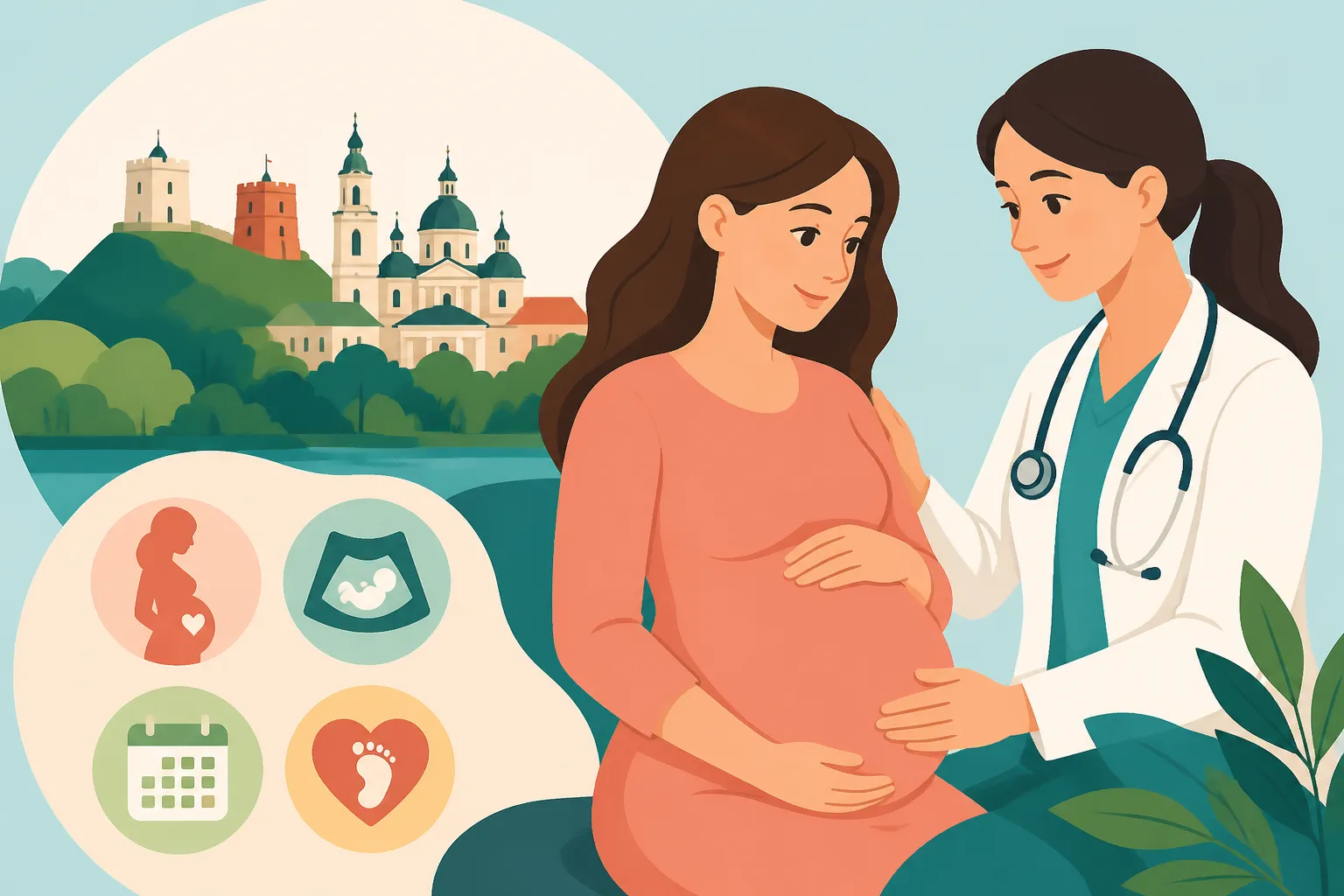
Once you are in the system, the care is very structured. Lithuania follows a standard European model of prenatal care, but with its own specific documentation requirements. You will become very familiar with your "Pregnancy Passport," a document that you must carry with you everywhere, especially as you get closer to your due date.
The Pregnancy Passport and E-Health
The Pregnancy Passport (Nėščiosios kortelė) is a physical booklet (though it is increasingly mirrored in the digital E-Sveikata system) that contains every single detail of your pregnancy. It lists your blood type, results of every screening, weight gain charts, and the baby’s growth measurements. In the event of an emergency, any doctor in Lithuania can look at this book and immediately understand your medical history. It is your most important piece of ID for nine months.
The digital transition in Lithuania is quite advanced. Every prescription and referral is handled through Understanding the Electronic Prescription (E-Receptas) System in Lithuania. This is incredibly convenient because you don't have to carry around sheaves of paper. Your doctor simply uploads the data, and when you go to the pharmacy for your prenatal vitamins or folic acid, you just show your ID. This system also allows for better coordination between your family doctor and your OB-GYN, as both can see your latest lab results in real-time.
Standard Tests and Screenings
Lithuania takes prenatal screening seriously. You can expect monthly visits during the first and second trimesters, increasing to bi-weekly or weekly as you approach 40 weeks. The standard battery of tests includes regular urine analysis, complete blood counts, and screenings for infections like HIV, Hepatitis B, and Syphilis. Between weeks 11 and 13, you will be offered the first major ultrasound and optional genetic screening (Prisca or NIPT).
One specific test that often surprises expats is the Glucose Tolerance Test, usually performed between weeks 24 and 28. Unlike some countries where this is only for high-risk patients, in Lithuania, it is standard for almost everyone. You will be asked to drink a very sweet glucose solution and have your blood drawn at intervals. It’s a long morning at the lab, so bring a book. If at any point you are worried about the quality of care or the specific procedures, remember that The Complete Guide to Healthcare in Lithuania for Expats (2027) provides a broader context of what the standards are across the country.
Accessing Specialists and E-Referrals
If your pregnancy is deemed "high risk"—perhaps due to age, twins, or pre-existing conditions—your OB-GYN will issue e-referrals to specialists. This might include an endocrinologist for gestational diabetes or a cardiologist. The How E-Referrals (Siuntimas) Work for Specialists in Lithuania system is generally efficient, but the wait times in the public system for specialists can be several weeks.
In these instances, having a supplementary insurance plan like SafetyWing can be useful if you decide to jump the queue and see a specialist privately. While the public system is excellent for standard care, the ability to see a specialist within 48 hours at a private clinic is a luxury that many expats find worth the extra cost. Always ensure that any specialist you see privately sends their findings back to your family doctor so your Pregnancy Passport remains updated.
Financial and Administrative Aspects of Pregnancy
Understanding who pays for what is often the biggest source of stress. The good news is that if you are legally employed in Lithuania or are a permanent resident, the financial burden is relatively low. The state provides significant support for families, provided you have navigated the initial registration hurdles.
Compulsory Health Insurance (PSD) Coverage
The backbone of the system is the Compulsory Health Insurance, known locally as PSD. As long as you are covered, the costs of your prenatal visits, standard ultrasounds, lab work, and the hospital stay for birth are covered by the How Lithuania's Health Insurance Fund (VLK/PSDF) Works: A Full Overview. This includes the cost of a standard room in the maternity ward and the medical team's services.
For non-EU expats, ensuring your PSD is active is critical. If you are here on a work visa, your employer handles these contributions. However, if you are a freelancer or are here on a different visa type, you need to be proactive. You can find out more about the registration process in the guide on How to Register for Compulsory Health Insurance (PSD) as a Foreigner in Lithuania. If there is a gap in your coverage—for example, if you are between jobs or waiting for a residence permit—you must have private travel or health insurance to avoid massive out-of-pocket bills. SafetyWing is a popular choice for expats during these transitional periods, as it offers flexible, month-to-month coverage that can fill the gap until your PSD status is "Draustas" (Insured).
| Service Type | Public System (with PSD) | Private Clinic (Out-of-Pocket) |
|---|---|---|
| Prenatal Consultation | Free | €50 – €120 |
| Standard Ultrasound | Free | €60 – €150 |
| Genetic Screening (NIPT) | Paid (usually) | €400 – €600 |
| Hospital Delivery | Free | €1,500 – €3,000 |
| Epidural | Free | Included in private packages |
| Private Room (Hospital) | €20 – €50 per night | Included in private packages |
Maternity Leave and Social Insurance (Sodra)
Lithuania has some of the most generous maternity and parental leave policies in the world. To qualify for maternity benefits, you generally need to have a specific record of social insurance contributions (Sodra). Maternity leave usually starts at 30 weeks of pregnancy and lasts for 126 days. During this time, you receive a percentage of your average salary.
The administration of this is handled through the Understanding Sodra Social Insurance Contributions in Lithuania system. Your OB-GYN will issue an electronic certificate of pregnancy at the 30-week mark, which automatically notifies Sodra. You then log into your Sodra account to apply for the benefit. If you are working while pregnant and need to take time off early due to complications, you will be issued a sick leave certificate. You can read more about how this works in Understanding Sick Leave (Nedarbingumo Pažymėjimas) and Sick Pay in Lithuania.
Costs for Expats Without Public Coverage
If you are not covered by PSD—perhaps you are a spouse of a worker and haven't yet received your residence permit—the costs can escalate quickly. A single prenatal visit might only cost €60, but the total bill for a hospital birth without insurance can reach several thousand euros, especially if a C-section or NICU care is required. In such cases, checking How Much Does a Private Birth Cost at a Lithuanian Hospital is essential for budgeting.
This is why most immigration experts and veteran expats suggest never letting your private insurance lapse. SafetyWing, for instance, can provide essential coverage for emergencies and unexpected medical complications that might arise before you are officially folded into the Lithuanian state system. It acts as a financial buffer during the sometimes lengthy residency application process.
The Birthing Experience in Lithuania
When the big day finally arrives, most expats head to one of the major university hospitals. In Vilnius, the Vilnius University Hospital Santaros Klinikos or the Vilnius City Clinical Hospital are the primary choices. In Kaunas, the Kauno Klinikos is the leading center. These institutions are world-class, though the "customer service" aspect can vary depending on which midwife is on shift.
Choosing a Hospital (Ligoninė)
Unlike some countries where you are strictly assigned to a hospital based on your address, in Lithuania, you have some flexibility, especially if you have a specific birth plan. Most women choose a hospital based on its reputation for certain types of births (e.g., natural birth-friendly or high-tech intervention). It is highly recommended to attend the "Open Days" that many hospitals offer, where you can tour the delivery rooms and meet the staff.
The Understanding Hospital Care at a Lithuanian Ligoninė experience can be a bit of a culture shock. Expect a very medicalized environment. However, the standard of care is extremely high, and the neonatal outcomes in Lithuania are among the best in Europe. If you don't speak Lithuanian, you may want to consider hiring a doula who can act as a translator and advocate, or ensure your partner is prepared to handle the communication with the midwives.
Birth Plans and Patient Rights
The concept of a "Birth Plan" is becoming more common in Lithuania, but it is still something you need to discuss proactively with your doctor. Lithuanian hospitals are generally supportive of partners being present for the birth, and skin-to-skin contact is now the standard practice. However, interventions like episiotomies or the use of Pitocin might be suggested more readily than in some Western countries.
You have the right to refuse any procedure, but you must be able to communicate this effectively. Writing your birth plan in both English and Lithuanian (using a translation service) is a smart move. You should also be aware of your rights regarding pain management. Epidurals are available 24/7 in major hospitals and are covered by PSD. If you are specifically looking for a more personalized experience, you might want to look into How to Find an English-Speaking Doctor in Lithuania who can help bridge the cultural gap during your delivery.
Postnatal Care in the Hospital and at Home
After birth, you will typically stay in the hospital for 2 to 3 days if it was a natural birth, and 4 to 5 days for a C-section. This is a time for recovery and for the nurses to help you with breastfeeding and basic baby care. Most hospitals offer "Family Rooms" for a small extra fee, allowing your partner to stay overnight with you. These rooms are in high demand, so you usually can't book them in advance; you just have to ask when you arrive in active labor.
Once you are home, the care continues. Your family doctor and a pediatric nurse will usually make a home visit within the first week of you being discharged. They will check the baby’s weight, inspect the umbilical cord, and answer any questions you have about newborn care. This home-visit system is a wonderful part of the Lithuanian healthcare model that helps new parents feel less isolated. For the ongoing health of your child, you'll eventually need to choose a regular clinic, so it’s worth researching How Do I Find a Pediatrician (Vaikų Gydytojas) in Kaunas or your respective city early on.
Registering Your Newborn and Post-Birth Admin
The weeks following the birth are a blur of diapers and sleep deprivation, but there are several critical administrative tasks you must complete to ensure your baby is legally registered and insured.
Obtaining the Birth Certificate
The first step is the civil registration of the birth. This is now largely done online through the MEPIS system or the E-Government Gateway. The hospital will transmit the electronic birth record to the Civil Registry. You then need to log in and "claim" the record, choosing the baby’s name and registering their parentage. Once this is done, you can obtain a physical birth certificate, which is necessary for the next steps.
For expats, this process can be slightly more complex if the parents are not Lithuanian citizens. You will likely need to register the birth with your home country's embassy as well to ensure the baby gets their second citizenship and a passport. Make sure you have your own How to Get Your Asmens Kodas (Personal Code) and Why It Matters for Healthcare documents in order, as you will need your own personal code to link the baby to your file.
Applying for the Baby's Residence Permit
If you are in Lithuania on a residence permit, your baby does not automatically become a Lithuanian citizen (Lithuania follows jus sanguinis, or right of blood). You will need to apply for a residence permit for the baby. This involves a visit to the Migration Department (MIGRIS). You will need the baby’s birth certificate (sometimes with an Apostille and translation, depending on where you are from) and proof that you can support the child.
This administrative phase is another reason why having flexible insurance like SafetyWing is beneficial. Until the baby is officially granted a residence permit and added to the PSD system, they may not be fully covered for non-emergency services. SafetyWing can provide that peace of mind during the months it takes for the MIGRIS paperwork to be processed, ensuring your little one is protected from day one.
First Pediatric Visits
Within the first month, you will have your first official "well-baby" check-up at the poliklinika. This is where the vaccination schedule begins. Lithuania has a comprehensive Understanding Vaccination Schedules and Requirements in Lithuania that covers all the standard childhood immunizations. These are free of charge in the public system.
During these visits, the pediatrician will monitor the baby's development. If you ever feel that your concerns aren't being heard due to a language barrier, don't be afraid to switch doctors. The process is relatively simple, and you can find out how to do it in How to Switch Your Family Doctor (Šeimos Gydytojas) in Lithuania. Finding a pediatrician who speaks your language and understands your cultural perspective on child-rearing can make the first year of parenthood significantly smoother.
Cultural Nuances and Language Barriers
Finally, it is worth discussing the "vibe" of Lithuanian maternity care. Lithuanians can sometimes come across as formal or direct in a medical setting. This isn't rudeness; it’s just a different professional culture. However, beneath that formality, there is a deep respect for the process of birth and motherhood.
Finding English-Speaking Providers
While many younger doctors speak excellent English, the nursing and administrative staff may not. This is where the challenge lies. If you are in Vilnius, you have a much higher chance of finding a fully English-speaking environment. In smaller towns, you might need to rely on translation apps or a helpful friend.
If the language barrier feels insurmountable, don't ignore the private sector. Even just paying for a few private consultations can help you feel more informed and empowered when you eventually enter the public hospital for delivery. There are also several expat parenting groups on social media where you can find recommendations for specific midwives or doctors who are known for being "expat-friendly."
Lithuanian Parenting Culture and Support Groups
Lithuanians value the outdoors and fresh air for babies. You will see parents pushing strollers in the parks regardless of whether it's 25 degrees or -10 degrees Celsius. There is also a strong culture of "moms' clubs" and breastfeeding support groups. Organizations like "Pieno Medis" provide excellent resources for breastfeeding, which can be a lifesaver in those first few weeks.
Navigating pregnancy in Lithuania is a journey of both medical and personal growth. While the bureaucracy of How to Register My Newborn for Health Insurance in Lithuania can be tedious, the core of the system is designed to ensure that you and your baby have a safe and healthy start. By being proactive, understanding your rights under the PSDF, and having a backup plan like SafetyWing for any insurance gaps, you can focus on what really matters: welcoming your new family member to life in the Baltics.
Disclaimer
This guide is for informational purposes only and does not constitute professional medical or legal advice. Healthcare regulations and insurance policies in Lithuania are subject to change. Always consult with the Lithuanian Migration Department, the National Health Insurance Fund (VLK), and qualified medical professionals regarding your specific situation.