How Do I Transfer My EU Health Insurance to Lithuania?
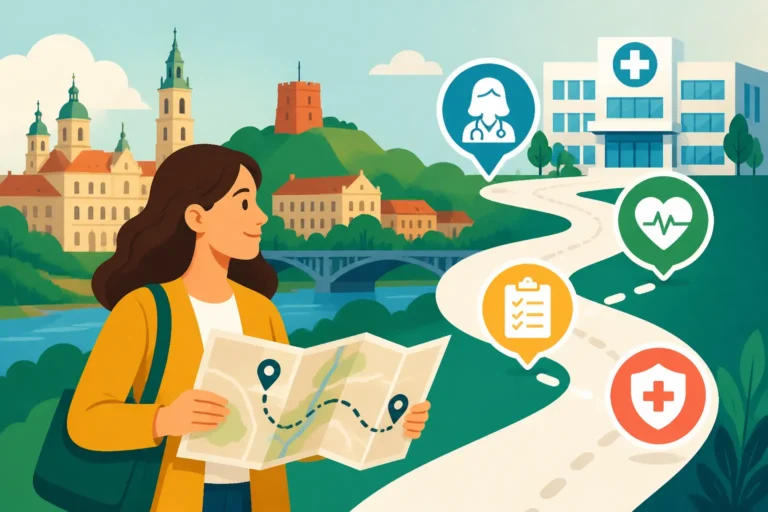
Moving from one EU member state to another should, in theory, be a seamless administrative transition, but many expats arriving in Vilnius or Kaunas quickly discover that health insurance is where the "unified Europe" dream often meets local bureaucratic reality. This guide explains exactly how to move your existing EU health coverage into the Lithuanian system, ensuring you don't lose coverage during the transition or face unexpected monthly debt to the state social insurance fund.
The Transition from EHIC to Local Residency
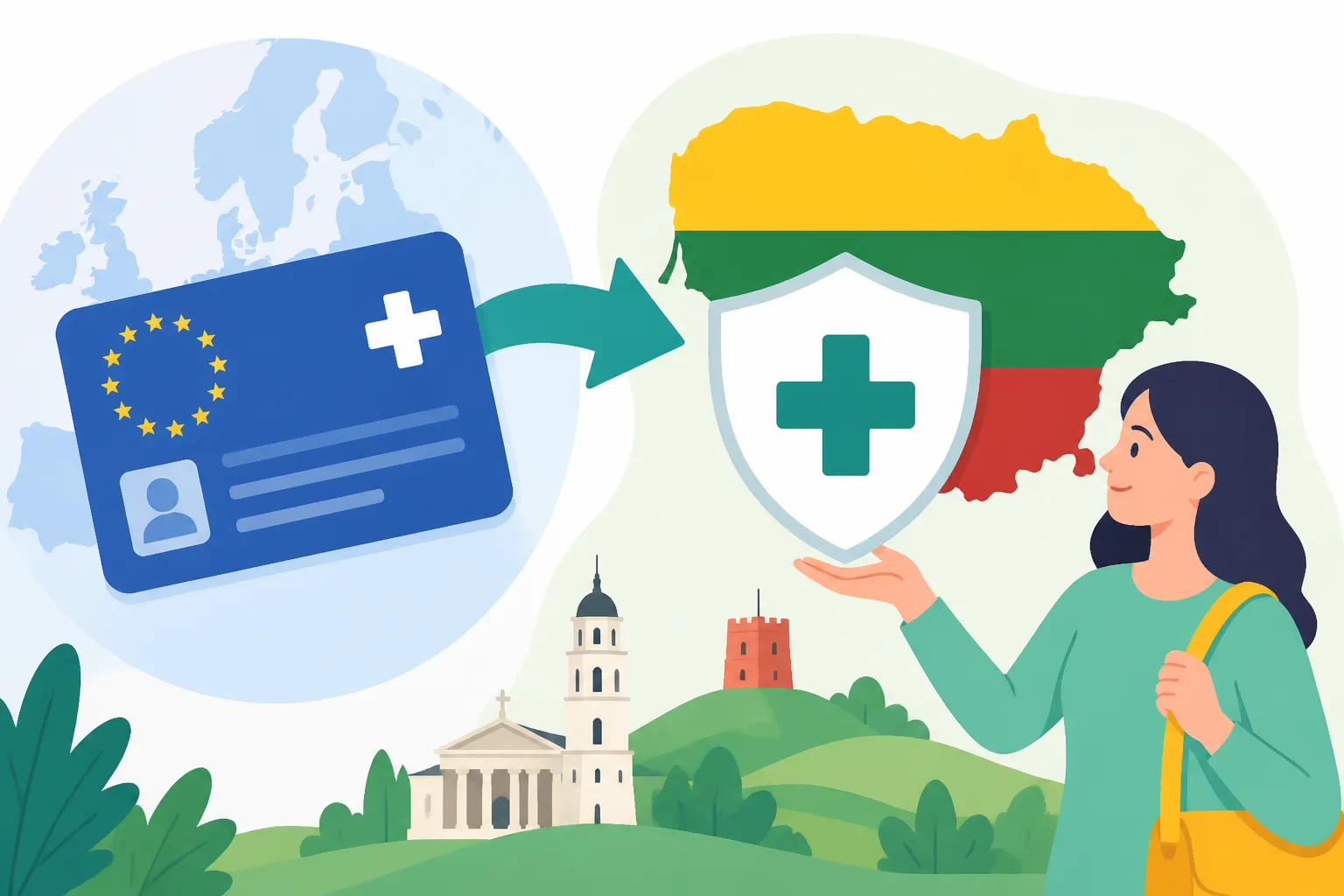
When you first arrive in Lithuania from another EU country, your European Health Insurance Card (EHIC) is your best friend. It provides access to state-provided healthcare during a temporary stay under the same conditions as a local. However, the keyword here is "temporary." The moment you decide to stay long-term and perform the "deklaravimas" (declaration of residence), the rules change. You are no longer a visitor; you are a resident, and the system expects you to integrate into the Lithuanian Compulsory Health Insurance (PSD) scheme.
I remember the confusion of my first few months. I thought my German EHIC would cover me until I found a job, but Lithuania is very strict about its database. Once you are in the system as a resident, the state starts a "clock" on your insurance contributions. If you haven't formally transferred your rights or started paying into the system, you might find yourself with a growing bill from Sodra (the Social Insurance Fund). Understanding your EHIC (ESDK) card is vital here because the EHIC only covers "unforeseen" medical needs, not chronic management or routine checkups once you've moved your life here.
To avoid a gap in coverage while you are waiting for your residency documents to be processed, many expats find that a flexible plan like SafetyWing can provide that necessary safety net. It acts as a bridge so you aren't left exposed if a medical issue arises before your name appears in the Lithuanian National Health Insurance Fund (VLK) database.
The Vital Role of the S1 Form
For those who are moving to Lithuania but remain insured in another EU country—such as pensioners, cross-border workers, or employees posted abroad by a company—the S1 form is the ultimate key. This document allows you to register with the Lithuanian healthcare system while your home country continues to foot the bill. Without this form, the Lithuanian authorities will expect you to pay monthly PSD contributions out of your own pocket.
Obtaining the S1 form must happen in the country you are leaving. You need to contact your previous health insurer and inform them of your relocation to Lithuania. Once they issue the S1, you don't just keep it in a drawer; you must physically or digitally present it to the Territorial Health Insurance Fund (Teritorinės ligonių kasos or TLK). In Vilnius, the office is located on Ž. Liauksmino g., and while the staff are professional, having a translated copy or at least a clear understanding of the process will save you hours of back-and-forth.
Once the TLK processes your S1, you are treated exactly like a Lithuanian citizen in the public system. You can then begin registering with a family doctor (Šeimos Gydytojas) which is the person responsible for your primary care and referrals. If you are a digital nomad or between jobs and don't qualify for an S1, remember that you will be liable for the monthly PSD payment, which is currently a percentage of the minimum wage. During these transitional months, having SafetyWing can be a lifesaver, especially if you need to travel back home or to other countries while your Lithuanian paperwork is still "in the works."
Registering for PSD and Getting Your Asmens Kodas
You cannot truly "transfer" your insurance without a personal identification code, known as the asmens kodas. This eleven-digit number is the "Open Sesame" for every door in Lithuania, from opening a bank account to seeing a specialist. You usually receive this when you apply for your registration certificate as an EU citizen at the Migration Department (Migracija).
Once you have your code, the next step is ensuring your insurance status is "draudžiamas" (insured). If you are employed by a Lithuanian company, this happens automatically as your employer pays taxes. However, if you are self-employed or unemployed, you must take proactive steps. You will need to use the online portal to check your status. Many expats get caught out because they assumed the "transfer" was automatic upon moving. It isn't. You must verify that the VLK knows you are now a resident.
| Feature | EHIC (Temporary Stay) | PSD (Resident/Transfer) |
|---|---|---|
| Duration | Up to 90 days (usually) | Permanent |
| Coverage | Emergency/Unforeseen only | Full (Preventative, Routine, Surgery) |
| Cost | Free (Paid by home country) | Monthly contribution or S1 Form |
| Doctor Access | Any public clinic | Must register with a Family Doctor |
| E-Health Access | Limited/Manual | Full access to E-Sveikata |
If you find that your status is "not insured" despite your efforts, don't panic. Sometimes there is a lag between your residency declaration and the health fund’s database update. This is another scenario where SafetyWing is incredibly useful, as it ensures you have coverage for any accidents or illnesses while you are arguing with a computer system that doesn't yet recognize your new asmens kodas. It’s much easier to wait out a bureaucratic delay when you know you won't be charged 500 Euros for a simple emergency room visit.
Navigating the E-Health System and Family Doctors
Once the transfer is complete and you are officially in the system, you gain access to one of Lithuania's best modern features: the E-Sveikata (E-Health) system. This is a centralized digital portal where every prescription, blood test result, and doctor's note is stored. To log in, you will need either a Lithuanian bank account or a Mobile-ID (M-Parašas), which you can get from local mobile providers like Telia or Bitė.
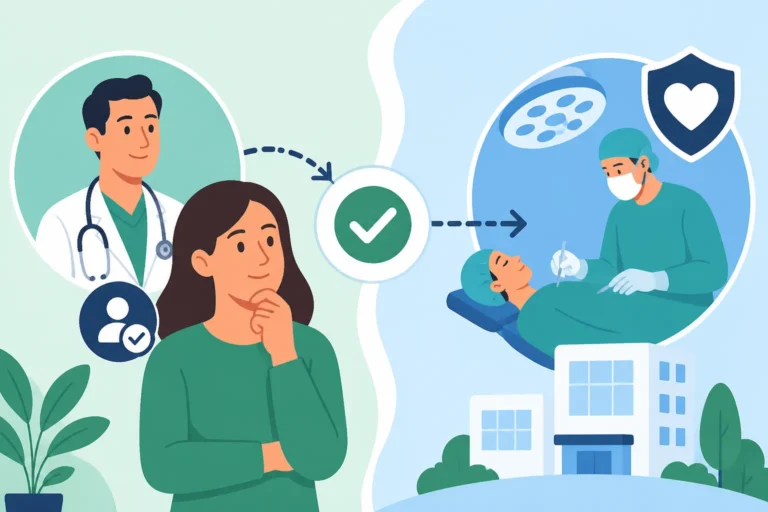
Your next priority should be choosing and registering with a family doctor. Unlike some countries where you can just walk into any clinic, the Lithuanian system is built around the "gatekeeper" model. Your Family Doctor (Šeimos gydytojas) manages your health and provides the "siuntimas" (referral) needed to see a specialist for free. If you try to see a cardiologist or a dermatologist without this referral, you will be asked to pay the full private price, even if you are insured.
For many of us moving from Western Europe, the concept of a "Poliklinika" (Polyclinic) can be a bit intimidating. These are large, often brutalist-looking buildings that house everything from dentists to surgeons. Don't let the architecture fool you; the equipment inside is often state-of-the-art. However, English proficiency varies wildly. If you are worried about the language barrier during your first few appointments, it helps to look for clinics in central Vilnius or Kaunas that specifically mention English-speaking staff. It's all part of settling in and getting used to the local rhythm of care.
Coordinating Social Security History
A common worry for EU expats is whether their years of contributions in France, Italy, or Poland will "count" in Lithuania. If you become unemployed in Lithuania shortly after moving, you may need to prove your insurance history from your previous country to claim benefits or remain insured under certain social categories. This is where the Form U1 or Form S041 comes in.
This isn't strictly for the medical side, but health insurance and social security are intertwined in Lithuania via the Sodra system. If you want to understand the bigger picture, reading about Sodra social insurance can help you see how your health tax is actually a piece of the larger social safety net. If you are moving with a family, ensure you also look into registering family members for health insurance because children are covered by the state, but you still need to register them with their own asmens kodas to trigger that coverage.
While you are gathering these forms and waiting for your "history" to be recognized by the Lithuanian authorities, it is wise to maintain some form of private international coverage. SafetyWing is particularly popular among the expat community because it doesn't require a mountain of paperwork to start, and it provides a "global" umbrella while you are stuck in the "local" paperwork phase. Transitioning between EU systems can sometimes take weeks of processing, and the Lithuanian health fund is not known for backdating coverage unless all your forms are perfectly in order.
Final Practical Steps for a Smooth Move
To summarize the path for a veteran expat moving to Lithuania, you should follow this checklist to ensure you don't fall through the cracks:
- Before leaving your home country, request an S1 form (if applicable) or a summary of your insurance periods (E104).
- Upon arrival, use your EHIC for any immediate emergencies but do not rely on it for long-term care.
- Declare your place of residence at the Seniūnija or via the Migracija office as soon as possible.
- Wait for your asmens kodas and then visit the TLK office to confirm your PSD status.
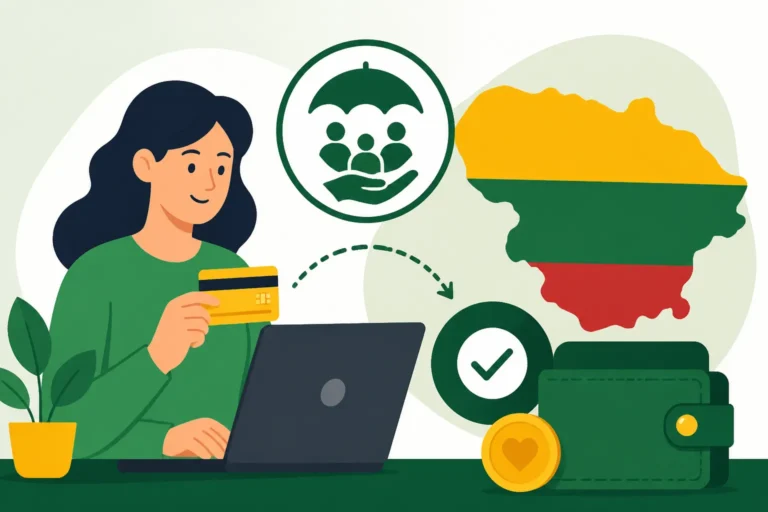
- If you are not working, set up a standing order for your monthly PSD payments to Sodra to avoid debt.
- Register with a local Poliklinika and choose your Family Doctor.
Lithuania's healthcare is high-quality, but it is a "system of record." If the record doesn't show you as insured, the doctors—no matter how kind—cannot treat you for free. By taking these steps and perhaps using a bridge service like SafetyWing during the first 90 days, you can focus on enjoying the beautiful old town of Vilnius rather than stressing over medical bills. It’s also helpful to learn how the online portal works so you can monitor your own status without needing to call an agent every time you have a question.
Disclaimer
This guide is for informational purposes only and is based on the general rules of the Lithuanian healthcare system as of 2026. Administrative procedures and monthly contribution rates (PSD) can change based on government legislation. Always consult with the National Health Insurance Fund (VLK) or the Social Insurance Fund (Sodra) for the most current and personal advice regarding your specific residency and insurance situation.