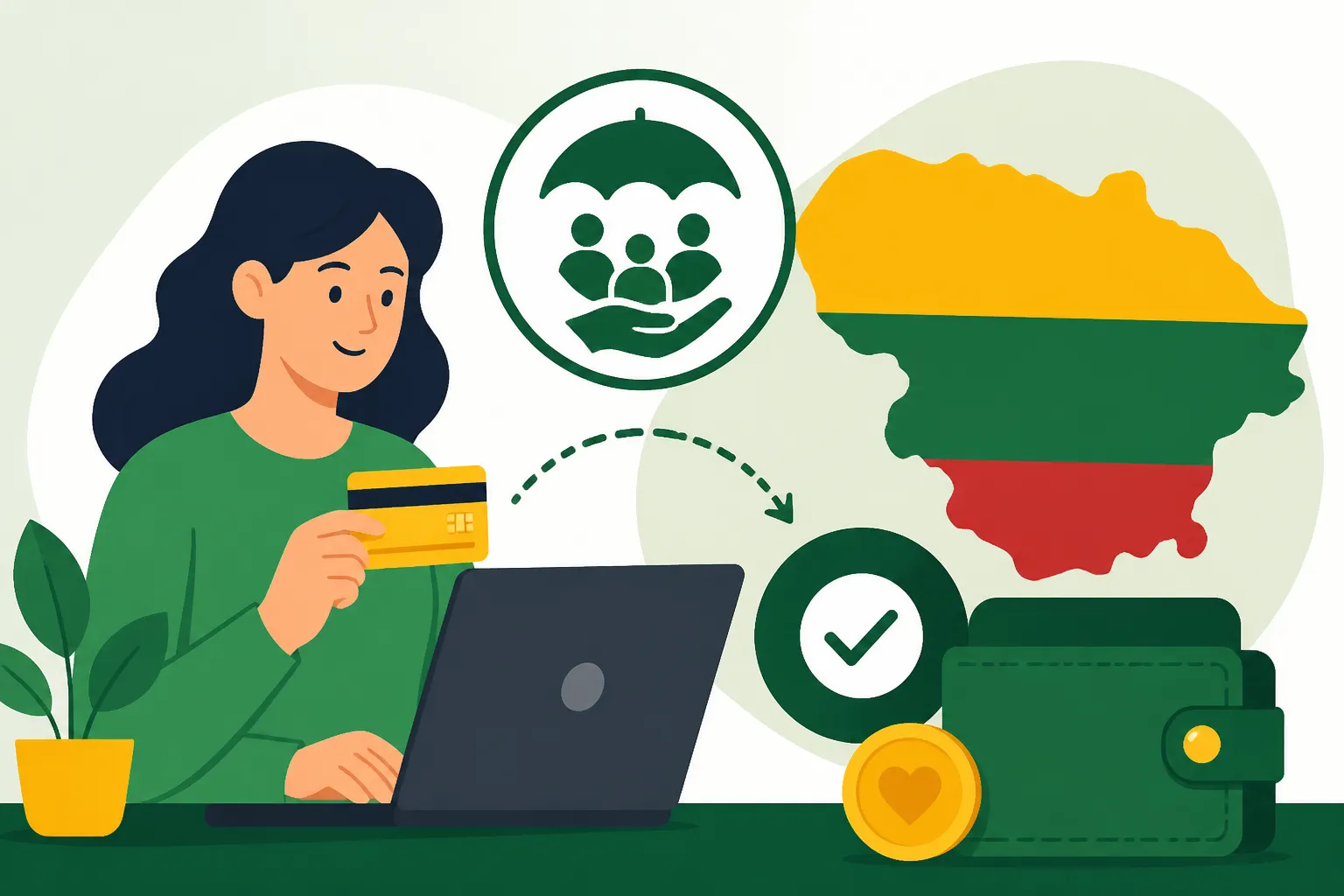
How Do I Pay PSD Contributions Voluntarily in Lithuania?
The administrative hurdles of living abroad often feel like a never-ending obstacle course, and navigating healthcare contributions in Lithuania is certainly no exception. Many expats find themselves in a bewildering situation: they’re living here, maybe freelancing, between jobs, or simply not employed in a traditional sense, and suddenly realize they're expected to pay into the compulsory health insurance system (PSD) themselves. The fear of unexpected medical bills or falling afoul of the taxman is real, and the information isn't always clear. This guide is here to untangle the complexities of voluntarily paying your PSD contributions in Lithuania, offering a clear, empathetic roadmap to ensure you stay covered and worry-free.
Understanding Compulsory Health Insurance (PSD) in Lithuania
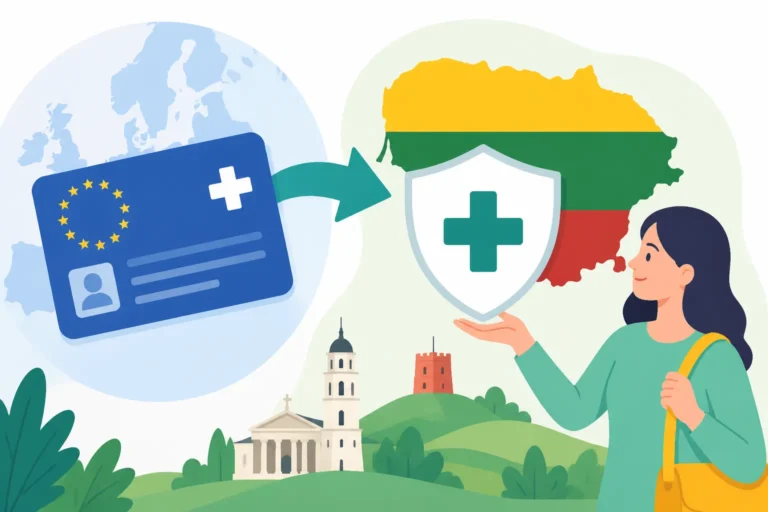
Let's start with the basics, because understanding what you're paying for is the first step to feeling in control. PSD, or Privalomasis Sveikatos Draudimas, translates to Compulsory Health Insurance. It’s not just a suggestion; it's a legal requirement for almost everyone legally residing in Lithuania. This system is the lifeblood of the public healthcare system, funding the Valstybinė ligonių kasa (VLK) – the National Health Insurance Fund, or PSDF (Privalomojo sveikatos draudimo fondo biudžetas). If you're here, you need to be in it, unless you fall into a very specific category of state-insured individuals.
The confusion for many expats often stems from their home country's system, where health insurance might be optional, privately arranged, or automatically deducted. Here in Lithuania, if you're working for a local company, your employer handles the PSD contributions for you – it's a portion of your gross salary. But if you’re outside that neat, traditional employment box, the responsibility falls squarely on your shoulders. Neglecting this isn't just a minor oversight; it can have severe financial consequences, as we’ll discuss. For a broader look at the system, you might want to check out The Complete Guide to Healthcare in Lithuania for Expats (2027).
What PSD Covers and Why It's Crucial
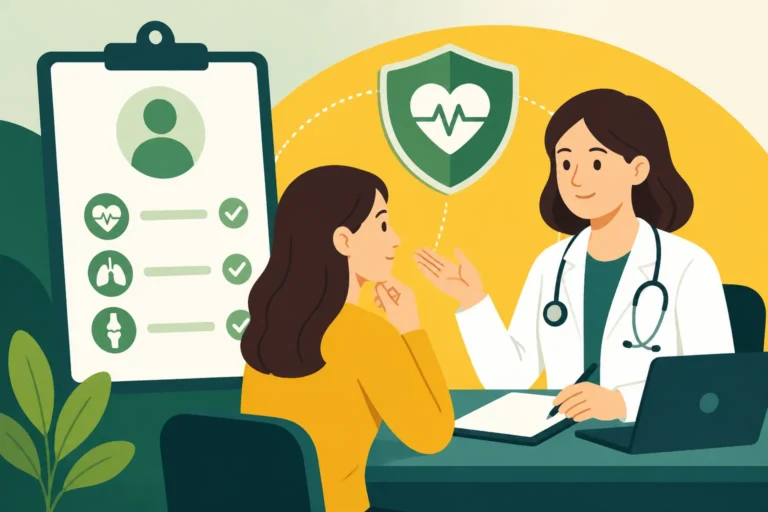
So, what exactly does your voluntary PSD contribution get you? In essence, it grants you access to the Lithuanian public healthcare system. This includes a wide range of services: consultations with your family doctor (šeimos gydytojas) at a polyclinic, specialist referrals, emergency medical care, and even partial reimbursement for certain prescription medications. It’s the safety net that prevents minor ailments from turning into major financial disasters.
Imagine this scenario: you're just starting your freelancing career in Vilnius, full of enthusiasm, but then you slip on some ice and break your wrist. Without active PSD, that trip to the emergency room, the X-rays, the cast, and follow-up appointments could easily run into hundreds, if not thousands, of euros. It’s a sobering thought, but one that underscores the absolute necessity of maintaining your PSD. Even if you hold private health insurance, or initially arrived with travel insurance like SafetyWing, which is excellent for covering unexpected emergencies during your initial transition, it’s crucial to understand that PSD is your gateway to the local public system and is often a prerequisite for long-term residency. For a detailed comparison, you can read Health Insurance in Lithuania: Compulsory, Private and Travel Options Explained.
The Link to Sodra and VMI
Now, for a common point of expat bewilderment: the roles of Sodra and VMI. While Sodra (the State Social Insurance Fund Board) is the overarching body that manages social insurance, including health insurance contributions, the actual collection of voluntary PSD payments for many categories, especially the self-employed or those not employed, is handled by the VMI (State Tax Inspectorate). This division of labor often causes headaches, as expats might naturally assume all social insurance queries go to Sodra.
Think of it this way: Sodra sets the rules and manages your overall social insurance record, while VMI acts as the bank and records keeper for your direct payments. So, when it comes to making your voluntary contributions, you’ll largely be interacting with VMI's payment channels. It’s a bit like two departments in the same huge administrative building, and knowing which door to knock on is key. This is a critical piece of the puzzle when you're figuring out Understanding PSD Contributions Through Sodra in Lithuania.
Who Needs to Pay PSD Voluntarily? Common Expat Scenarios
This is where many expats discover they need to take proactive steps. If you're not employed by a Lithuanian company that handles your social security deductions, you very likely fall into one of the categories requiring voluntary PSD payments. Don't assume someone else is taking care of it; in Lithuania, the onus is often on the individual to ensure their contributions are up to date.
The Self-Employed and Individual Activity Holders
If you've embraced the freedom of being your own boss in Lithuania, perhaps through "individuali veikla" (individual activity) or a "verslo liudijimas" (business certificate), then congratulations – you're part of a growing, vibrant community! However, this freedom comes with responsibilities, one of the biggest being your PSD contributions.
As a self-employed individual or an individual activity holder, you are required to pay monthly PSD contributions. The amount is usually calculated as a percentage of the minimum monthly wage (MMA), regardless of your actual income, ensuring a baseline contribution. For example, if you're a graphic designer freelancing for international clients from your cozy apartment in Kaunas, or an IT consultant working for a foreign company, you're responsible for paying your own PSD. This often gets missed in the excitement of setting up your business or starting your freelance journey, but it’s non-negotiable. To understand more about getting started, you might want to read How to Register Individual Activity (Individuali Veikla) in Lithuania.
Unemployed and Not Registered with Užimtumo Tarnyba
This is a common trap for new arrivals or those experiencing a gap between jobs. If you are not employed, not a student, not a state-insured individual (e.g., a parent on maternity leave, a pensioner), and you are not registered with the Lithuanian Employment Service (Užimtumo Tarnyba) as unemployed, then you are expected to pay PSD voluntarily.
Many expats arrive in Lithuania, spend a few weeks or months job hunting, and assume they're "between jobs" and thus somehow covered or exempt. This is a dangerous assumption. Without active registration with the employment service, which means you're actively looking for work and meet their criteria, the state does not cover your PSD. This means if you fall ill during this period and haven't made voluntary contributions, you're on the hook for all medical costs. Even if you've got excellent travel insurance like SafetyWing for emergencies, it's wise to ensure your PSD is active for long-term integration into the healthcare system and for routine care.
Spouses and Dependents Not Otherwise Covered
Family reunification is a wonderful thing, bringing loved ones together in a new country. However, just because your spouse or dependents move to Lithuania with you, it doesn't automatically mean they're covered by your employer's PSD contributions. While children are often state-insured, adult dependents (like a non-EU spouse who isn't employed or actively seeking work) may need to make voluntary PSD payments.
The specific rules can be a bit nuanced depending on their nationality (EU vs. non-EU), visa type, and whether they have any other grounds for state insurance. Always check with Sodra or the Migration Department regarding your family members' status, especially after going through the How to Register Family Members for Health Insurance in Lithuania process. It’s far better to clarify proactively than to face a hefty medical bill down the line.
Those on Certain Visas or Waiting for Employment
New residents, particularly those arriving from non-EU countries, often experience a period of transition. You might be on a work visa (National D visa) or have applied for a temporary residence permit based on work, but your official employment hasn't started yet, or your permit is still being processed. During this limbo, your PSD status might not be active through an employer.
Even if your residence permit application explicitly states you need health insurance (which it always does!), and you've provided proof of a valid private insurance policy for the application (often a requirement for non-EU citizens), this doesn't always equate to active PSD status for the public system. There can be waiting periods for activation, or you might simply not be registered yet. This is precisely where a flexible, comprehensive travel health insurance like SafetyWing can be invaluable. It covers you globally, including in Lithuania, for unexpected medical issues, bridging that crucial gap until your PSD is fully active and you’re integrated into the local system. Don't get caught out by Understanding Health Insurance Waiting Periods for New Residents in Lithuania.
Your Step-by-Step Guide to Voluntary PSD Payments
Alright, let's get down to brass tacks. Paying your voluntary PSD contributions might seem daunting at first, especially with the language barrier and unfamiliar administrative systems. But once you understand the steps, it becomes a routine.
Checking Your PSD Status: A Must!
Before you even think about making a payment, you must verify your current PSD status. This is crucial because you might already be covered without realizing it, or you might have a debt you're unaware of. The primary tool for this is the e.VMI system (the State Tax Inspectorate's electronic services) and sometimes the e.Sodra portal.
To access these systems, you'll need your How to Get Your Asmens Kodas (Personal Code) and Why It Matters for Healthcare. This personal identification number is your key to almost all administrative services in Lithuania. Once you have it, you can register for e.VMI via your Lithuanian bank's online banking (if you have one) or by visiting a VMI office in person. On the e.VMI portal, specifically the EDS (Electronic Declaration System), you can check your PSD status. Similarly, e.Sodra allows you to view your social insurance history. It’s not uncommon for expats to find discrepancies, so always double-check. If you see a "mokėtojo PSD įmokos" (payer's PSD contributions) entry, it means you're being recognized as an individual responsible for your own payments.
Calculating the Monthly Contribution
The PSD contribution amount is not a static figure; it's tied to the Minimum Monthly Wage (MMA) set by the Lithuanian government, which typically changes annually. For voluntarily insured persons, the monthly PSD contribution is currently 6.98% of the MMA.
Let's do the math for the current year (as of 2024):
- Minimum Monthly Wage (MMA): €924
- PSD Rate: 6.98%
- Monthly PSD Contribution: €924 * 0.0698 = €64.40
This amount is subject to change, so always verify the latest MMA and PSD rate on the official Sodra or VMI websites. It's usually wise to check this at the beginning of each calendar year. For more information on general costs, take a look at The Cost of Healthcare in Lithuania: A Complete Breakdown for Foreigners (2026).
Making the Payment to VMI
This is the actionable part! Payments are generally made to the State Tax Inspectorate (VMI). You have a few options:
-
Bank Transfer (E.bankas): This is the most common method. If you have a Lithuanian bank account (like Swedbank, SEB, Luminor), you can easily make a transfer through your online banking portal.
- Recipient: Valstybinė mokesčių inspekcija prie LR FM (VMI)
- Recipient's Bank Account: VMI has specific bank accounts for different types of taxes in various banks. You'll need to find the correct one on the VMI website (vmi.lt -> "Kontaktai" -> "Bankų sąskaitų numeriai"). For example, for Swedbank, the account might look something like LT247300010077864197.
- Payment Code (Mokėjimo kodas): This is crucial. For voluntary PSD contributions for the current period, the payment code is 2901. If you're paying for previous periods or outstanding debt, the code might be different, so verify on the VMI site.
- Payer's Code (Mokėtojo kodas): This is your personal code (asmens kodas).
- Purpose of Payment (Mokėjimo paskirtis): Briefly state "PSD įmoka už [Mėnuo] [Metai]" (e.g., "PSD įmoka už balandį 2024") – PSD contribution for [Month] [Year].
-
Payment through VMI EDS Portal: The VMI Electronic Declaration System (EDS) offers a way to generate payment orders directly, often pre-filled with the correct details once you're logged in. This can simplify the process, especially if you're comfortable navigating online government portals.
-
Third-Party Payment Services: Some payment service providers might offer options for paying taxes, but direct bank transfer is usually the most straightforward and secure.
The Deadline: You must pay your voluntary PSD contribution by the last day of the current month to be covered for that month. For example, to be covered for April, you must pay by April 30th. Missing this deadline can lead to gaps in your insurance and potential penalties.
Here's a quick reference table for your convenience:
| Detail | Information |
|---|---|
| Recipient | Valstybinė mokesčių inspekcija prie LR FM (VMI) |
| Recipient Account | Check VMI.lt for the correct account number for your bank (e.g., Swedbank) |
| Payment Code (Current PSD) | 2901 |
| Payer's Code | Your Asmens Kodas (Personal Code) |
| Purpose of Payment | PSD įmoka už [Month] [Year] |
| Monthly Contribution (2024) | €64.40 (based on 6.98% of €924 MMA) |
| Payment Deadline | Last day of the current month |
Common Pitfalls and Expert Tips for Expats
Navigating any new system has its challenges, and Lithuania's healthcare and tax administration is no different. These are mistakes that newcomers commonly make. Let's talk about how to sidestep them.
The "I Forgot" or "I Didn't Know" Trap
This is arguably the most common pitfall. Many expats simply don't realize they need to pay PSD voluntarily, or they forget to do it consistently. The system doesn't always send you polite reminders. You're expected to know and comply. Ignoring this responsibility can lead to accumulating debt, late payment penalties, and most significantly, a complete lack of public health coverage when you need it most.
Imagine you've been busy with a new project, and suddenly realize it's been three months since your last PSD payment. Not only will you have to pay the accumulated amount, but you might also incur fines. Worse, if you needed medical care during those uncovered months, you’d be billed for the full cost. This is why having comprehensive knowledge of Registering for Compulsory Health Insurance (PSD) in Lithuania (2027) is so important. Set up a recurring reminder on your phone or calendar, or better yet, a standing order with your bank if possible (though the amount might change annually, so check).
Incorrect Payment Details
Another frequent hiccup is making payments with incorrect details. Even a single digit off in the VMI bank account number, the payment code (mokėjimo kodas), or your personal code (asmens kodas) can mean your payment isn't correctly allocated. This results in VMI not registering your contribution, leaving you showing as uninsured, even though the money has left your account.
Always, always double-check the recipient's bank account number, the specific payment code for voluntary PSD (2901 for current contributions), and ensure your asmens kodas is correctly entered as the payer's code. It might seem tedious, but it saves a world of trouble later. When you're making payments, make sure you know How Do I Get a Tax Number (Asmens Kodas) in Lithuania? as it's the most critical piece of information. If you suspect an error, contact VMI immediately with proof of payment.
Gaps in Coverage
Life happens, and sometimes there are legitimate gaps in employment or changes in visa status that can affect your PSD coverage. Perhaps you've left one job and haven't started another, or your residence permit is being renewed. During these periods, you might find yourself temporarily without automatic PSD coverage.
This is where proactive planning is crucial. If you anticipate a gap, consider making voluntary PSD payments to maintain continuous coverage. Additionally, having a robust travel health insurance policy, like SafetyWing, can provide a critical safety net during these transitions. While it won't replace your PSD for long-term residency requirements, it can cover unexpected medical emergencies that might arise when your public system coverage is uncertain or inactive. Don't leave yourself exposed; understand Navigating the Lithuanian Healthcare System: An Expat's Roadmap (2027) fully.
Language Barriers and Where to Get Help
Let's be honest, dealing with administrative tasks in a foreign language is incredibly frustrating. The VMI and Sodra websites, while offering English versions, can still be complex, and finding English-speaking staff in person or over the phone isn't always guaranteed.
If you're struggling with the language, don't suffer in silence.
- VMI and Sodra: Many larger branches (especially in Vilnius) have staff who can assist in English. Try calling their general information lines and asking if they have English-speaking consultants.
- Expat Groups: Online expat communities in Lithuania are often a goldmine of practical advice and can point you to reliable resources or even help translate specific terms.
- Professional Assistance: If your situation is complex (e.g., self-employed with irregular income, or dealing with back payments), consider consulting a local accountant or a legal professional who specializes in expat services. They can guide you through the process and ensure compliance. Remember, getting your How to Register for Compulsory Health Insurance (PSD) in Lithuania (2026) right is a key step in building your life here.
Disclaimer
The information provided in this guide is intended for general informational purposes only and does not constitute legal, financial, or medical advice. While every effort has been made to ensure accuracy and up-to-date information, regulations and rates in Lithuania can change. Always consult official Lithuanian government sources (such as Sodra and VMI websites) or seek professional advice from a qualified lawyer, accountant, or healthcare professional for your specific situation. Reliance on any information in this guide is solely at your own risk.