Can I See a Specialist Privately and Still Use the PSDF for Surgery?
Navigating the Lithuanian medical system often feels like trying to solve a Rubik's cube where the colors keep shifting. You might find yourself facing a three-month wait just to speak with a cardiologist at your local poliklinika, while your symptoms won't wait. This guide explains exactly how to bridge the gap by seeing a specialist privately to speed up the process while still utilizing the Compulsory Health Insurance Fund (PSDF) to cover the heavy costs of the actual surgery.
The Reality of the Lithuanian Hybrid Healthcare Path
If you have been living in Lithuania for any length of time, you already know that the public system is high-quality but deeply burdened by bureaucracy and long queues. The question of whether you can mix private and public care is one of the most common topics in expat circles in Vilnius and Kaunas. The short answer is yes, but the execution requires a precise understanding of how the referral system functions. Most expats find that Public vs Private Healthcare in Lithuania: Which Should Expats Choose?() is the first question they ask, but the "hybrid" model is often the smartest financial and medical move.
In Lithuania, the state health system is funded through the National Health Insurance Fund, or VLK. When you are employed or self-employed and paying your monthly contributions, you are entitled to "free" care. However, "free" often comes with a "wait." By choosing to pay out-of-pocket for a private specialist consultation—which usually costs between 60 and 150 Euros—you bypass the initial weeks or months of waiting for a diagnostic appointment. The crucial part is ensuring that this private visit leads back into the public system for the expensive surgical procedure.
Understanding the Role of the Private Specialist
When you visit a private clinic like Northway, Kardiolita, or InMedica, you are paying for speed and often for a doctor who speaks fluent English. These specialists are often the same surgeons who work in the large public hospitals (Ligoninė) during the morning hours. This is a vital piece of the puzzle. When you see a specialist privately, you are often seeing the person who will eventually perform your surgery in a public facility.
To make this work, the private specialist must be able to issue an electronic referral, known as a "siuntimas." Not all private clinics have the same level of integration with the national system, but most major ones do. You must confirm beforehand that the doctor can log into the Understanding the E-Sveikata (E-Health) System in Lithuania() portal to record your diagnosis and referral. Without this digital trail, the public hospital will not recognize your private visit as a valid entry point for state-funded surgery.
The Importance of the Siuntimas in the Public System
The "siuntimas" is the golden ticket in Lithuanian healthcare. It is an electronic document that tells the state, "This patient has a medical necessity for a specific service." Usually, your first step in the country is The Expat Guide to Finding a Family Doctor (Šeimos Gydytojas) in Lithuania(), who acts as the gatekeeper. However, a specialist can also issue a referral for surgery.
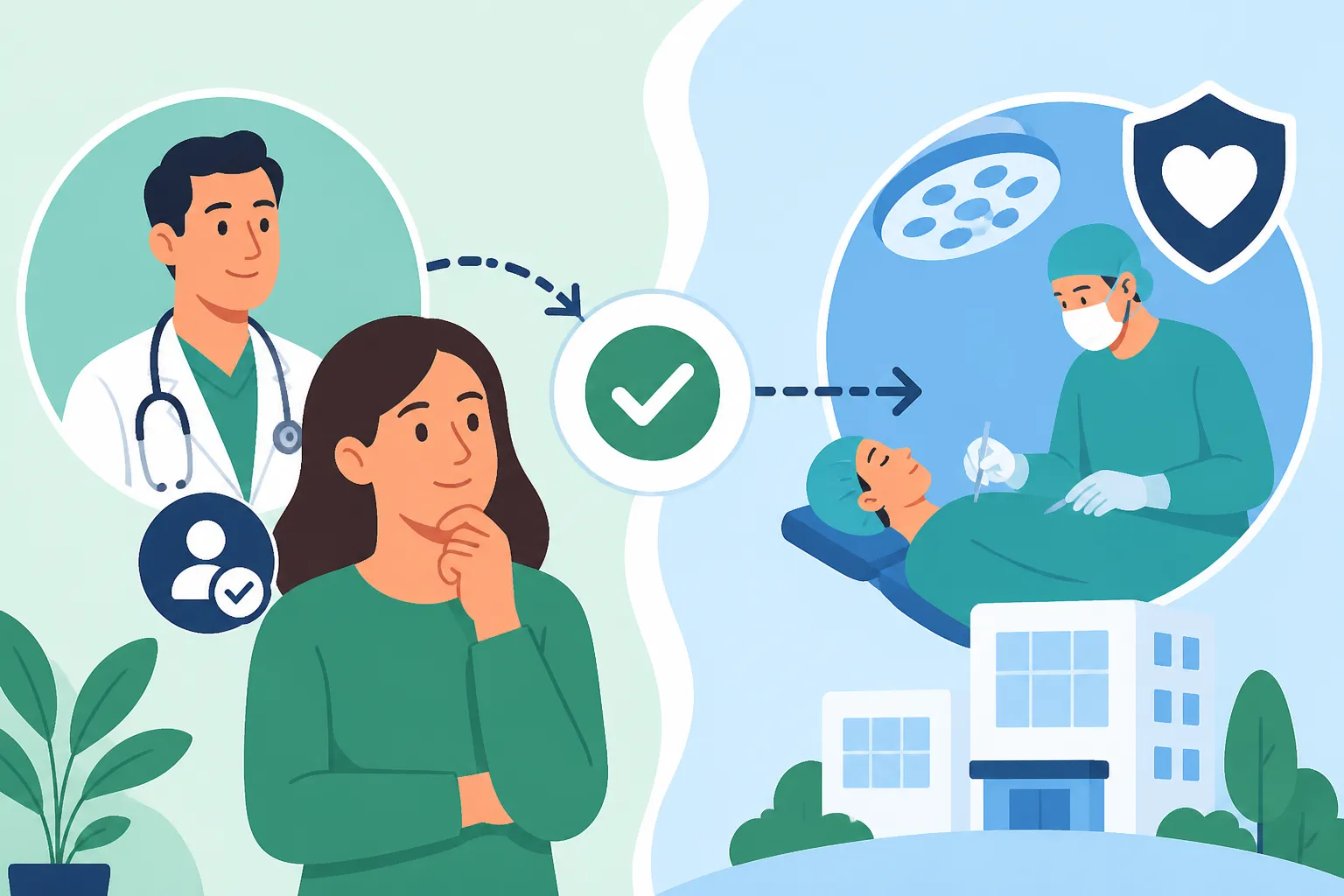
If you see a specialist privately and they determine you need surgery, they can issue an e-referral for that surgery at a public hospital. Because you are covered by the PSDF, the surgery itself, the anesthesia, the hospital room, and the standard medications used during your stay should be covered 100%, provided you go to a public hospital or a private clinic that has a specific contract with the VLK for that procedure. This is the core of how you Navigating the Lithuanian Healthcare System: An Expat's Roadmap (2026() effectively: pay for the diagnosis to save time, use the insurance for the treatment to save thousands of Euros.
Step-by-Step: Moving from Private Specialist to Public Surgery
The transition from a private office to a public operating theater isn't automatic. It requires you to be proactive. After your private consultation, you must ensure the doctor has uploaded the referral to the E-Sveikata portal. Once that is done, you don't necessarily have to go back to your family doctor, though it is often helpful to keep them in the loop so your medical history remains centralized.
You then take that electronic referral and "shop" for a hospital. In Lithuania, you have the right to choose which public hospital performs your surgery, regardless of where you live. Many expats prefer the Vilnius University Hospital Santaros Klinikos or the Kaunas Clinics due to their advanced facilities. You will need to contact the registration desk of the surgery department at your chosen hospital. Tell them you have an e-referral in the system. They will then place you on the state-funded waiting list for the surgery.
Navigating the Public Hospital Waiting List
Even with a private referral, you cannot "skip the line" for the surgery itself in a public hospital. You will be placed on the same waiting list as everyone else. However, the advantage is that you reached that waiting list much faster than someone who waited three months just to see the initial specialist. For many procedures, like gallbladder removal or hernia repairs, the wait might be a few weeks to a few months. For major orthopedic surgeries like hip replacements, the wait can still be significant.
During this waiting period, some expats choose to maintain a secondary insurance policy. For instance, if you are a digital nomad or still waiting for your residence permit to be finalized, having something like SafetyWing can provide a safety net for other medical emergencies that might arise while you are waiting for your scheduled public surgery. It is important to remember that Health Insurance in Lithuania: Compulsory, Private and Travel Options Explained() varies significantly, and the PSDF only covers you once your status is "Apdraustas" (Insured) in the system.
Coordination Between Private and Public Facilities
One potential hurdle is the transfer of diagnostic tests. If you had an MRI, CT scan, or extensive blood work done at a private clinic, you must ensure those results are accessible to the public surgeons. Most modern private clinics in Lithuania upload these directly to E-Sveikata. If they don't, you should ask for a digital copy (often on a CD or a secure cloud link) to bring to your surgical consultation at the public hospital.
If the public hospital cannot access your private tests, they may insist on repeating them within the public system, which can add more delays. Always be the "manager" of your own medical files. Check your E-Sveikata account frequently to see if your private doctor has actually uploaded the "Atsakymas" (Result) and the "Siuntimas" (Referral). If you see a gap in your records, call the private clinic immediately to rectify it before your public hospital appointment arrives.
Costs and Coverage Comparison
While the surgery itself is covered by the PSDF, there are often "hidden" or additional costs that expats should be aware of. The Lithuanian system is excellent at covering the basics, but if you want a private room in a public hospital, or if you want a specific "higher-end" version of a medical device (like a specific brand of stent or a more advanced prosthetic), you may be asked to pay the price difference out of pocket.
| Feature | Public Path (Poliklinika) | Private Specialist Path | Hybrid Path (Recommended) |
|---|---|---|---|
| Specialist Wait Time | 1 – 4 Months | 2 – 7 Days | 2 – 7 Days |
| Specialist Cost | Free (Covered by PSD) | 60€ – 150€ | 60€ – 150€ |
| Surgery Cost | Free (Covered by PSDF) | 1,500€ – 10,000€+ | Free (Covered by PSDF) |
| Surgery Wait Time | Standard Public Queue | Immediate / Very Fast | Standard Public Queue |
| Total Out-of-Pocket | 0€ | Very High | Minimal (Consultation only) |
It is also worth noting that medications prescribed for use after you leave the hospital are not necessarily free. You will need to understand Prescription Medications and Pharmacies in Lithuania: The Complete Guide() to know how the reimbursement levels (50%, 80%, or 100%) apply to your specific condition. Most post-operative medications are at least partially subsidized if you have a valid E-Receptas from your surgeon.
When Private Insurance Fills the Gaps
Many expats use a combination of the PSDF and private international insurance. If you are in the middle of a residence permit application and your PSD status is not yet active, you are effectively a "private patient" for everything. In these scenarios, a provider like SafetyWing is invaluable because it can cover unexpected medical costs before you are fully integrated into the Lithuanian social security system. Once you have your Asmens Kodas and are paying into Sodra, the PSDF becomes your primary coverage, but the private insurance remains a great backup for things the state doesn't cover, like certain types of rehabilitation or private hospital stays.
For those who find the public recovery wards a bit too "Soviet" for their liking—though many have been beautifully renovated—private insurance might allow you to opt for a private surgery altogether in a clinic that doesn't have a VLK contract. However, for 90% of expats, the hybrid model of private-specialist-plus-public-surgery strikes the perfect balance between speed and financial prudence. You get the expertise of the top surgeons in the country without the crippling bill of a private surgical suite.
Common Challenges and Expat Troubleshooting
The biggest challenge expats face when trying to use a private referral for public surgery is the language barrier at the public hospital (Ligoninė). While your private specialist likely spoke great English, the administrative staff at the registration desk of a large hospital like Santariškės might not. It is often highly beneficial to bring a Lithuanian-speaking friend or hire a local consultant for the day you go to register your referral and schedule your surgery date.
Another common issue is your insurance status. If you are a freelancer or working under a "Mažoji Bendrija," you must ensure your PSD payments are up to date. If there is even a small gap in your Sodra history, your status in the VLK database will flip to "Neapdraustas" (Not Insured), and the hospital will bill you as a private patient for the surgery. This can be a nightmare if discovered on the day of the operation. Always check your status online a week before any scheduled procedure.
What if the Specialist Refuses to Give a Referral?
On rare occasions, a private specialist might be hesitant to give a referral for a public hospital, perhaps because their own private clinic wants to sell you the surgery. However, in Lithuania, you have a legal right to your diagnosis and the necessary referrals. If you encounter resistance, you can take your diagnostic results from the private specialist back to your family doctor.
By showing your family doctor the results of your private tests and the specialist's recommendation, the family doctor can then issue the public "siuntimas" for the surgery. This adds one extra step, but it guarantees that the referral is perfectly formatted for the public system. You can learn more about this in The Cost of Healthcare in Lithuania: A Complete Breakdown for Foreigners (2026() section regarding administrative fees.
Handling Emergencies During the Wait
If your condition worsens while you are on the public waiting list, do not wait for your scheduled surgery date. Lithuania has a robust emergency system. If you experience acute pain or a sudden decline in health, you should head straight to the "Skubios Pagalbos Skyrius" (Emergency Room) of the nearest hospital. In a true emergency, the hospital will perform the surgery immediately, regardless of your place on the waiting list, as long as you have active PSD coverage. Understanding Emergency Medical Care in Lithuania: What Every Expat Needs to Know() is essential for these high-stress situations.
If you are traveling outside of Lithuania while waiting for your surgery, remember that your PSDF coverage is mostly limited to Lithuania (unless you have an EHIC for other EU countries). For trips outside the EU or for broader protection, maintaining a policy with SafetyWing ensures that you aren't financially ruined by a medical event that happens while you are away from the Lithuanian system.
Summary of the Hybrid Healthcare Strategy
To successfully see a specialist privately and use the PSDF for surgery, follow this checklist:
- Ensure your PSD (Compulsory Health Insurance) is active through Sodra.
- Book a private specialist appointment at a reputable clinic.
- Confirm the specialist can issue an e-referral (siuntimas) into the E-Sveikata system.
- After the visit, verify the referral appears in your E-Sveikata portal.
- Contact a public hospital (Ligoninė) to register for the surgery using that referral.
- Prepare for the public waiting list, knowing you've already saved months of time.
- Keep a secondary insurance like SafetyWing for gaps in coverage or travel.
By following this path, you respect both your health and your wallet. The Lithuanian system is remarkably flexible if you know which buttons to press. You don't have to suffer through endless public queues, nor do you have to spend your life savings on a private operation. You simply need to navigate the bridge between the two with a bit of expat savvy.
Disclaimer
The information provided in this guide is for informational purposes only and does not constitute legal or medical advice. Healthcare regulations and VLK/PSDF policies in Lithuania are subject to change. Always verify your insurance status and the validity of medical referrals with the National Health Insurance Fund (VLK) or a qualified medical professional before proceeding with treatment.