Can EU Pensioners Use Lithuanian Public Healthcare?
Moving to a new country in your golden years should be about enjoying the calm Baltic atmosphere and affordable cost of living, but often, the first few months are overshadowed by bureaucratic confusion. Many retirees arrive in Vilnius or Kaunas unsure if their hard-earned European pensions grant them access to the local clinics. This guide provides a definitive roadmap for EU pensioners to navigate the Lithuanian public healthcare system, ensuring you are fully covered from day one.
The Foundation of Healthcare Rights for EU Pensioners in Lithuania
The short answer is a resounding yes: EU pensioners can absolutely use the Lithuanian public healthcare system. However, it is not an automatic "show your passport and get a check-up" situation. The mechanism that makes this possible is a specific European social security coordination rule designed to protect people who move within the European Union. As a pensioner receiving a state pension from an EU/EEA member state or Switzerland, your home country remains responsible for the costs of your healthcare, even if you reside permanently in Lithuania.
Understanding the Vital S1 Form
To access the public system without paying out-of-pocket, you must obtain the S1 form (formerly known as the E121) from the social security or health insurance authority in the country that pays your pension. This document is essentially a certificate of entitlement to healthcare. It signals to the Lithuanian authorities that while you are using their doctors and hospitals, the bill will eventually be settled by your home country. Without this form, you might be viewed as a standard resident who needs to pay monthly Compulsory Health Insurance (PSD) contributions, which can lead to unnecessary expenses and administrative headaches.
Applying for the S1 form should ideally happen before you leave your home country. Many expats have waited until they arrived in Klaipeda to start the process, only to find themselves stuck in a "coverage gap" where they were no longer covered at home but hadn't yet registered in Lithuania. During this transitional period, many savvy retirees use temporary solutions like SafetyWing to ensure they have emergency protection while the paper trail between government offices catches up. SafetyWing is particularly helpful because it covers the gaps that standard tourist insurance might miss when you are in the process of relocating.
Why Your EHIC is Not a Permanent Solution
A common mistake I see among new arrivals is relying solely on the European Health Insurance Card (EHIC). While the EHIC is fantastic for a two-week holiday in Druskininkai, it is strictly intended for temporary stays. It covers "medically necessary" care that cannot wait until you return home. Once you register your residence in Lithuania and become a permanent resident, the EHIC ceases to be your primary healthcare tool. To truly integrate and receive routine care, chronic disease management, and specialist referrals, you must transition to the S1 system. Relying on an EHIC for long-term residency can lead to your claims being rejected by the Health Insurance in Lithuania: Compulsory, Private and Travel Options Explained framework.
The Step-by-Step Registration Process at the TLK
Once you have your S1 form in hand and your Lithuanian residence is officially declared, your next stop is the Territorial Health Insurance Fund, known locally as the Teritorinė ligonių kasa (TLK). There are five main branches located in Vilnius, Kaunas, Klaipėda, Šiauliai, and Panevėžys. This is where the magic happens and where you officially enter the Lithuanian system.
Visiting the TLK Office
You don't necessarily need a high-level command of the Lithuanian language to visit the TLK, as many staff members in the larger cities speak English or Russian. However, showing up prepared is key. You will need to present your S1 form, your passport or national ID card, and proof that you have declared your place of residence in Lithuania. The staff will verify your pension status and enter your details into the national database. Once this is processed, you are considered "insured" under the Compulsory Health Insurance (PSD) scheme, just like a local worker or a Lithuanian pensioner.
The processing time can vary. Sometimes it is updated in the system within a few days; other times, it can take a couple of weeks if there are queries regarding your home country's documentation. Because of these potential delays, having a backup like SafetyWing can provide significant peace of much-needed security. If an emergency occurs before the TLK has flipped the switch on your digital record, you won't be left facing a massive hospital bill alone. It is also a good idea to learn How to Get Your Asmens Kodas (Personal Code) and Why It Matters for Healthcare early on, as this number is the key to almost every administrative door in the country.
Managing Your Digital Health Profile
Lithuania is incredibly proud of its digital infrastructure. Once you are registered with the TLK, your health records will be managed through the Understanding the E-Sveikata (E-Health) System in Lithuania. This portal allows doctors to see your history, issue electronic prescriptions, and provide referrals. As an EU pensioner, your data will be linked to your Asmens Kodas. I highly recommend getting a Mobile-ID or a Smart-ID through a local bank as soon as possible so you can log into E-Sveikata. Being able to see your own test results and prescription history from your laptop at home is a luxury that many expats find refreshing compared to the paper-heavy systems in other parts of Europe.
| Feature | EHIC Card | S1 Form (Registration) |
|---|---|---|
| Intended Use | Temporary stays / Tourism | Permanent residency / Relocation |
| Scope of Care | Emergency & Necessary care only | Full range of public health services |
| Primary Doctor | Not allowed to register | Full rights to a family doctor |
| Prescription Costs | Often full price / complicated | Subsidized (Lithuanian rates) |
| Renewal | Every few years | Usually valid as long as pension is paid |
Choosing Your Doctor and Accessing Specialist Care
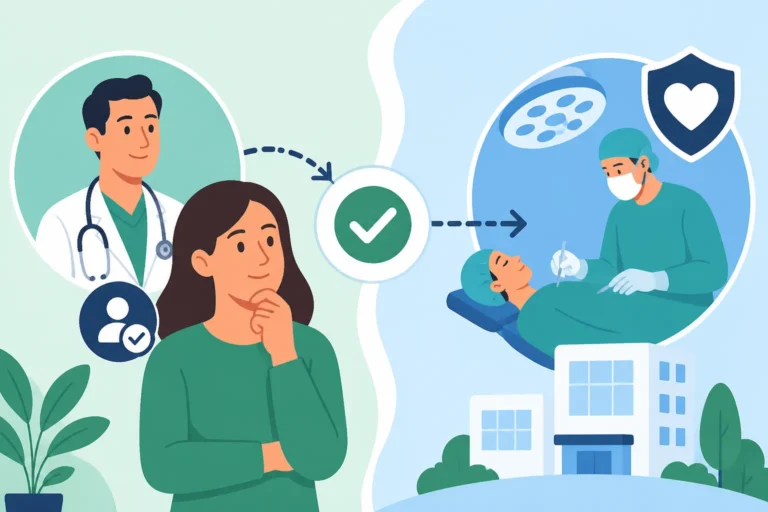
After the TLK has confirmed your status, you aren't quite finished. In Lithuania, the gatekeeper of the healthcare system is the Family Doctor, or Šeimos Gydytojas. Unlike some countries where you can simply walk into a specialist's office, here you almost always need a referral.
Registering with a Poliklinika
Your next move is to choose a Poliklinika (public polyclinic). You are free to choose any clinic, but most people pick the one closest to their home for convenience. To register, you visit the registration desk (Registratūra) of your chosen clinic and fill out an application. You will be asked to choose a specific doctor. If you don't know who to pick, you can ask for a doctor who speaks English. In the larger cities like Vilnius, finding an English-speaking physician is relatively easy, but in smaller towns, it can be a challenge. You might find it helpful to read about How to Find an English-Speaking Doctor in Lithuania to understand which clinics are most expat-friendly.
Once registered, you can book appointments for routine check-ups. As an EU pensioner with an S1 form, these visits are free. The clinic will claim the costs from the Lithuanian Health Insurance Fund, which in turn bills your home country. This seamless back-end process is one of the best parts of the EU's social security coordination.
Referrals and Specialist Waiting Times
If you need to see a cardiologist, neurologist, or any other specialist, your family doctor will issue an e-referral (siuntimas). This referral is valid for 60 days. You can use this referral to book an appointment at any public institution in the country. This is a common point of frustration for expats: the waiting times. For popular specialists in the public sector, the wait can be several weeks or even months.
If you find the wait too long, you have the option to visit a private clinic. However, keep in mind that the S1 form generally does not cover private healthcare costs. If you choose to go private, you will pay the full market rate unless you have a supplementary policy like SafetyWing or a specific local private insurance plan. Many retirees find a "hybrid" approach works best—using the public system for chronic care and expensive surgeries, while using private clinics for faster diagnostics or specialized consultations. You can learn more about this in our guide on Public vs Private Healthcare in Lithuania: Which Should Expats Choose?.
Pharmacy and Medication Subsidies
Prescription medications are handled via the Understanding the Electronic Prescription (E-Receptas) System in Lithuania. When your doctor prescribes something, they enter it into the system, and you simply go to any pharmacy (Vaistinė) and show your ID. As an EU pensioner, you are eligible for the same "compensated" (subsidized) medicines as Lithuanian pensioners. This can significantly reduce the cost of life-saving medications for blood pressure, diabetes, or cholesterol. The pharmacist will see the subsidy automatically on their screen. This is a massive benefit that saves retirees hundreds of euros a year compared to paying full price as a non-resident.
Common Challenges and How to Overcome Them
While the system is robust, it isn't without its quirks. One of the most frequent hurdles is the "Active Status" issue. Sometimes, a pensioner might move, register at the TLK, but then discover a few months later that their insurance has been marked as "Inactive." This usually happens because of a communication breakdown between the Lithuanian Sodra (the social insurance body) and the health insurance office in your home country.
Keeping Your Status Active
If you receive a notification that your insurance is inactive, don't panic. Usually, it requires a quick visit to the TLK or an email to your home country's social security office to re-verify that your pension is still being paid. It is also vital to keep your Declaring Your Place of Residence in Lithuania: The Complete Guide updated. If you move house within Lithuania and forget to update your address with the municipality, your healthcare link might be temporarily severed because the system thinks you have left the country.
Dealing with Language Barriers
The "administrative language" of the Lithuanian healthcare system is, of course, Lithuanian. While doctors often speak English, the receptionists at the polyclinics might not. This can make booking appointments over the phone a bit stressful. It is always wise for new retirees to try to find a clinic that offers online booking through the Sergu.lt portal or the E-Sveikata system. If that’s not an option, having a local friend or a relocation assistant help with the first few appointments can make the transition much smoother.
For those who are still worried about the initial hurdles of the Navigating the Lithuanian Healthcare System: An Expat's Roadmap (2027), remember that you are not alone. Thousands of EU citizens have successfully made this move. If the bureaucracy feels overwhelming, taking a step back and ensuring you have a safety net like SafetyWing during the first few months allows you to focus on getting settled rather than worrying about what happens if you trip on a cobblestone street in the Old Town.
Emergency Care Access
In a true emergency, you should always dial 112. Whether or not your S1 paperwork is finalized, Lithuanian hospitals are required to provide life-saving stabilization. However, without the S1 or a valid EHIC, you might receive a bill later for the services rendered. This is why the administrative step of registering with the TLK is so critical. For more details on what constitutes an emergency and how the ambulance service works, check out our article on Emergency Medical Care in Lithuania: What Every Expat Needs to Know.
Summary of Costs for EU Pensioners
While the healthcare itself is "free" at the point of service for S1 holders, there are some minor costs to keep in mind. You might pay a small registration fee at your polyclinic (usually just a few euros per year). Additionally, while many medications are subsidized, they are not always 100% free. There is often a "patient co-payment" or "premium" depending on the specific brand of medication you choose.
| Expense Category | Public System (with S1) | Private System (Out-of-Pocket) |
|---|---|---|
| GP Visit | 0 EUR | 40 – 70 EUR |
| Specialist Visit | 0 EUR (with referral) | 60 – 120 EUR |
| Major Surgery | Covered by PSDF | 2,000 – 10,000+ EUR |
| Basic Blood Tests | 0 EUR | 15 – 50 EUR |
| Emergency Room | 0 EUR | Variable / 100+ EUR |
If you are curious about more specific pricing, especially for things like dental work which isn't always fully covered by the public fund, you can read The Cost of Healthcare in Lithuania: A Complete Breakdown for Foreigners (2026). Generally, most retirees find that the savings they make on healthcare in Lithuania compared to the UK, Ireland, or Germany are substantial enough to significantly improve their quality of life.
Disclaimer
This guide is for informational purposes only and does not constitute legal or medical advice. Healthcare regulations and EU coordination rules can change. Always verify the latest requirements with the Lithuanian Migration Department, the Territorial Health Insurance Fund (TLK), and your home country's social security office before making relocation decisions.