Can I Use My Lithuanian Health Insurance When Travelling in the EU?
One of the most common worries when you finally get your head around the Lithuanian healthcare system is, "What happens when I leave?" It's a valid concern! We expats often navigate the public health insurance (PSD) system, get our shiny new asmens kodas, and then wonder if all that effort was only for within Lithuania's borders. This guide is here to clear up that confusion, specifically regarding your Lithuanian health insurance coverage when you venture out into other EU countries.
Understanding Your Lithuanian Health Insurance for EU Travel
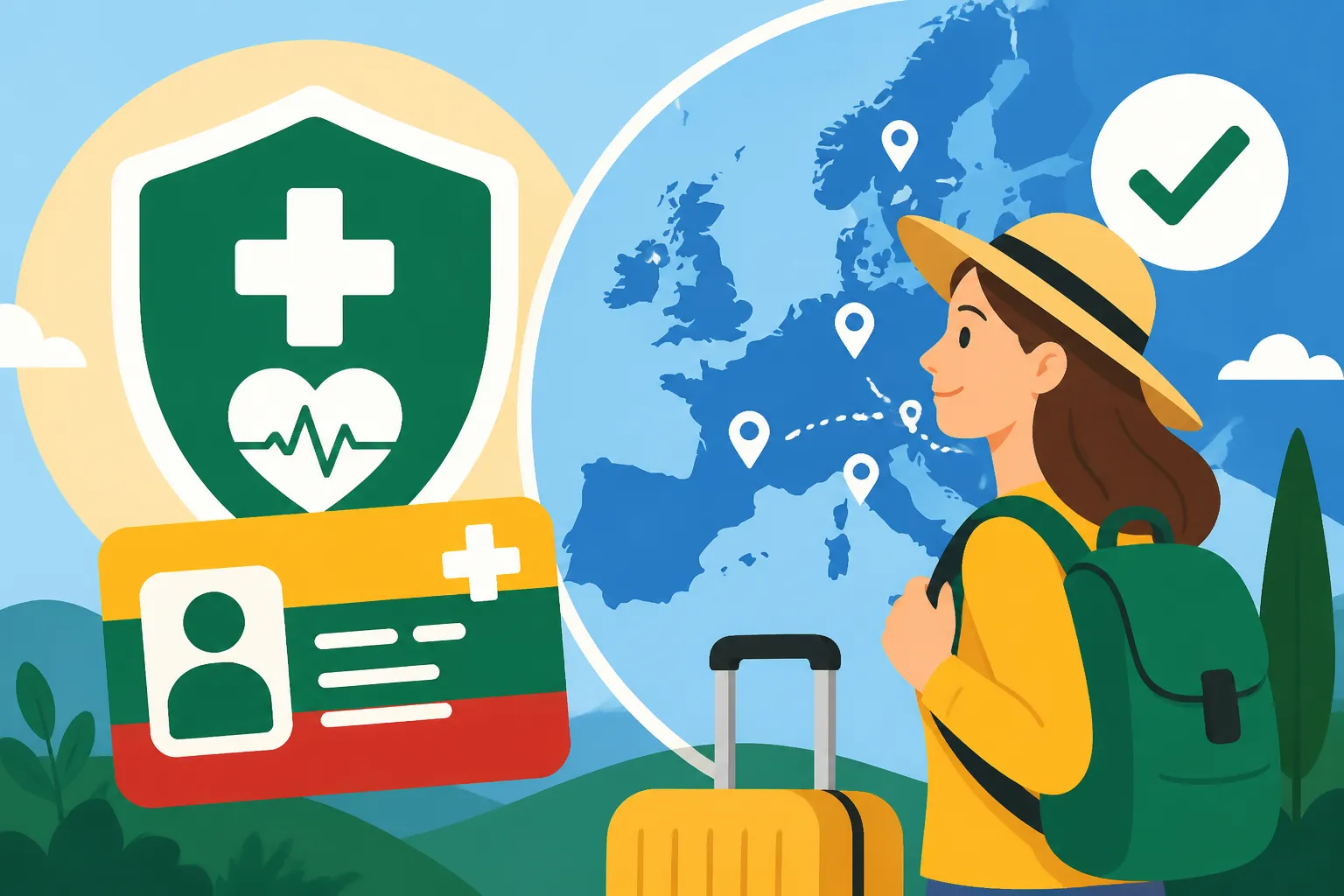
Let's get straight to it: if you're registered with Lithuania's Compulsory Health Insurance (PSD) scheme, which is managed by the National Health Insurance Fund (VLK/PSDF), you absolutely do have a safety net for emergency and necessary medical care when you travel within the European Union (EU), European Economic Area (EEA), and Switzerland. This isn't some complex, secret system; it's facilitated by a pretty well-known document: the European Health Insurance Card, or EHIC.
But here’s the crucial part, and where many people get tripped up: your Lithuanian health insurance isn't a magic wand that gives you access to free healthcare anywhere in Europe. It simply ensures that you receive healthcare under the same conditions and at the same cost as a national of the country you're visiting. This could mean free care, or it could mean paying a patient co-payment that local residents would also pay. It's vital to understand this distinction to avoid nasty surprises. Think of it as your passport to equal treatment, not a free pass.
What is the EHIC and How Does it Work?
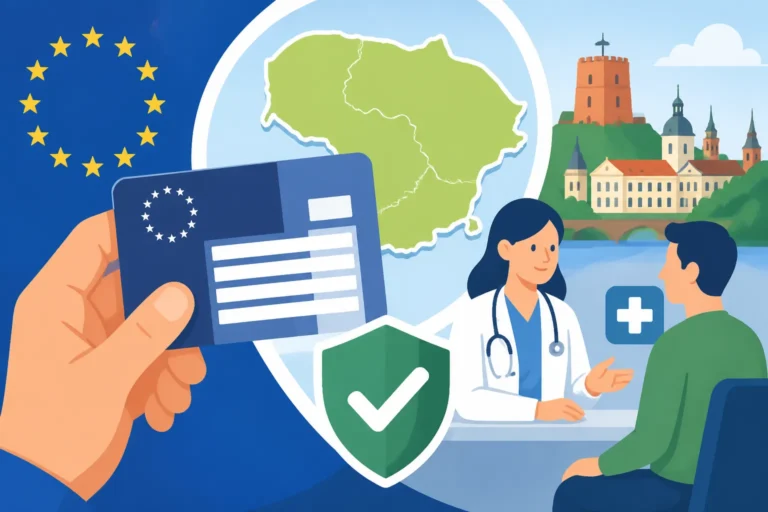
The European Health Insurance Card (EHIC) is a physical card that proves you are covered by public health insurance in an EU/EEA country or Switzerland. When you travel to another participating country and need medical attention, you present this card to a public healthcare provider. The system is designed to allow you to access "medically necessary" care, which means any treatment that cannot reasonably wait until you return home.
Let’s imagine a scenario: You’re enjoying a lovely autumn weekend in Paris, strolling along the Seine, and suddenly you slip on a wet pavement and twist your ankle. Ouch! If you have your Lithuanian EHIC, you wouldn't necessarily need to pay for a private doctor upfront. Instead, you'd head to a public hospital or clinic, present your EHIC, and you'd be treated under the same terms as a French citizen. If French citizens pay a small co-payment for emergency room visits or consultations, so would you. If it's free for them, it's free for you. This covers unexpected illnesses or accidents, but it's not for planned treatments or seeking out a specific doctor for a non-urgent condition. It's about ensuring your health doesn't take a nosedive just because you're away from home.
The EHIC simplifies things significantly because it means you don't have to deal with complicated insurance claim forms or seek reimbursement from your Lithuanian health fund later, if the treatment was fully covered by the local public system. It's a direct route to care. However, it's essential to understand that this card applies to state-provided healthcare, not private facilities. Many tourist destinations have a mix of public and private options, and without clarification, you might inadvertently end up in a private clinic that won't accept your EHIC.
Who is Eligible for an EHIC in Lithuania?
Eligibility for a Lithuanian EHIC is pretty straightforward: you must be covered by the compulsory health insurance (PSD) system in Lithuania. This means if you are:
- Employed in Lithuania: Your employer contributes to Sodra, and you're covered.
- Self-employed (Individuali Veikla, MB, etc.): You make your own PSD contributions through Sodra.
- A student: If you're studying in Lithuania and registered for PSD.
- A pensioner: Receiving a Lithuanian pension.
- A dependent family member: If you're a spouse or child registered under someone else's PSD coverage.
- Voluntarily insured: If you're not working but living in Lithuania and choose to pay PSD contributions yourself.
Basically, if you have active health insurance coverage through the Lithuanian state system, you are entitled to an EHIC. It’s not an additional insurance policy; it’s proof of your existing PSD coverage abroad. So, if you're like many expats, meticulously Registering for Compulsory Health Insurance (PSD) in Lithuania (2027) or Understanding PSD Contributions Through Sodra in Lithuania, then rest assured, you're on the right track for EHIC eligibility.
How to Apply for Your Lithuanian EHIC
Getting your EHIC in Lithuania is thankfully not one of the administrative hurdles that will make you want to pull your hair out. It's a relatively simple process.
- Check your eligibility: As mentioned, you need to be actively covered by PSD. If you've just moved here, or there's a gap in your employment, make sure your How to Register for Compulsory Health Insurance (PSD) as a Foreigner in Lithuania is sorted.
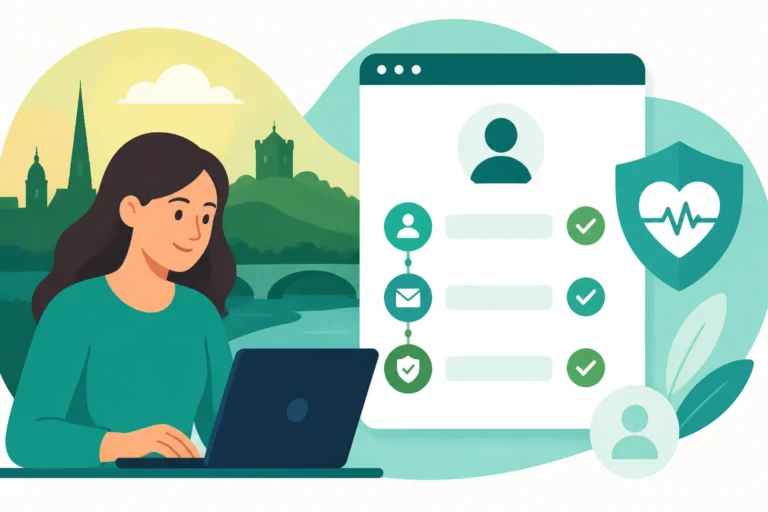
- Apply through VLK: The National Health Insurance Fund (Valstybinė ligonių kasa, or VLK) is responsible for issuing EHIC cards. You can apply directly through their portal (e-Government gateway, Elektroniniai Valdžios Vartai) or in person at one of their territorial patient funds (Teritorinės ligonių kasos – TLK) offices.
- Required Documents: Usually, you'll need your passport or ID card and your asmens kodas. Sometimes, proof of your PSD contributions might be requested, but if you're regularly employed, the system should show your active status. You can apply online via the e-Sveikata portal or by visiting a TLK office in Vilnius, Kaunas, Klaipėda, Šiauliai, or Panevėžys.
- Wait for it: Once applied, the card is typically issued and mailed to your declared residence within 7-10 working days. If you're in a real hurry, some TLK offices might be able to issue it on the spot or offer a temporary certificate.
Always make sure your EHIC is valid before you travel! It has an expiration date, usually tied to the duration of your residence permit or employment contract. Don't be that person scrambling at the last minute because your card expired. Trust me, I've seen it happen.
Limitations of the EHIC: When Public Isn't Enough
While the EHIC is an absolute blessing and a fundamental right for anyone covered by a state health insurance system in the EU, it's crucial to understand its limitations. This isn't to scare you, but to give you a realistic picture, because being prepared beats being surprised by an unexpected bill any day.
Understanding "Medically Necessary" Care
The term "medically necessary" is key here. It means you'll receive the treatment required to allow you to continue your stay safely until your planned return home. It does not mean you can go to another country for routine check-ups, ongoing treatment for chronic conditions (unless it's an emergency flare-up), or elective procedures you've been waiting for back home. For instance, if you have a known condition like mild asthma and travel to Spain, and your symptoms suddenly worsen due to an allergic reaction, that would be considered medically necessary. However, going to a specialist for a routine follow-up on your asthma, which could easily wait until you return to your Family Doctor (Šeimos Gydytojas) in Lithuania, wouldn't be covered.
Another common misunderstanding is around dental care. While emergency dental treatment to alleviate pain or infection might be covered, extensive dental work, like crowns or braces, definitely won't be. The EHIC isn't designed for medical tourism. It's a safety net, not a full-service health plan for your travels. If you're in a situation where you need Emergency Medical Care in Lithuania: What Every Expat Needs to Know with your PSD, the EHIC functions similarly abroad, but only for the essentials.
Costs Not Covered by EHIC
This is where the financial risk comes in, and why many seasoned travellers, especially expats who understand the nuances of public healthcare, opt for additional coverage. The EHIC does not cover:
- Private healthcare providers: This is a big one. If you walk into a private clinic or hospital, your EHIC will likely be politely declined. While public hospitals are widely available in the EU, in some areas or for certain specialties, private options might be more accessible or offer shorter waiting times. If you choose a private provider, you're usually on the hook for the full cost.
- Repatriation: This is a major gap. If you suffer a serious accident or illness and need to be transported back to Lithuania (or your home country) via a special medical flight or ambulance, the EHIC will not cover these costs. This can amount to tens of thousands of euros.
- Lost or stolen property: Your medical insurance is just that – medical. It won't help you if your luggage goes missing or your passport is stolen.
- Trip cancellation or interruption: If you have to cancel your trip due to illness, or cut it short, the financial losses from non-refundable flights or accommodation are not covered by the EHIC.
- Search and rescue: If you go hiking and get lost, and need a search and rescue operation, the EHIC won't cover it.
- Patient co-payments: As mentioned earlier, if local citizens pay a portion of their medical costs (e.g., a fixed fee for a doctor's visit, a percentage of hospital costs, or prescription charges), you will too. These costs can add up, especially for longer hospital stays or multiple visits.
This list alone should be enough to highlight why relying solely on your EHIC for international travel, especially within the EU, can be a gamble.
The Importance of Private Travel Insurance
Given the EHIC's limitations, especially the lack of coverage for repatriation and private medical care, private travel insurance becomes not just an option, but a prudent necessity for many. This is particularly true for expats and digital nomads who might travel more frequently, work remotely, or simply want comprehensive peace of mind.
Private travel insurance steps in where the EHIC leaves off. It offers coverage for:
- Emergency medical expenses: Beyond what the EHIC might cover, including private hospitals if needed.
- Medical evacuation and repatriation: This is probably the biggest selling point. If you break your leg skiing in Austria and need to be flown home, private insurance covers it.
- Trip cancellation/interruption: Reimburses you for non-refundable expenses if your trip is unexpectedly cut short or cancelled.
- Lost or delayed luggage: Provides compensation for lost items or essential purchases if your bags are delayed.
- Personal liability: Covers you if you accidentally injure someone or damage property while abroad.
For those of us who live an international lifestyle, a good travel insurance policy is often as essential as your passport. For example, some long-term travelers and digital nomads find value in flexible plans offered by providers like SafetyWing, which can be particularly handy if your travel plans are fluid or you're unsure how long you'll be in a given location. These types of plans are designed with the expat lifestyle in mind, often covering you in multiple countries over extended periods. Even if you only travel a couple of times a year, a solid annual multi-trip policy can save you a world of stress and money. While your Lithuanian PSD ensures your basic rights with the EHIC, adding private insurance provides the comprehensive safety net you truly need for comfortable and worry-free travel.
Practical Advice for EU Travel with Lithuanian Health Insurance
Being prepared is half the battle when it comes to healthcare abroad. As an expat, you're already used to navigating administrative labyrinths, so consider this just another layer of smart planning.
Before You Go: Preparation is Key
Before you even start packing, take a few crucial steps to ensure you're ready for any medical eventuality:
- Apply for or check your EHIC: Make sure your Lithuanian EHIC is valid for the entire duration of your trip. If it's expired or you don't have one, apply for it well in advance through the VLK as discussed earlier. Don't forget, if you're newly covered under How Lithuania's Health Insurance Fund (VLK/PSDF) Works: A Full Overview, it takes a little time to process.
- Understand the local healthcare system: Quickly research the healthcare system in your destination country. Are there significant co-payments? Is public and private care clearly distinguishable? Knowing this beforehand helps you make informed decisions if you need care. For instance, in some countries, pharmacies (Vaistinė) are the first point of contact for minor ailments, just like in Lithuania.
- Consider private travel insurance: Seriously, do it. Especially if you're traveling beyond a quick city break, or if you're engaging in activities that carry a higher risk. Look into policies that cover repatriation, trip cancellation, and ideally, provide 24/7 assistance. Providers like SafetyWing offer flexible plans, which can be useful for longer trips or if you travel frequently.
- Pack essential medications: If you take prescription medications, bring enough for your entire trip, plus a few extra days' supply, along with the prescription from your Lithuanian doctor. Also, pack a basic first-aid kit with pain relievers, plasters, and any personal allergy medications.
- Know your medical history: Carry a small card or note with your essential medical information: blood type, allergies, chronic conditions, and current medications. In an emergency, this can be invaluable.
- Inform your Lithuanian family doctor (if applicable): If you have a chronic condition and are traveling for an extended period, it might be a good idea to inform your The Expat Guide to Finding a Family Doctor (Šeimos Gydytojas) in Lithuania about your travel plans, in case they need to send information or you need to consult them remotely.
During Your Trip: What to Do if You Need Medical Care
Accidents and illnesses don't take vacations, unfortunately. If you find yourself needing medical attention while abroad, here’s a step-by-step approach:
- Assess the urgency: Is it a life-threatening emergency? Call the local emergency number (which is 112 across the EU, just like in Lithuania) immediately.
- Locate public healthcare: For non-emergencies, seek out a public hospital or clinic. Ask your hotel, local tourist information, or do a quick online search for "public hospital near me" or "centro de salud" (in Spain), "médecin généraliste" (in France), etc.
- Present your EHIC: When you register at the medical facility, present your Lithuanian EHIC and your ID. Make it clear you are seeking public healthcare.
- Understand the costs: Ask about any potential co-payments or patient fees before receiving extensive treatment. While the EHIC grants you access under local terms, it's always good to clarify.
- Keep documentation: Always ask for a copy of your medical records, prescriptions, and all receipts, even if you don't pay anything upfront. These documents are crucial if you need to seek reimbursement later, or for your follow-up care back in Lithuania.
- Contact your private insurer (if you have one): If you have private travel insurance (which I highly recommend, especially after hearing too many expat horror stories), contact their 24/7 assistance line as soon as possible. They can guide you to appropriate facilities, handle direct billing, and arrange for things like medical evacuation if needed. This is where a company like SafetyWing really earns its stripes, by offering that direct support.
After Your Trip: Reimbursements and Follow-ups
Even with an EHIC, you might find yourself paying out of pocket for some services or co-payments. Don't worry, there's a process for reimbursement:
- Reimbursement from local authorities: In some cases, if you had to pay upfront for medically necessary public healthcare, you might be able to claim reimbursement directly from the national health insurance institution of the country you visited. This can be a bit bureaucratic, but it's an option.
- Reimbursement through VLK: Alternatively, you can seek reimbursement from the Lithuanian National Health Insurance Fund (VLK) upon your return. You'll need to submit all original receipts, medical reports, and proof of payment. They will reimburse you based on Lithuanian tariff rates for equivalent services. If the treatment would have been free in Lithuania, you'd be reimbursed for the full amount paid abroad (up to the Lithuanian cost). If there are co-payments in Lithuania, they'll apply the same principle.
- Follow-up with your doctor: Once back in Lithuania, schedule a follow-up with your How to Choose and Register with a Family Doctor (Šeimos Gydytojas) in Lithuania to share your medical records from abroad and discuss any further care you might need. The Lithuanian E-Sveikata (E-Health) System in Lithuania might eventually integrate with some EU systems, but for now, physical documents are your best bet.
Remember, it’s all about documentation. Keep everything!
EHIC vs. Private Travel Insurance: A Quick Comparison
To help you decide, here’s a simple table comparing the key aspects of your Lithuanian EHIC and a typical private travel insurance policy.
| Feature | Lithuanian EHIC (via PSDF) | Private Travel Insurance (e.g., SafetyWing) |
|---|---|---|
| Coverage Area | EU, EEA, Switzerland | Typically worldwide (check policy) |
| Eligibility | Active PSD contributions in Lithuania | Purchase required, usually no pre-existing health requirements (check terms) |
| Medical Necessity | Covers "medically necessary" care only (unexpected illness/accident) | Covers emergency medical treatment, usually broader definition |
| Treatment Access | Public healthcare providers only, under local terms | Public and private providers, often with direct billing |
| Repatriation | Not covered | Usually covered (medical evacuation back home) |
| Patient Co-payments | You pay local co-payments | May have a deductible (excess) but often covers full remaining costs |
| Planned Treatment | Not covered | Not covered (unless explicitly stated, e.g., for chronic condition travel) |
| Trip Cancellation | Not covered | Often covered |
| Lost Luggage | Not covered | Often covered |
| Personal Liability | Not covered | Often covered |
| Cost | Free (included with your PSD) | Varies by policy, duration, and coverage level |
Disclaimer
The information provided in this article is intended for general guidance and informational purposes only, and does not constitute legal, financial, or medical advice. While we strive to provide accurate and up-to-date information, regulations and procedures in Lithuania and other EU countries can change. Always consult with the official Lithuanian National Health Insurance Fund (VLK), the Migration Department (MIGRIS), or a qualified insurance professional for personalized advice regarding your specific situation before making any decisions related to your health insurance or travel plans.