How Long Are Specialist Waiting Lists in the Lithuanian Public System?
Getting sick in a foreign country is stressful enough without the added headache of navigating a bureaucratic medical system. If you have been living here for a while, you likely know the drill: you visit your family doctor, get a referral, and then hit a wall of "no available appointments" for months. This guide solves the mystery of the Lithuanian public specialist waiting lists, providing realistic timelines and actionable strategies to get the care you need without the endless wait.
The Reality of Specialist Waiting Lists in the Lithuanian Public System
When you first dive into the Lithuanian healthcare system, it is important to understand that while it is highly functional, it is also heavily centralized and often overburdened. The public system is funded by the Mandatory Health Insurance Fund, which most residents contribute to through their monthly taxes. Because the care is essentially free at the point of service for those with valid insurance, the demand for specialists—from cardiologists to neurologists—is incredibly high.
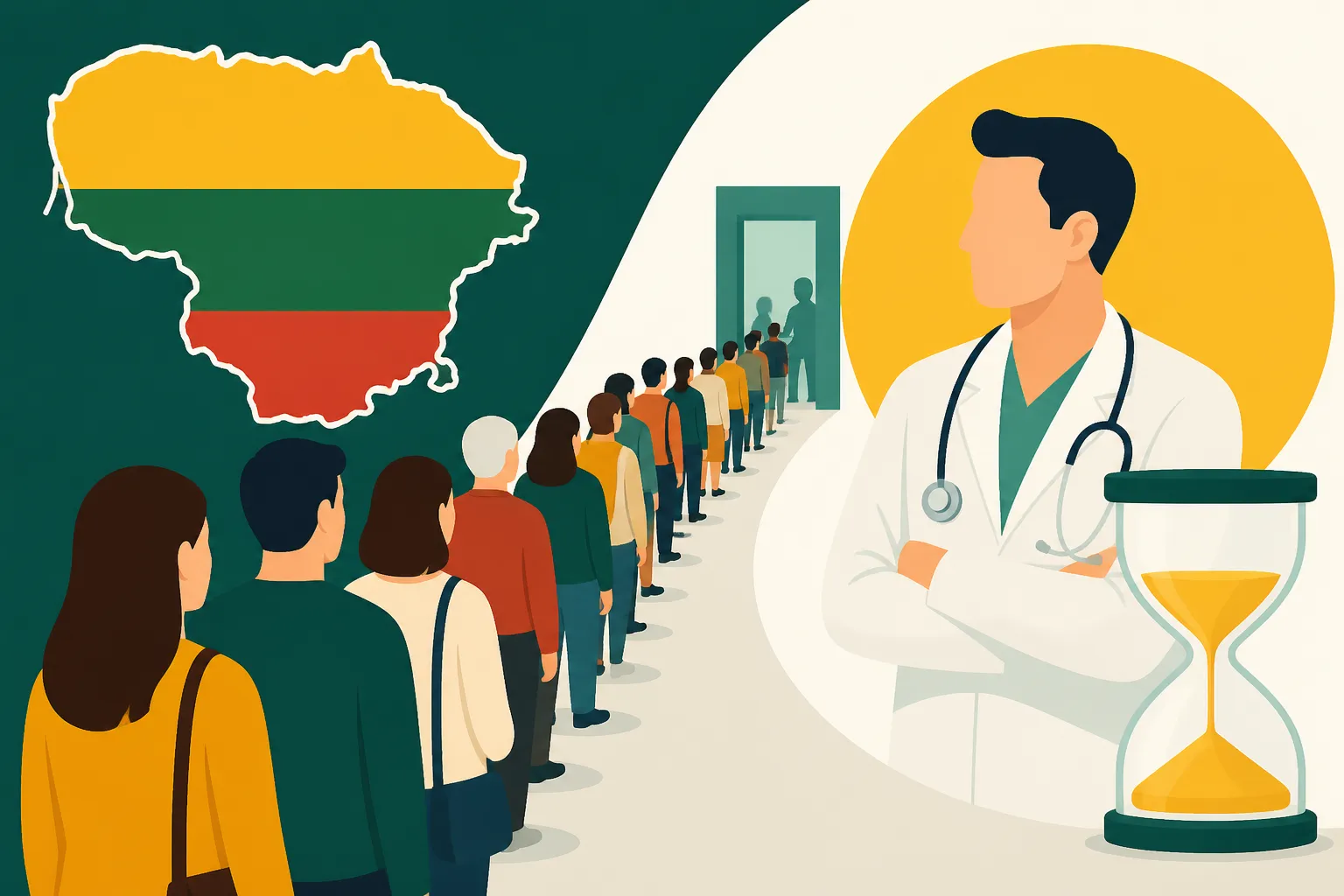
Generally, wait times can fluctuate wildly based on the specific specialty. If you are looking for a routine check-up with a dermatologist, you might find an opening within two to three weeks. However, if you need to see an endocrinologist or a cardiologist in a major city like Vilnius or Kaunas, you could be looking at a wait time of two to four months. This is often the biggest culture shock for expats who come from countries with either entirely private systems or more decentralized public ones. I remember when I first needed a consultation with a gastroenterologist; the first polyclinic I called told me the next available slot was seventy days away. It felt like an eternity, but as I learned more about the system, I realized there are ways to navigate these timelines.
The pressure on the system often stems from the fact that Lithuania has a high ratio of doctors per capita, but they are concentrated in a few tertiary care centers. While The Complete Guide to Healthcare in Lithuania for Expats (2027) offers a broad look at the landscape, the specialist bottleneck is a specific pain point that requires its own set of survival skills. You are competing with the entire local population for slots in the most popular public clinics, which are often the ones attached to the major universities.
Understanding the PSDF and Public System Pressure
The Compulsory Health Insurance Fund, known locally as the PSDF, is the backbone of the system. To understand why lists are long, you have to understand How Lithuania's Health Insurance Fund (VLK/PSDF) Works: A Full Overview. Essentially, the government sets quotas for how many consultations a specific clinic can provide under the public insurance scheme. Once a clinic hits its monthly quota for public patients, they often stop offering "free" slots until the next funding cycle begins, even if the doctors themselves have open hours.
This creates a "first-come, first-served" race at the beginning of every month. For many expats, this feels like an outdated way to manage health, but it is a fiscal reality of the system. If you are a newcomer waiting for your residency paperwork to clear, you might find yourself in a gap where you aren't yet covered by the PSDF. In these cases, having a flexible plan like SafetyWing can be a lifesaver, providing a safety net for emergencies or urgent specialist needs while the local bureaucracy grinds on. SafetyWing is particularly popular among digital nomads in Vilnius who haven't yet committed to the full local tax registration.
Furthermore, the public system's documentation is rigorous. Every specialist visit must be justified by a primary care provider. This prevents people from self-diagnosing and jumping into specialist queues, but it also adds an extra layer of appointments you must navigate before even getting on a waiting list.
The Regional Divide Vilnius and Kaunas vs Smaller Towns
One of the most effective strategies for reducing your wait time is to look outside the "big two" cities. Vilnius and Kaunas host the country's most prestigious medical universities and hospitals, such as Santaros Klinikos and Kauno Klinikos. Naturally, everyone wants to be treated there. The result? Waiting lists that stretch into next season.
However, if you are willing to drive an hour to a city like Ukmergė, Alytus, or even Panevėžys, you might find that the wait time for the exact same specialist is cut in half. The public system is national, meaning your referral from a doctor in Vilnius is perfectly valid at a polyclinic in a smaller town.
Living in the capital often gives us a bit of a "Vilnius bubble" mentality, but the regional polyclinics are often modern, well-equipped, and much less crowded. If you have a car and the time, expanding your search geographically is the single best way to beat the waiting list system. It is also worth noting that for those still transitioning or traveling, SafetyWing offers international coverage that doesn't restrict you to specific municipal boundaries, which can be a relief if you are constantly on the move between Lithuanian cities.
How the Referral System Impacts Your Wait Time
The gatekeeper of the Lithuanian healthcare system is the Šeimos Gydytojas, or family doctor. You cannot simply walk into a cardiologist's office and ask for a public appointment. You must first have an electronic referral, known as a siuntimas. This referral is valid for a specific period—usually 30 or 60 days—and it dictates which "level" of specialist you can see.
The family doctor also has the power to mark a referral as "urgent." If there is a clinical reason why you cannot wait three months—such as acute pain or a rapidly progressing condition—your doctor can flag the referral. This doesn't magically create a slot, but it does allow registration desks to prioritize you if a cancellation occurs. It is vital to be very clear with your family doctor about the severity of your symptoms. Many expats tend to downplay their pain out of politeness, but in the Lithuanian system, being your own advocate is essential.
Knowing How to Choose and Register with a Family Doctor (Šeimos Gydytojas) in Lithuania is the first step in this journey. A good doctor who speaks your language and understands your medical history will be much more effective at navigating the referral process for you.
The Role of the Family Doctor in Prioritization
Your family doctor is more than just a person who writes prescriptions; they are your navigator through the bureaucratic woods. When they issue a referral, it enters the Understanding the E-Sveikata (E-Health) System in Lithuania portal. This digital record is what every specialist in the country will look at.
If your doctor believes your case is routine, you will be placed on the standard list. However, for chronic conditions or specialized treatments, the doctor can sometimes provide advice on which specific clinic has the shortest queues. They often have internal knowledge of which hospitals are currently "over-quota" and which ones are still taking patients. It pays to ask them directly: "Where is the shortest wait for this specialty right now?"
For those who are self-employed or freelancers, sometimes the delay in getting that initial family doctor appointment can be the first hurdle. If you are in the process of setting up your local insurance, SafetyWing can provide that interim security, ensuring that if something urgent happens before you can see a family doctor, you aren't left paying massive out-of-pocket hospital bills.
Navigating the Siuntimas Referral Process
The siuntimas is essentially your golden ticket. Once it is issued, it is visible in the e-health system. You can then use the central registration portal (sergu.lt or ipr.esveikata.lt) to search for openings. This is where the real work begins. The portal allows you to filter by city, by clinic, and by specialist name.
A common mistake is looking only at the "Poliklinika" (the local community clinic) where you are registered. In reality, you can take your referral to any public or private clinic that has a contract with the Territorial Health Insurance Fund (TLK). This is a crucial distinction. Many private clinics actually take public patients for certain specialist services, though you might still have to pay a small "administrative" or "materials" fee.
Understanding How E-Referrals (Siuntimas) Work for Specialists in Lithuania can save you hours of frustration. The digital nature of the referral means you don't need a physical paper; you just need your Asmens Kodas (personal code) when you call or book online.
| Specialty | Average Wait (Vilnius/Kaunas) | Average Wait (Regional) | Urgent Priority Wait |
|---|---|---|---|
| Cardiology | 8–12 Weeks | 3–5 Weeks | 1–5 Days |
| Dermatology | 2–4 Weeks | 1 Week | 1–3 Days |
| Neurology | 10–14 Weeks | 4–6 Weeks | 2–7 Days |
| Endocrinology | 12–16 Weeks | 5–8 Weeks | 3–10 Days |
| Ophthalmology | 4–6 Weeks | 2 Weeks | 1 Day |
Tools and Strategies to Find Sooner Appointments
If the online portal shows no slots, do not give up. The digital system is often a few hours behind the actual reality of the clinic's schedule. The most seasoned expats in Lithuania know that "the system" is only one part of the story; the other part is human interaction and persistence.
One of the most effective tools at your disposal is the Išankstinė pacientų registracija (IPR) system. It is a centralized website where you can see wait times across the entire country. However, many clinics only release their slots for the following month on a specific day (e.g., the last Friday of the month). Knowing when your preferred clinic "drops" their new appointments is like trying to get concert tickets—you need to be online and ready the moment they go live.
If you find the public system too opaque, you might want to look into Public vs Private Healthcare in Lithuania: Which Should Expats Choose? to see if the cost of a private visit outweighs the stress of the wait. For those who travel frequently, SafetyWing offers a bridge, allowing you to access care globally while you wait for your turn in the Lithuanian public queue.
Using E-Sveikata to Compare Clinic Wait Times
The E-Sveikata portal is quite comprehensive if you know how to use it. When you log in, you can see all your medical records, but the registration function is where the power lies. You can search for a "Consultation with a Specialist" and it will list every clinic in the country that offers that service under the PSDF.
The system will show you the "first available" date for each clinic. Use this as a comparative tool. If the Antakalnis Poliklinika in Vilnius shows 60 days, but the Šeškinė Poliklinika shows 40, you’ve already saved yourself nearly three weeks. The interface is primarily in Lithuanian, so using a browser with a built-in translator is highly recommended for newer expats.
Also, check the Understanding the Electronic Prescription (E-Receptas) System in Lithuania if you are only seeing a specialist to renew a long-term medication. Sometimes, your family doctor can extend a specialist’s prescription for a few months while you wait for your formal consultation, preventing a gap in your treatment.
The Secret of the Morning Call and Cancellations
This is the "old school" tip that still works better than any app. Patients cancel appointments every single day. Most polyclinics have a registration desk that opens at 7:00 AM or 7:30 AM. If you call right when they open and ask if there have been any cancellations for the day, you can often snag a slot that was vacated just minutes prior.
It requires patience and potentially a Lithuanian-speaking friend if your language skills aren't quite there yet, but some people have reported getting same-day appointments with specialists that officially had a three-month waiting list. Another trick is to go to the clinic in person. There is a psychological element where it is harder for a receptionist to say "no" to a polite, persistent person standing in front of them than to a voice on the phone.
If the thought of calling clinics every morning sounds like a nightmare, this is exactly why many foreigners investigate Understanding Private Health Insurance Plans in Lithuania. Having private insurance or a robust travel medical plan like SafetyWing means you can simply book a private appointment for the next day and let the insurance company handle the costs, bypassing the "morning call" ritual entirely.
Comparing Public Wait Times with Private Alternatives
At some point, you have to ask yourself: what is my time and health worth? In Lithuania, the private medical sector is booming, and the quality of care is exceptionally high. Clinics like Kardiolita, InMedica, or Northway offer specialist appointments often within 24 to 48 hours.
The cost for a private specialist consultation typically ranges from 50 to 120 Euros. For many expats, this is a reasonable price to pay to avoid a three-month wait, especially for non-critical but life-disrupting issues like chronic back pain or skin conditions. However, keep in mind that the consultation is just the beginning. Private diagnostic tests (MRIs, CT scans) can run into the hundreds or thousands of euros.
This is where the debate of Is Private Health Insurance Worth It for Expats in Lithuania? becomes relevant. If you are someone who prefers immediate answers, private care is the way to go. SafetyWing can be a great companion here as well; while it is primarily designed as travel medical insurance, it covers unexpected illnesses and accidents that might require you to seek private specialist care urgently.
When to Skip the Line and Pay Out of Pocket
You should consider paying for a private visit if:
- Diagnostic Speed is Critical: If you have a lump or a neurological symptom that needs an immediate scan.
- Language Barriers: Private clinics almost universally have English-speaking staff and doctors.
- Work Schedule: Public polyclinics often have rigid hours that require you to take half a day off work. Private clinics often have evening and weekend slots.
Once you have a private diagnosis and a treatment plan, you can sometimes "hop" back into the public system for long-term treatment or expensive surgeries. However, this transition isn't always seamless, so it’s good to check How Much Private Health Insurance Cost in Lithuania in 2026? to see if a full private plan might be more cost-effective for your lifestyle.
Integrating Private Health Insurance for Peace of Mind
For those who are not covered by the PSDF (like some non-EU digital nomads or those on certain visa types), private insurance isn't just a luxury—it's a necessity. Even for those with public coverage, a "top-up" private policy can cover the costs of these private specialist visits.
Many employers in the Lithuanian fintech and IT sectors provide private health insurance as a perk. If you are job hunting, this is a benefit you should absolutely negotiate for. It effectively eliminates the "waiting list" problem from your life. If your employer doesn't provide it, or you are working remotely for a foreign company, a global plan like SafetyWing provides that essential layer of protection that travels with you, whether you are in a Vilnius polyclinic or traveling back home.
Practical Tips for Managing Your Healthcare Journey
Navigating the specialist lists is a marathon, not a sprint. To make the process smoother, always keep a digital folder of your medical history, including any previous scans or blood tests from your home country. Having these ready can sometimes save the specialist from ordering repeat tests, which would require even more waiting.
Always verify your insurance status before making an appointment. You can check this on the VLK website by entering your Asmens Kodas. If it shows as "uninsured," you will be charged the full private rate at a public polyclinic, which can be a nasty surprise at the reception desk.
Knowing Your Rights as a Patient in Lithuania
As a resident, you have the right to choose your healthcare provider. You are not shackled to the clinic nearest your house. You also have the right to a second opinion, though this will usually require a new referral and a new wait.
If you feel a wait time is dangerously long, you can contact the Territorial Health Insurance Fund (TLK) to inquire about "maximum wait time" guarantees. Lithuania has been working on implementing more stringent standards for how long a patient can be expected to wait for critical services, though these are often still "goals" rather than hard laws.
Ultimately, the Lithuanian system is a mix of high-tech digital solutions and old-school persistence. By using the e-Sveikata portal, looking at regional options, and keeping a backup plan like SafetyWing for those "in-between" moments, you can ensure that you get the specialist care you need without spending your whole year in a waiting room.
Disclaimer
The information provided in this guide is for informational purposes only and does not constitute legal or medical advice. Healthcare regulations, waiting list durations, and insurance requirements in Lithuania are subject to change. Always consult with the official Migration Department (MIGRIS), the National Health Insurance Fund (VLK), or a qualified medical professional to verify current procedures and your personal eligibility for care. Any reliance on the information in this article is at the reader's own risk.