Can I Become a Lithuanian Citizen Without Giving Up My Passport?
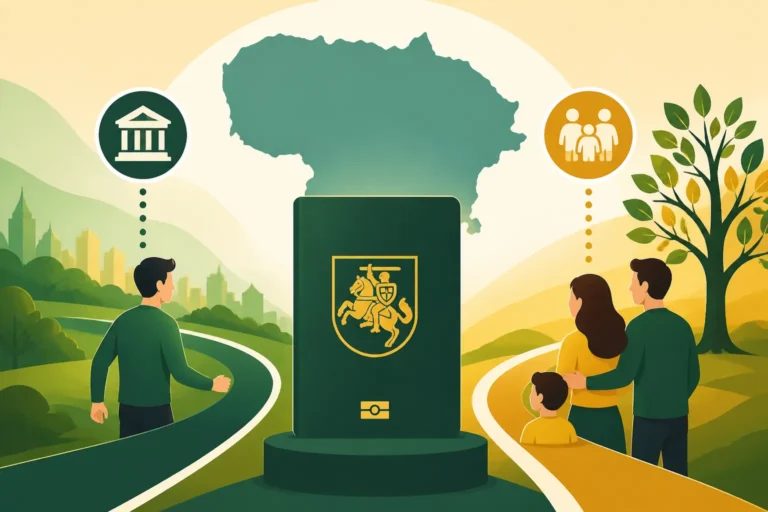
It’s a common dilemma, isn't it? You’ve settled into life in Lithuania, fallen in love with its charm, perhaps built a career, and now you’re contemplating the long-term commitment of citizenship. But then the question hits you: what about your original passport? For many, the thought of giving up their birthright citizenship feels like losing a part of themselves, and the rules around dual nationality in Lithuania can be incredibly confusing and, frankly, quite disheartening. This guide aims to clear up that confusion, diving deep into the nuances of Lithuanian dual citizenship, its strict general rule, and the very specific exceptions that might apply to your unique situation.
The General Rule: Lithuania's Strict Stance on Dual Citizenship
Let's get this out of the way upfront: Lithuania, as a rule, does not permit dual citizenship. I know, I know. It's a tough pill to swallow for many of us who've lived abroad, especially coming from countries where having two passports is completely normal. Many of us arrive from places like the US, Canada, or Australia, where the idea of giving up your birth citizenship is simply alien. When you’ve built a life here, perhaps put down roots, or even used services like Sirelo to help you make the big move, this can feel like an unfair obstacle.
The reasoning behind this strict stance is deeply rooted in Lithuania's history. After regaining independence from the Soviet Union, there was a strong desire to solidify national identity and ensure loyalty to the newly re-established state. The idea was to prevent situations where individuals might have divided loyalties, particularly given the volatile geopolitical landscape of the past century. So, while it might seem frustratingly bureaucratic today, it's a policy born from a very specific historical context.
What this means in practice is that if you apply for Lithuanian citizenship through naturalisation, you will almost certainly be asked to renounce your current citizenship. This is often the biggest hurdle for long-term residents and expats. The process requires a formal declaration that you will give up your other nationality upon acquiring Lithuanian citizenship. It’s not just a formality; the Migration Department takes this very seriously. They expect proof that you have either renounced or are in the process of renouncing your prior citizenship once your Lithuanian application is approved in principle. This can be a lengthy and often costly process depending on your home country's laws, adding another layer of complexity and stress to an already significant life decision.
Key Exceptions to the Dual Citizenship Ban
Now, before you throw your hands up in despair, there are indeed exceptions to this general rule. These exceptions are specific, narrowly defined, and often hinge on how and when an individual acquired their second citizenship, or their specific lineage. It’s not a loophole for just anyone, but it's crucial to understand if you might fall into one of these categories. These exceptions truly highlight the complexities of Understanding Dual Citizenship Rules in Lithuania.
Citizenship Acquired at Birth
One of the most common exceptions applies to individuals who acquired dual citizenship automatically at birth. This could happen in a few scenarios:
- Born to Lithuanian citizens abroad: If you were born outside Lithuania to at least one parent who was a Lithuanian citizen, you automatically acquire Lithuanian citizenship. If the country you were born in also granted you citizenship by jus soli (right of soil, i.e., simply by being born there) or your other parent was a citizen of that country, then you would hold dual citizenship from birth. In such cases, you are generally allowed to retain both.
- Born in Lithuania to foreign parents: Conversely, if you were born in Lithuania to foreign parents, and your parents' home country granted you their citizenship, while Lithuania, under certain circumstances, might also consider you a citizen, this could lead to dual nationality from birth.
- Adoption: A child adopted by Lithuanian citizens who also retains foreign citizenship (e.g., if the adoption laws of the birth country or Lithuania allow it, or if the child was already a dual national) may also be an exception.
However, even with citizenship acquired at birth, there’s often a catch for minors. Children who are dual citizens by birth might be required to make a choice between their citizenships by a certain age, usually 21. If they fail to make a choice, they could risk losing their Lithuanian citizenship. It's vital to check the specific regulations applicable to your birth year and circumstances.
Restored Lithuanian Citizenship
This is a significant category for those with historical ties to Lithuania, particularly descendants of individuals who were citizens of the Republic of Lithuania before June 15, 1940, and who subsequently lost that citizenship due to various occupations and forced exiles. Many families, tragically, found themselves displaced or fleeing during the Soviet occupation.
If you are a descendant of such individuals, you may be eligible to restore your Lithuanian citizenship. The fantastic news is that, in most cases, individuals restoring their Lithuanian citizenship are not required to renounce their current citizenship. This is a profound recognition of the historical injustices faced by these families and aims to facilitate their reconnection with their heritage.
To qualify for restoration of citizenship, you need to prove your lineage to a Lithuanian citizen who held citizenship before 1940. This typically involves extensive documentation, such as birth certificates, marriage certificates, and archival records showing your ancestor's citizenship and subsequent loss of it. The process can be complex and time-consuming, but for those eligible, it offers a path to dual citizenship without the agonizing choice. You can find more details on this specific route in the guide on How to Apply for Lithuanian Citizenship Through Descent.
Other Very Specific Cases
Beyond birth and restoration, the possibilities for dual citizenship become extremely narrow:
- Exceptional Merits: In rare cases, the President of Lithuania can grant citizenship as an exception, for "exceptional merits" to the Republic of Lithuania. This is not for your average expat, but for individuals who have made truly outstanding contributions in areas like science, culture, or sports, bringing significant international recognition to Lithuania. Such grants may, at the discretion of the President, allow for dual citizenship. This is a highly selective and infrequent occurrence.
- Marriage to a Foreigner: If a Lithuanian citizen acquires citizenship of another country automatically through marriage, they might retain Lithuanian citizenship. However, if they apply for foreign citizenship (even after marriage), they are generally expected to renounce their Lithuanian citizenship. This is a subtle but critical distinction. For instance, if you're a Lithuanian citizen and marry an American, then automatically gain U.S. citizenship, you may keep both. But if you apply for U.S. citizenship, you might have to choose.
As you can see, these exceptions are quite specific. It's not about convenience or personal preference; it's about circumstances beyond one's direct control or specific historical and national interest cases.
Here’s a quick overview of the dual citizenship scenarios:
| Scenario | Dual Citizenship Allowed? | Common Conditions/Notes |
|---|---|---|
| Naturalisation by Long-Term Residence | No | Must renounce prior citizenship upon approval. |
| Citizenship Acquired at Birth (both parents/country) | Yes (often with a choice at age 21) | Acquired automatically by birth, not by application. |
| Restoration of Citizenship (pre-1940 lineage) | Yes | Proof of pre-1940 Lithuanian citizenship and loss due to specific historical events required. |
| Exceptional Merits to Lithuania | Yes (Presidential discretion) | Extremely rare, for outstanding contributions to Lithuania. |
| Automatic Acquisition via Marriage (Lithuanian citizen) | Potentially | If Lithuanian citizen automatically acquires foreign citizenship through marriage. |
| Minor Children (under 18) | Yes (if parents are dual nationals) | Often required to choose by age 21. |
Navigating the Naturalisation Process for Expats in Lithuania
For most expats like us, who don't have pre-1940 Lithuanian ancestry or didn't acquire dual citizenship at birth, the path to Lithuanian citizenship is through naturalisation. And as discussed, this path usually requires giving up your existing passport. It's a significant commitment, and it involves a long journey that starts with establishing stable residency.
The Residency Requirement
Before you can even think about citizenship, you need to prove your long-term commitment to Lithuania through legal residency. This means first securing a Temporary Residence Permit (TRP) in Lithuania (if you’re a non-EU citizen) and then progressing to Permanent Residence in Lithuania: The Complete Pathway.
Generally, to be eligible for naturalisation, you must have resided in Lithuania legally and continuously for a specified period, typically 10 years, with the last 5 years holding permanent resident status. "Continuously" usually means you haven't been outside Lithuania for more than a certain number of days per year (e.g., usually no more than 6 months in any single year, or a total of 10 months over a 5-year period). The Migration Department (MIGRIS) is very strict about these dates, so keep meticulous records of your travel.
Part of establishing your residency involves several steps, including securing your Asmens Kodas (Personal Code), which is essentially your national ID number, and registering your address. Throughout this period, you’ll also need to maintain valid health insurance, with providers like Cigna Global often being a good option for comprehensive expat coverage.
Language and Constitution Exams
This is another critical hurdle. To become a Lithuanian citizen by naturalisation, you must demonstrate proficiency in the Lithuanian language and pass an exam on the fundamentals of the Constitution of the Republic of Lithuania. I won't lie, the language exam is no walk in the park. Lithuanian is a beautiful but grammatically complex language, and the exam requires a B1 level of proficiency. This means you need to be able to understand the main points of clear standard input on familiar matters, deal with most situations likely to arise whilst travelling, produce simple connected text on topics that are familiar or of personal interest, and describe experiences and events, dreams, hopes, and ambitions, and briefly give reasons and explanations for opinions and plans.
There are various language schools across Vilnius, Kaunas, and other major cities offering courses specifically designed to help foreigners reach this level. Dedicating yourself to learning the language isn't just a requirement; it's also a fantastic way to integrate more deeply into Lithuanian society. You can learn more about this in our guide on How to Prove Lithuanian Language Skills for Citizenship? and Understanding the Lithuanian Language and Constitution Exams for Citizenship.
The Constitution exam is generally less daunting than the language exam but still requires serious study. It tests your knowledge of Lithuania's governmental structure, citizens' rights, duties, and key historical facts about the state.
Financial Stability and Good Character
Applicants for naturalisation must also demonstrate financial stability, proving they have a legal source of income to support themselves and their dependents in Lithuania. This is to ensure you won't become a burden on the state. You’ll need to provide bank statements, employment contracts, or other proof of income.
Furthermore, a clean criminal record is essential. The Lithuanian authorities will conduct thorough background checks both within Lithuania and internationally. Any serious offenses could disqualify your application. This falls under the general requirement of being a "person of good character."
The Application Process
Once you meet all these criteria, you can submit your application for citizenship. The process is handled by the Migration Department, and much of it can be initiated through their electronic portal, MIGRIS. However, prepare for significant paperwork, potential interviews, and a long waiting period. It's not uncommon for the entire process, from submitting the initial application to receiving a decision, to take anywhere from 6 to 12 months, or even longer in some complex cases. Remember, this is after you've already spent a decade building up your residency.
This is why, for many, the decision to pursue Lithuanian citizenship by naturalisation becomes a deeply personal one, weighing the benefits of full citizenship against the emotional and practical implications of renouncing their original nationality. The path is long, but for those who choose it, it signifies a profound bond with their adopted home. You can start exploring the initial steps in The Complete Guide to Lithuanian Residence Permits for Expats (2027).
The Path to Lithuanian Citizenship by Descent: A Special Case
If you discover you have Lithuanian ancestry, you might be in for a pleasant surprise, as this is where the dual citizenship rules become much more flexible. As mentioned earlier, the restoration of Lithuanian citizenship is primarily aimed at descendants of those who were citizens before June 15, 1940, and who were forced to leave or were exiled during the various occupations, particularly the Soviet occupation.
Who is Eligible?
The key here is proving that your ancestor was a citizen of the independent Republic of Lithuania between 1918 and 1940. This means tracing your family tree and gathering documentary evidence. This typically involves:
- Birth certificates: Showing your ancestor's birth in Lithuania.
- Marriage certificates: To link generations.
- Passports or other identity documents: Issued by the pre-war Republic of Lithuania.
- Documents proving departure/exile: Records showing when and why your ancestor left Lithuania, often due to political persecution, deportation, or occupation.
The requirements are quite specific. For instance, if your ancestor voluntarily left Lithuania before 1940 and chose to become a citizen of another country without coercion, you might not be eligible under this restoration clause. However, if they left due to the Soviet occupation, or were exiled, then you likely are.
The Application Process for Descent
The application for citizenship by descent is handled by the Migration Department as part of the broader framework of Lithuanian Citizenship: Routes Through Naturalisation and Descent. You’ll need to prepare an extensive dossier of documents, translated into Lithuanian and apostilled or legalised, depending on the origin country.
It's highly recommended to consult with a legal professional specializing in Lithuanian immigration and citizenship law for these cases. Proving lineage and the exact circumstances of an ancestor's departure and loss of citizenship can be incredibly complex, involving historical archives and specific legal interpretations. While you can apply for your Asmens Kodas after securing residence, the citizenship by descent process itself is a direct route to nationality, often bypassing many of the usual residency requirements.
For those eligible, this path offers a powerful way to reconnect with their heritage and enjoy the benefits of Lithuanian and EU citizenship without the pain of renouncing their current nationality. It's a testament to Lithuania's commitment to its diaspora and historical memory.
Understanding the Legal Complexities
The laws surrounding citizenship, especially dual citizenship, are notoriously complex and can change. What might be applicable today might see minor revisions in the future, so staying informed is crucial. The Migration Department's official website is your primary source of truth, but navigating legal jargon can be tough, even for native speakers.
Remember that Lithuania is a sovereign nation with its own distinct laws. These laws reflect its history, its values, and its future aspirations. While the strict stance on dual citizenship might be a point of frustration for many expats, it's also a part of what defines the modern Lithuanian state. The exceptions, where they exist, are deeply meaningful and serve to address specific historical or inherent circumstances rather than offering a broad alternative. If you're considering this journey, be prepared for thorough documentation, patience, and a deep dive into both your own history and that of Lithuania.
Navigating these intricacies often requires professional advice. Immigration lawyers in Lithuania specialize in these matters and can provide personalized guidance, helping you gather the necessary documents and ensure your application meets all the requirements. This investment can save you significant time, stress, and potential heartbreak down the line. It's about ensuring your journey towards becoming a Lithuanian citizen, with or without retaining your other passport, is as smooth as possible.
Disclaimer
The information provided in this article is intended for general guidance only and does not constitute legal advice. While we strive to provide accurate and up-to-date information, citizenship and immigration laws are complex and subject to change. It is essential to consult with the official Lithuanian Migration Department (MIGRIS) or a qualified legal professional for advice tailored to your specific situation.