How Do I Get a Medical Certificate for Work in Lithuania?
Waking up with a pounding headache or a fever is bad enough, but in Lithuania, the realization that you need a formal medical certificate for your employer can add a whole new layer of stress. Navigating the local healthcare bureaucracy while you are feeling unwell—especially with the language barrier and the complex E-Sveikata system—is a rite of passage for every expat. This guide is designed to walk you through exactly how to secure that certificate, ensuring you get paid and stay in your employer's good graces without the headache.
The Two Main Types of Medical Certificates You Will Encounter
When people talk about a "medical certificate" in Lithuania, they are usually referring to one of two very different things. It is crucial to understand which one you need before you go through the effort of booking an appointment, as the process for each varies significantly.
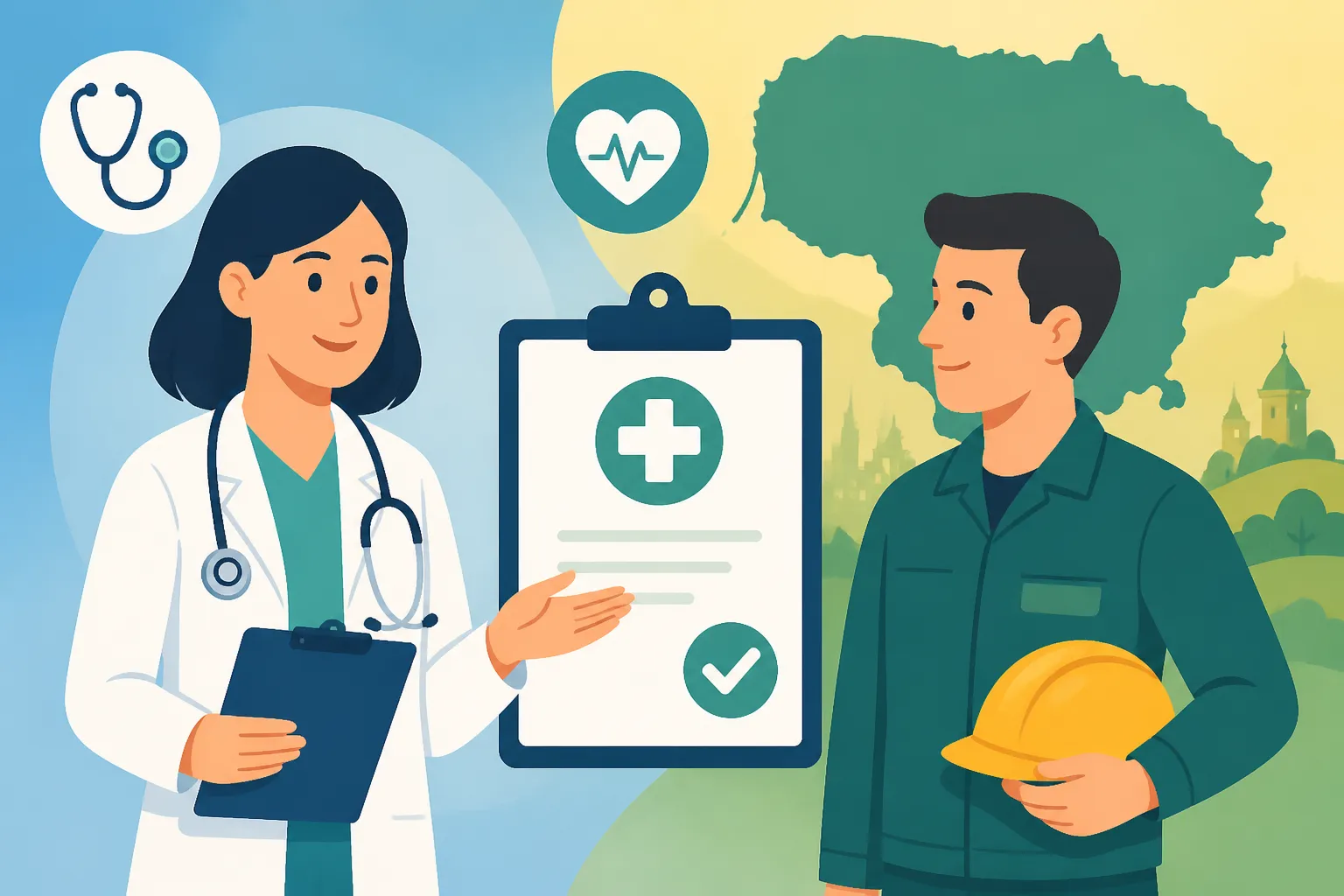
The first is the Pre-Employment Health Check (Form No. 047/a or 048/a). If you have just signed a contract or are about to, your employer is legally required to ensure you are fit for the specific environment you’ll be working in. This isn't just a formality; it involves a series of check-ups that might include blood tests, a chest X-ray, or an eye exam, depending on whether you'll be sitting at a computer all day or working in a high-intensity manual labor role. I remember my first time doing this in Vilnius; I was surprised by how many different doctors I had to see just to prove I could sit at a desk.
The second, and more common for day-to-day life, is the Electronic Sick Leave Certificate (Nedarbingumo pažymėjimas). In Lithuania, we don’t really do "paper" sick notes anymore. Everything is handled through a digital system that links your doctor, your employer, and Sodra (the State Social Insurance Fund). If you are too sick to work, you don’t just call in; you must have a doctor officially "open" a period of incapacity in the system. If you fail to do this on the very first day you are absent, you risk not being paid for your time off or, worse, having your absence marked as unexcused.
For expats who are still navigating their residency status, having a backup like SafetyWing can be a lifesaver. While you wait for your Compulsory Health Insurance to become active, having that extra layer of protection ensures you aren't paying massive out-of-pocket fees just to get a simple consultation for a sick note.
Navigating the Pre-Employment Health Check
If you are starting a new job, your employer should provide you with a "Health Check Referral" (Privalomojo sveikatos tikrinimo siuntimas). This document lists the "harmful factors" of your job—for instance, if you work with chemicals or just the standard "work with video display terminals" (computers).
Once you have this referral, you can head to either a public polyclinic or a private medical center. Many expats choose private clinics for this because they offer "packages" where you can see all the necessary specialists in one hour rather than spending three days in different waiting rooms. When I first moved to Kaunas, I tried the public route for my first job, and while it was cheaper, the coordination was a bit of a puzzle.
Usually, the employer covers the cost of this check-up. They might have a contract with a specific clinic, or they might ask you to pay upfront and then reimburse you upon presentation of the receipt. If you are curious about the underlying system, reading up on How Lithuania's Health Insurance Fund (VLK/PSDF) Works: A Full Overview can help you understand why these checks are so strictly regulated.
How to Get an Electronic Sick Leave Certificate (Nedarbingumo pažymėjimas)
The process for getting a sick note when you are actually ill is quite specific. You cannot simply show up a week later and ask for a backdated note. The "Nedarbingumas" must be opened on the day you stop working.
Step 1: Contacting Your Family Doctor
The moment you feel you cannot work, you must call your registered family doctor (Šeimos gydytojas). If you haven't registered yet, you’ll find that The Expat Guide to Finding a Family Doctor (Šeimos Gydytojas) in Lithuania is an essential resource. During the call, explain your symptoms. Since the pandemic, many doctors are willing to open a sick leave certificate via a phone consultation if the symptoms are straightforward, like a flu or a cold. However, they may still ask you to come in for a physical examination to ensure it’s nothing more serious.
Step 2: The Opening of the Certificate
The doctor will log into the Understanding the E-Sveikata (E-Health) System in Lithuania portal and "open" your certificate. This sends an automatic notification to Sodra. Your employer doesn't see your diagnosis (privacy is strictly protected), but they will see that you have an active "incapacity for work" period. If you are a digital nomad or just starting out and haven't fully integrated into the local social security system, providers like SafetyWing can offer support for medical expenses, though the official "sick pay" from the state only applies to those paying into the Lithuanian system through a local contract or individual activity.
Step 3: Closing the Certificate
A sick leave certificate is never "open-ended." The doctor will usually give you a 3-to-5-day window. You must have a follow-up call or visit to "close" the certificate. If you feel better, the doctor closes it, and you can return to work. If you are still sick, they will extend it. Never just go back to work without the doctor officially closing the period in the system, as this creates a conflict in the Sodra records.
| Feature | Pre-Employment Health Check | Sick Leave Certificate (Nedarbingumas) |
|---|---|---|
| Primary Purpose | To prove fitness for a specific job | To justify absence due to illness |
| Format | Paper form (usually stamped) | 100% Electronic |
| Who Initiates? | Employer provides a referral | Employee contacts their GP |
| Who Pays? | Employer (usually) | Sodra & Employer (shared) |
| Validity | Often valid for 2 years | Specific dates of illness only |
The Role of Private Clinics vs. Public Poliklinikas
One of the biggest choices you'll face is where to go. The public system (Poliklinika) is what most locals use. If you are insured through your job, the visits are essentially "free" (covered by your contributions). However, the wait times for a non-emergency appointment can be frustrating. For a medical certificate, you often need to see someone today.
This is where private clinics (like Antakalnio poliklinika’s private wing, InMedica, or Kardiolita) come in. They are much faster and often have more English-speaking staff. While you might have to pay a consultation fee (ranging from 30 to 80 EUR), the speed and convenience are often worth it when you’re feeling miserable. If you’re worried about these costs, The Cost of Healthcare in Lithuania: A Complete Breakdown for Foreigners (2026) gives a realistic view of what to expect.
I’ve found that many expats prefer keeping a private insurance policy like SafetyWing as a buffer. It’s particularly useful if you need to see a specialist quickly and don’t want to wait the standard 3-4 weeks in the public system. For more on this debate, check out Public vs Private Healthcare in Lithuania: Which Should Expats Choose?.
Understanding Sick Pay and Sodra
Getting the certificate is only half the battle; the other half is getting paid. In Lithuania, the "Sick Pay" (Ligos išmoka) is split. Usually, the employer pays for the first two days of your illness (no less than 62.06% of your average salary), and from the third day onwards, Sodra takes over.
To receive money from Sodra, you must have a certain "social insurance record" (usually 6 months of contributions within the last 24 months). If you are a new arrival, you might find that you aren't eligible for state sick pay yet. This is a common pitfall for expats in their first few months. Understanding How Lithuania's Health Insurance Fund (VLK/PSDF) Works: A Full Overview is vital here to manage your expectations regarding your first few payslips after an illness.
If you are self-employed, the rules change slightly. You are still entitled to sick leave, but you must ensure you are paying the correct "Sodra" contributions voluntarily or through your "Individuali veikla" taxes. You can learn more about this in our guide on Understanding PSD Contributions Through Sodra in Lithuania.
Managing the Language Barrier at the Clinic
Let’s be honest: not every doctor in a local Lithuanian polyclinic speaks fluent English. This is especially true for the administrative staff at the front desk who handle the registration of certificates. If you are feeling unwell and can't find the words in Lithuanian, it is perfectly acceptable to bring a friend or use a translation app.
However, a better long-term strategy is to look for a doctor who specifically lists English as a language they speak. Many private clinics highlight this on their websites. If you are in the capital, Where Can I Find an English-Speaking Family Doctor in Vilnius? is a great place to start your search.
When you call the clinic, clearly state: "I need a medical certificate for work" (Man reikia nedarbingumo pažymėjimo). This usually triggers the correct administrative process. Having a global travel medical insurance like SafetyWing is also helpful because their support team can often assist in finding English-speaking providers in your area, which takes the pressure off you when you're too sick to think straight.
What Happens If You Get Sick While Abroad?
If you are a resident of Lithuania but fall ill while visiting your home country or traveling within the EU, you can still get a medical certificate, but the process is a bit more manual. You will need to get a physical medical certificate from the foreign doctor, have it translated into Lithuanian (if it’s not in a standard format), and submit it to Sodra upon your return.
This is where things can get incredibly bureaucratic. You will likely need to prove that the illness was legitimate and that you sought care immediately. If you're traveling, make sure you know How to Claim Healthcare Cost Reimbursement in Lithuania to avoid being stuck with foreign hospital bills on top of your missed wages.
Key Takeaways for Expats
Navigating the Lithuanian medical certificate system doesn't have to be a nightmare if you follow the "Day One" rule. Always contact your doctor on the first day of your illness. Whether you are using the public system or a private clinic, ensure your Asmens Kodas (Personal Code) is correctly recorded in their system, as this is the "key" that links your medical record to your social security benefits.
If you are still in your first few months in the country, don't rely solely on the state system. The Health Insurance in Lithuania: Compulsory, Private and Travel Options Explained guide can help you find the right mix of coverage. Many veterans of the expat scene keep a flexible policy like SafetyWing active during their transition period or while they are between jobs to ensure they are never without medical support.
Finally, always keep a copy of your "Health Check" (the pre-employment one) for your own records. While the employer keeps the original, having a scan can save you from repeating the entire battery of tests if you switch jobs within a year or two.
Important Disclaimer
The information provided in this guide is for general informational purposes only and does not constitute legal or professional medical advice. Lithuanian healthcare laws, Sodra regulations, and E-Sveikata procedures are subject to change. While we strive to provide the most up-to-date information, you should always consult with a qualified medical professional or a legal expert regarding your specific situation and the current requirements of the Migration Department and the Ministry of Health. We are not responsible for any actions taken based on the content of this article.