How Do I Get Reimbursed for Medical Costs Paid Abroad?
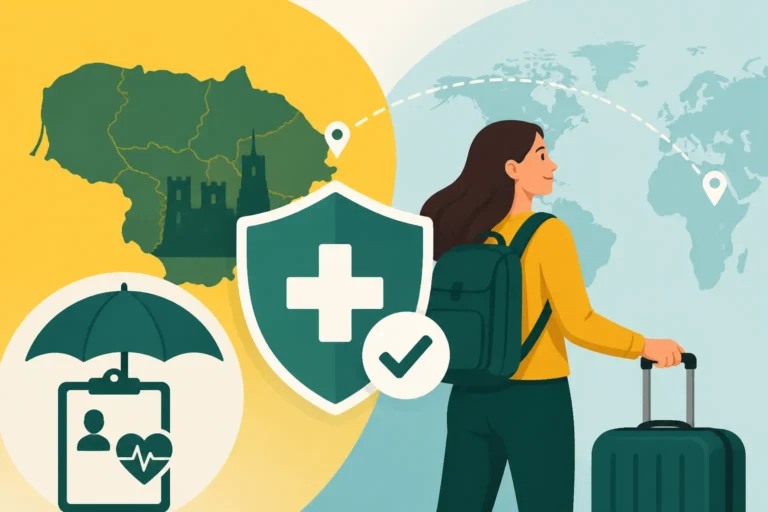
We have all been there: you are finally enjoying a weekend away from the hustle of Vilnius or Kaunas, perhaps visiting family back home or exploring the Alps, and suddenly a medical emergency strikes. Navigating the paperwork for How to Claim Healthcare Cost Reimbursement in Lithuania while standing in a foreign hospital is a specific kind of stress. This guide breaks down the precise steps to get your money back from the Territorial Health Insurance Fund (TLK) and how to handle costs incurred outside the European Union.
Understanding Your Coverage Rights and the EHIC System
Before you can even think about filling out a reimbursement form, you need to understand the foundation of your coverage as an expat living in Lithuania. If you are legally employed or self-employed and paying your monthly contributions, you are part of the Compulsory Health Insurance (PSD) system. This does not just cover you within the borders of Lithuania; it extends to the European Union (EU), European Economic Area (EEA), and Switzerland, provided you have the right documentation.
The Role of the European Health Insurance Card
The most critical tool in your arsenal is the European Health Insurance Card (EHIC). In Lithuania, this is known as the Europos sveikatos draudimo kortelė. If you are Registering for Compulsory Health Insurance (PSD) in Lithuania (2027), you are eligible to apply for this card for free. I cannot stress this enough: apply for it the moment your PSD status is active. It acts as a "passport" for healthcare, allowing you to access the public medical system of another EU country under the same conditions and costs as a local resident.
However, the EHIC is not a magic wand. It only covers "necessary" medical care—things that cannot wait until you return to Lithuania. It does not cover private clinics, and it does not cover the costs of being flown back home (repatriation). If you forget your card or the foreign provider doesn't accept it, you will likely be asked to pay the full price upfront. This is where the formal reimbursement process begins.
When PSD Applies and When It Fails
It is a common misconception that having PSD means you are covered globally. In reality, the How Lithuania's Health Insurance Fund (VLK/PSDF) Works: A Full Overview clearly states that the fund primarily reimburses costs incurred within the EEA and Switzerland. If you are traveling to the United States, Thailand, or even nearby Turkey, your Lithuanian public insurance provides zero coverage.
For these trips, relying on a private solution like SafetyWing is essential. While the VLK handles the bureaucratic EU transfers, SafetyWing bridges the gap for those high-cost emergencies in non-EU countries or situations where you want private medical attention that the public system won't reimburse. Too many expats get stuck with a five-figure bill from a clinic in Bali because they assumed their Lithuanian "Sodra" coverage was universal.
The Step-by-Step Process for Seeking Reimbursement
If you had to pay for medical services out of your own pocket while traveling in the EU, you have the right to apply for a refund once you return to Lithuania. This is not a fast process—expect to wait several months—and the paperwork must be flawless. The Lithuanian authorities are meticulous, and any missing signature or vague invoice can result in a denial.
Step 1 Gathering Your Evidence Abroad
The most frequent mistake I see people make is leaving the foreign hospital without the correct documents. To successfully navigate How to Handle a Medical Emergency Abroad with Lithuanian Insurance, you must collect the following while you are still in the foreign country:
- An itemized medical extract or report (epicuise) detailing the diagnosis and the specific treatments provided.
- Original invoices that clearly state the name of the medical institution and the patient’s details.
- Proof of payment, such as a bank statement or a cash receipt (kasos aparato kvitas).
- A copy of the prescription if you had to purchase subsidized medication.
Ensure that the medical report is as detailed as possible. If the doctor just writes "Consultation," the TLK may struggle to categorize the cost. If it says "Emergency Consultation for Acute Appendicitis," your chances of reimbursement skyrocket.
Step 2 Submitting the Application to the TLK
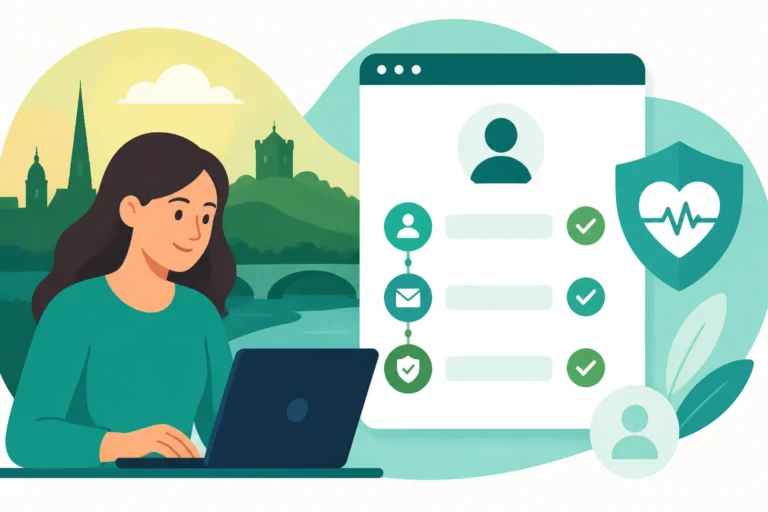
Once you are back home and have caught your breath, you need to head to your local Territorial Health Insurance Fund (TLK) branch. In Vilnius, this is located on Ž. Liauksmino street, but every major city has an office. You can also submit applications electronically through the e-Government Gateway or via the VLK website if you have a mobile signature.
You will need to fill out a specific "Request for Reimbursement of Costs for Healthcare Provided in an EU Country." This form asks for your Asmens Kodas, your Lithuanian bank account details, and a summary of the incident. If the documents are in a language other than Lithuanian, English, or Russian, the TLK might officially request a certified translation, though they are often flexible with major European languages for simple invoices.
Step 3 The Waiting Game and Calculation
After submission, the TLK does not just pay you back what you spent. Instead, they contact the health insurance fund of the country where you were treated. They ask: "If a local person with public insurance had this treatment, how much would your state pay?"
This is the "financial reality check" of the system. If you went to a high-end private clinic in Munich that charged 500 EUR for a consultation, but the German public system only pays 80 EUR for that same service, the TLK will only reimburse you the 80 EUR. This discrepancy is precisely why many veteran expats supplement their PSD with SafetyWing, which can often cover the "gap" or provide more comprehensive reimbursement for the actual costs incurred.
Comparing Reimbursement Scenarios
To help you understand how much you might actually get back, let's look at common scenarios expats face. The outcome depends heavily on whether you used the EHIC card and whether the provider was public or private.
| Scenario | Coverage Type | Initial Payment | Reimbursement Outcome |
|---|---|---|---|
| Emergency in Poland (Public Hospital) | EHIC Card Used | Patient Co-pay only | No further refund (co-pays are usually non-refundable). |
| Emergency in Spain (Public Hospital) | Forgot EHIC Card | Paid Full Cost | Reimbursed at Spanish public rates (usually 70-100%). |
| Private Clinic in France | PSD / EHIC | Paid Full Cost | Reimbursed only up to the "public rate" in France (often much lower). |
| Emergency in the USA | PSD / EHIC | Paid Full Cost | Zero reimbursement from the Lithuanian State. |
| Emergency in the USA | SafetyWing | Paid Full Cost | Reimbursed according to policy terms (minus deductible). |
As you can see, Can I Use My Lithuanian Health Insurance When Travelling in the EU? is a nuanced question. The state system is designed to prevent you from going bankrupt in a public ward in Italy, but it is not designed to cover the full price of premium private care.
Navigating Challenges and Denials
Bureaucracy in Lithuania can feel like an Olympic sport. Even if you follow every rule, you might receive a letter stating your claim has been denied or only partially approved. Understanding why this happens is key to appealing the decision.
Common Reasons for Claim Rejection
The most frequent reason for a rejection is that the treatment was deemed "planned" rather than "necessary." If you traveled to Poland specifically to see a specialist because the waiting list in Vilnius was too long, the TLK will not reimburse you unless you had prior authorization (the S2 form). The Cost of Healthcare in Lithuania: A Complete Breakdown for Foreigners (2026) guide often highlights that the PSDF is very protective of its budget; they do not want to fund "medical tourism" without a referral.
Another pitfall is the "Public vs. Private" distinction. If you are treated in a facility that has no contract with that country's national health system, the Lithuanian fund is not obligated to pay a cent. This is a common trap in tourist hotspots like the Greek islands or the Spanish coast, where "Tourist Clinics" look like regular doctors' offices but are entirely private. When Public vs Private Healthcare in Lithuania: Which Should Expats Choose?, we often discuss this trade-off; that same logic applies abroad.
How to Appeal a Decision
If your claim is denied, you have the right to appeal to the central VLK (Valstybinė ligonių kasa) in Vilnius within one month of receiving the decision. You will need to provide additional evidence—perhaps a statement from the foreign doctor confirming that the treatment was an absolute emergency and could not have been delayed.
During this time, having a secondary Health Insurance in Lithuania: Compulsory, Private and Travel Options Explained strategy is a lifesaver. If the state says no, a private insurer or a specialized expat plan like SafetyWing might still say yes, provided you met their filing deadlines. I always advise keeping digital copies of every single receipt and form you submit to the TLK, as originals are often kept by the government and can be hard to retrieve if you need to show them to a secondary insurer.
Practical Advice for Frequent Travelers
If you are an expat who travels often for work or leisure, you cannot rely solely on the standard PSD reimbursement process. It is a safety net, not a luxury service. To protect your finances, I recommend a three-pillar approach.
First, always keep your Emergency Medical Care in Lithuania: What Every Expat Needs to Know skills sharp, but apply that same vigilance abroad. Know the local emergency number (usually 112 in the EU) and always ask "Is this a public facility that accepts the EHIC?" the moment you arrive at a hospital.
Second, maintain a digital "medical folder" on your phone. This should contain a photo of your EHIC, your PSD insurance certificate (which you can download from the VLK portal), and your Asmens Kodas. If you are unconscious or unable to communicate, having these documents accessible to a travel partner or on your phone's lock screen can ensure the hospital processes you through the public system from the start, saving you the headache of a reimbursement claim later.
Third, consider the value of your time. The process of getting 150 EUR back from the TLK can take hours of administrative work and months of waiting. For many, paying for a premium plan like SafetyWing is a way to outsource that stress. When you have a private claim, the process is often handled through a streamlined app rather than a physical government office, which is a major benefit for those of us who haven't quite mastered the Lithuanian language yet.
Navigating the Non-EU World
Finally, we must address the reality of traveling to your home country if you are from outside the EU (such as the UK, USA, or India). Your Lithuanian PSD coverage ends the moment you cross the Schengen border. If you fall ill in London or New York, the VLK will not help you, and the EHIC is useless.
In these cases, reimbursement is only possible if you have a private international plan. Some expats try to argue that because they pay their PSD every month, they should be covered for a "quick visit" home. Unfortunately, the law is very clear. Always ensure your travel insurance is active before your flight leaves Vilnius airport. Whether it is a short-term policy or a long-term expat plan like SafetyWing, the cost of the premium is nothing compared to the cost of an uninsured night in a foreign hospital.
Disclaimer
This guide is for informational purposes only and is based on personal experience and current administrative rules in Lithuania. Healthcare laws and reimbursement rates can change. Always consult the official Valstybinė ligonių kasa (VLK) website or visit a Territorial Health Insurance Fund (TLK) office for the most up-to-date and legally binding information regarding your specific situation.