How Do I Set Up Gas for Cooking in My Lithuanian Home?
Moving to a new country like Lithuania often means a whirlwind of administrative tasks, and figuring out basic utilities can feel like navigating a maze blindfolded. One of those head-scratchers for many expats is often the gas supply, especially if you're used to a different system for cooking. This comprehensive guide will walk you through everything you need to know about setting up gas for cooking in your Lithuanian home, whether it’s natural gas or a bottled solution, to ensure you can whip up your favorite meals without unnecessary stress.
Understanding Gas Supply in Lithuanian Homes
Before you even think about firing up that stove, it's crucial to understand how gas is typically supplied in Lithuanian residences. Unlike some countries where a universal system is in place, Lithuania presents a bit of a mixed bag, primarily depending on whether you live in an urban center or a more rural area, and even the age of your building. This distinction is vital, as it dictates the entire process of how you'll get your cooking fuel.
Natural Gas vs. Bottled Gas Propane/LPG
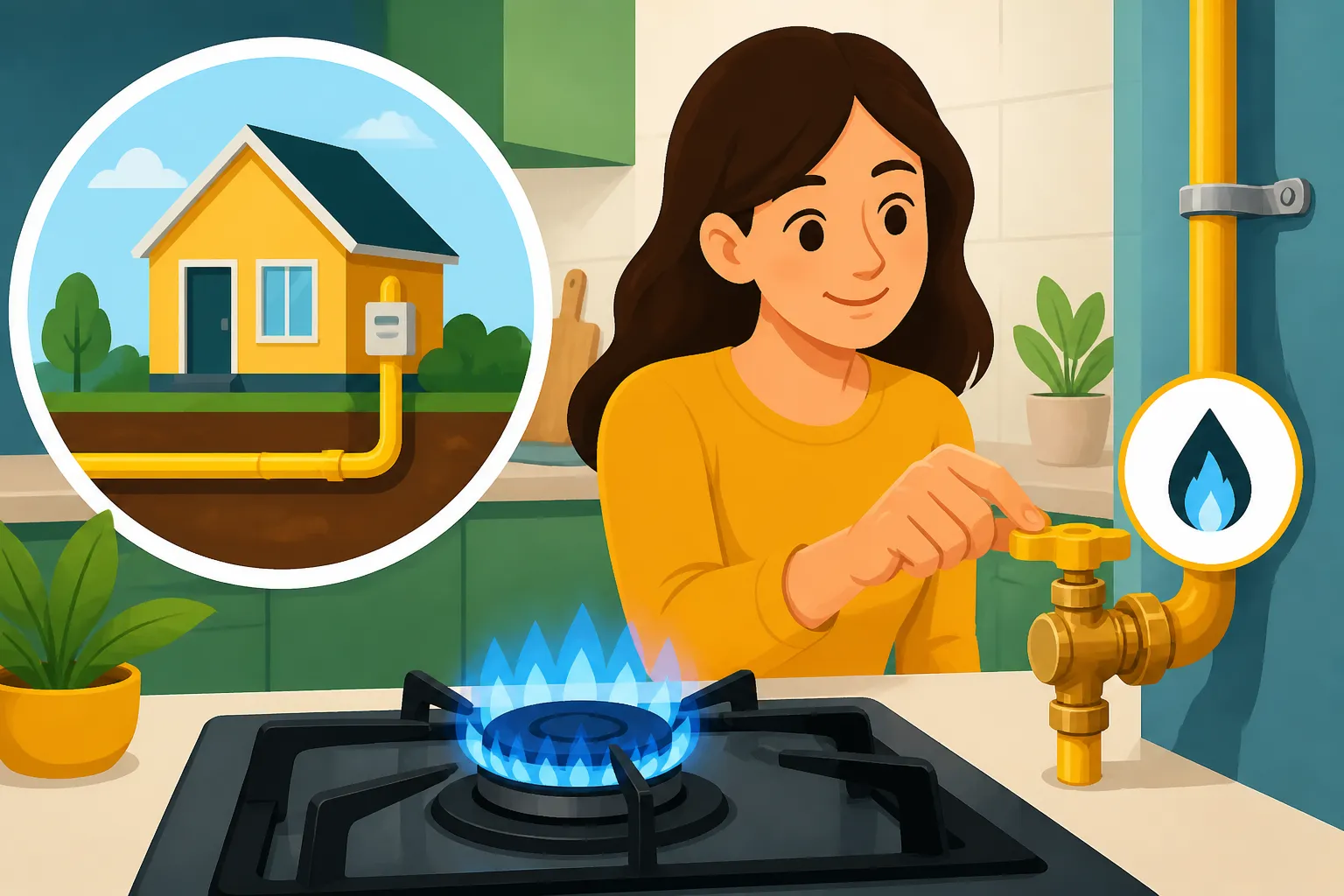
Lithuanian homes primarily use one of two types of gas for cooking: natural gas (gamtinės dujos) delivered via pipelines, or bottled gas (suskystintos dujos or propano-butano mišinys), which is essentially propane or LPG in cylinders. Natural gas is the prevalent option in larger cities like Vilnius, Kaunas, and Klaipėda, especially in apartment buildings constructed or renovated in recent decades. It's convenient, continuous, and generally requires less hands-on management once set up.
However, move beyond the major urban hubs, or into older buildings even within cities, and you'll encounter a much higher likelihood of bottled gas being the primary solution for cooking. This is particularly common in smaller towns, villages, and many private houses that aren't connected to the natural gas network. Living in a rural sodyba (countryside homestead) or an older apartment without the necessary infrastructure means you'll almost certainly be relying on cylinders.
The key differences between these two are substantial. Natural gas is metered, meaning you pay for what you use, and it's delivered directly to your appliance. Bottled gas involves physical cylinders that need to be purchased, transported, connected, and replaced when empty. Each has its own set of setup requirements, safety considerations, and ongoing management. Understanding which one applies to your specific dwelling is the very first step in your gas journey.
Identifying Your Home's Gas Type
So, how do you figure out which gas type your Lithuanian home uses? The simplest and most reliable way is to ask your landlord or the previous owner if you're buying. They will know definitively. Don't be shy about pushing for a clear answer; it's a fundamental utility. Check your rental agreement or property documents for any clauses about utilities, especially if you are confused by any terms related to "The Expat Guide to Setting Up Utilities in Lithuania".
If asking isn't an option, or you want to verify, a visual inspection is your next best bet. For natural gas, look for a gas meter, usually located in the kitchen, hallway, or sometimes even outside the apartment in a utility closet. You'll also see rigid pipes leading to your stove. If there's no visible meter or robust piping, and instead you find a flexible hose connecting to a large metal cylinder, you’re dealing with bottled gas. This cylinder is often hidden away in a cabinet beneath the sink or stove for aesthetic reasons, but it will be there.
Another indicator for natural gas can be the building itself. Most modern apartment blocks in Vilnius, for example, are universally equipped with natural gas. However, if you’re in a pre-war building or a Soviet-era block that hasn't seen major renovations, bottled gas might still be common. Don’t assume – always verify. A quick look at a neighboring apartment (if you can discretely manage it) might also offer clues, though direct confirmation is always best.
Setting Up Natural Gas for Cooking
If your Lithuanian home has access to the natural gas network, congratulations! While it still involves some administrative hoops, it's generally a more streamlined process than dealing with cylinders. The primary natural gas distributor in Lithuania for households is usually a subsidiary of ESO (Energijos Skirstymo Operatorius) or local municipalities.
The Connection Process with ESO or Local Providers
Setting up natural gas essentially involves two scenarios: a new connection to a property that has never had gas (rare for existing homes, more common for new builds), or transferring an existing connection into your name. For expats moving into an established apartment, you'll almost certainly be doing the latter. Your first step is to contact the local gas distribution company. In most cases, this will be related to ESO, which manages a large portion of the energy distribution in the country.
You'll need to provide your personal details, including your How to Get Your Asmens Kodas Personal Code and Why It Matters for Healthcare (personal code), proof of residence (like your rental agreement or property ownership documents), and possibly a meter reading from when you took possession of the property. The process often involves filling out forms, which can be a bit of a challenge due to language barriers. Don't hesitate to bring a Lithuanian-speaking friend or use translation apps; this is where services like Airalo can be helpful for maintaining connectivity on the go. Be prepared for a visit from a technician to confirm the meter reading and ensure everything is in order.
The key is getting a new contract (sutartis) in your name. This typically needs to be done shortly after you move in. If you're struggling, your landlord or real estate agent should be able to assist. Remember that until the contract is in your name, the previous occupant (or landlord) is technically responsible, but you'll be the one using the gas. For more general advice on managing household bills, you might find "Understanding Utility and Communal Costs Komunaliniai Mokesčiai in Lithuania" to be a useful resource.
Appliance Installation and Safety Checks
Once the natural gas supply is formally in your name, the next critical step is ensuring your cooking appliance (gas stove or hob) is safely installed and ready for use. This is absolutely non-negotiable for safety reasons. Never attempt to connect a gas appliance yourself unless you are a certified professional. Lithuania has strict regulations regarding gas appliance installation, and for good reason – faulty connections can lead to dangerous leaks and even explosions.
You must hire a certified gas technician to install your appliance. They will connect the stove to the gas line, perform leak tests, and ensure all components meet safety standards. They will also issue a certificate or a signed act confirming the safe installation. Keep this document safe, as it might be required by your landlord, insurance provider, or even the gas company itself if any issues arise. If you've moved into a place with an existing gas stove, it's still highly recommended to have a technician inspect it, especially if you have any doubts about its age or previous installation.
During the technician's visit, pay attention to any advice they offer on ventilation or maintenance. Good ventilation is crucial when using gas appliances. If you're buying new appliances, many retailers will offer installation services, but always confirm that their installers are certified for gas work. This isn't just about compliance; it's about your peace of mind and the safety of your home.
Dealing with Bottled Gas Propane/LPG for Cooking
If your Lithuanian home relies on bottled gas, the routine is quite different from natural gas. It requires more active management but offers flexibility, especially if you're in an area without a natural gas network. Don't be intimidated by the cylinders; once you get the hang of it, it becomes routine.
Sourcing and Purchasing Gas Cylinders
For bottled gas, you'll be sourcing cylinders (dujų balionas). These are widely available across Lithuania. You can typically find them at:
- Dedicated gas stations or filling points: These are often specific service stations that specialize in LPG/propane, or have a dedicated section for refilling cylinders.
- Larger supermarkets or construction supply stores: Some larger retailers, especially on the outskirts of cities or in smaller towns, will sell or exchange full cylinders. Brands like Intergas or Saurida are common in the Lithuanian market, offering different cylinder sizes.
- Delivery services: In some areas, particularly in rural settings, you might find local suppliers who offer delivery and even installation services. This is incredibly convenient if you're not comfortable handling the cylinders yourself.
When you purchase a new cylinder for the first time, you'll usually pay a deposit for the cylinder itself, in addition to the cost of the gas. Subsequent purchases are typically exchanges – you bring your empty cylinder and swap it for a full one, only paying for the gas. It's important to remember to return the same type of cylinder (e.g., if you bought a 10 kg cylinder from a specific provider, you usually need to return that type to them). Always check the weight (e.g., 5kg, 10kg, 27kg) to ensure you're getting the right size for your appliance and space. For those moving bigger items or needing assistance with heavier objects like gas cylinders, coordinating with a moving service like Sirelo can be very helpful for peace of mind.
Installation, Replacement, and Safety Precautions
Connecting a gas cylinder isn't rocket science, but it absolutely demands careful attention to safety. The cylinder connects to your stove via a regulator and a flexible hose. Most modern Lithuanian gas stoves designed for bottled gas will come with the necessary fittings, but always double-check.
Here’s a basic sequence for safe installation:
- Ensure ventilation: Open windows and doors.
- Turn off the appliance: Make sure all stove burners are off.
- Close the valve on the empty cylinder: Turn it fully clockwise.
- Disconnect the regulator: Unscrew the regulator from the empty cylinder.
- Remove the seal from the new cylinder: Most new cylinders have a plastic safety seal over the valve.
- Connect the regulator to the new cylinder: Ensure it's hand-tightened securely. Do not overtighten with tools unless specifically instructed for your regulator type.
- Slowly open the valve on the new cylinder: Turn it counter-clockwise. Listen for any hissing sounds.
- Check for leaks: The best way to do this is by applying a soapy water solution to the connections. If bubbles appear, you have a leak, and you must immediately turn off the gas, disconnect, and re-check the connection. Do not use the stove until the leak is fixed.
Always store spare cylinders upright in a well-ventilated area, away from direct sunlight, heat sources, and flammable materials. Never store them in basements or confined, unventilated spaces where gas could accumulate if there's a leak. When you're away for an extended period, it's wise to turn off the main valve on the cylinder. Understanding these small but crucial steps is part of living safely and comfortably in your Lithuanian home.
Costs and Practical Considerations
Understanding the financial aspects and potential hurdles of setting up gas in Lithuania is just as important as the physical setup itself. It’s not just about the monthly bill; there are initial costs, maintenance, and the ever-present challenge of language.
Initial Setup Costs and Ongoing Expenses
For natural gas, the initial setup cost is usually minimal if you're simply transferring an existing contract. You might pay a small administrative fee, but significant connection costs are typically only for new installations where infrastructure needs to be laid – a scenario unlikely for most expat renters. Your ongoing expenses will be based on consumption, measured in cubic meters (m³), plus a fixed monthly service fee. Prices vary slightly by region and provider, but you can expect to pay around €0.50 to €0.70 per cubic meter, in addition to a fixed charge of a few euros monthly. For a household that primarily uses gas for cooking, the monthly bill might be quite modest, often ranging from €5 to €15, depending on how much you cook.
Bottled gas, on the other hand, involves a higher upfront cost for the cylinder deposit, which can be anywhere from €30 to €60, plus the cost of the gas itself. A standard 10kg cylinder, which typically lasts a small household several weeks or even months for cooking only, might cost between €20 and €30 for the gas refill. So, your first purchase could be €50-€90. Subsequent costs are just for the gas refill. While there's no fixed monthly fee like natural gas, you'll need to factor in the effort and occasional cost of transporting empty cylinders for exchange. You can see a quick comparison in the table below:
| Feature | Natural Gas (Gamtinės Dujos) | Bottled Gas (Suskystintos Dujos / LPG) |
|---|---|---|
| Availability | Primarily urban areas, newer buildings | Rural areas, older buildings, private homes |
| Delivery | Pipeline, continuous supply | Cylinders, needs physical exchange/refill |
| Initial Cost | Low (transfer fee) | Moderate (cylinder deposit + gas) |
| Ongoing Cost | Based on consumption + fixed fee | Based on cylinder refills |
| Typical Monthly Bill (cooking only) | €5-€15 | €10-€25 (depending on refill frequency) |
| Management | Automatic, metered | Manual exchange, storage, safety checks |
| Installation | Certified technician for appliance | DIY connection (with care), or assisted |
Language Barriers and Finding English-Speaking Assistance
Navigating utility setups in a foreign country is challenging enough, but when you add a language barrier, it can feel insurmountable. Lithuanian isn't widely spoken outside the country, and while English proficiency is decent among younger generations in cities, older service personnel or official documents might still be solely in Lithuanian. This is where many expats hit a wall, feeling isolated and frustrated.
When contacting utility providers like ESO, always try to find their English-speaking customer service line or email. Many larger companies do offer this, even if it's not prominently advertised. If not, don't be afraid to ask a Lithuanian colleague, friend, or even a kind stranger for help with phone calls or translating documents. Using online translation tools can also be a lifeline, especially when reading through website information or basic forms. Remember that setting up your initial connectivity with services like Airalo can be crucial for these online resources.
For installation services, explicitly ask for an English-speaking technician if possible, or arrange for a translator to be present during the appointment. Communication is paramount when it comes to gas safety. When looking for reliable services, whether it's an electrician or a gas technician, consider searching local expat groups on social media platforms – they often have recommendations for English-friendly professionals. Platforms like Sirelo also offer advice on finding reliable service providers when relocating, which can be invaluable in these situations. Persistence and proactive communication are your best tools against the language barrier.
Disclaimer
The information provided in this guide is for general informational purposes only and does not constitute professional advice. While we strive to provide accurate and up-to-date information, utility regulations, pricing, and service availability in Lithuania can change. Always consult with official service providers, qualified technicians, or legal professionals for advice specific to your situation. We cannot be held responsible for any decisions made based on the information presented herein.