What Documents Do I Need to Renew My Residence Permit in Lithuania?
Renewing your residence permit in Lithuania can often feel like reliving the initial application process all over again, a bureaucratic déjà vu that many expats find incredibly frustrating and anxiety-inducing. Navigating the Migration Department (MIGRIS) portal and understanding the precise documentation required, especially when requirements can subtly shift, is a common hurdle. This guide is here to walk you through exactly what documents you'll need, offering practical advice to make your renewal as smooth as possible, cutting through the confusion with real-world insights from someone who’s been there.
Understanding the Renewal Process: Why It Feels Like Starting Over
When you first arrived in Lithuania, getting that initial residence permit felt like a monumental achievement. Fast forward a few years, and suddenly, it's time to renew. You might expect it to be simpler, a mere formality, but often, the process requires a level of detail and documentation that can make it feel like you're starting from scratch. It’s not just about proving you're still here; it's about re-establishing your entire basis for residence, ensuring all your ducks are in a perfectly straight, Lithuanian-approved row.
The Importance of Timely Application
Let's be brutally honest: procrastination is not your friend when it comes to immigration documents. The Lithuanian Migration Department takes deadlines very seriously. Missing your renewal window can lead to severe consequences, ranging from fines to complications with your legal status, and in the worst-case scenario, even difficulties extending your stay. Typically, you should aim to submit your renewal application at least 2-4 months before your current permit expires. I know, it feels like an eternity away when you're still enjoying your current permit, but trust me, that time flies, and gathering all the necessary papers takes longer than you think. Imagine having an appointment for your biometric data collection only to find out you missed the deadline to submit the online application – it happens, and it's a nightmare. Always mark your calendar with a reminder, maybe even two, for the "start gathering documents" phase and the "submit application" phase.
Key Changes Since Your Initial Application
Life happens, and it rarely stays static. Since your first application, you might have changed jobs, moved apartments, started a family, or even opened a new business. All these changes, big or small, are relevant and will impact the documents you need for your renewal. For example, if your initial permit was based on a work contract and you’ve since registered as a self-employed individual with a business certificate, your entire justification for residence has shifted. What was a straightforward employment contract before, now requires a detailed look at your business financials and activities. Similarly, a change of address means updating your registered place of residence, which is a fundamental requirement. These personal evolutions mean the renewal isn't just a rubber-stamping exercise; it's a fresh assessment of your current circumstances against the criteria for continued residence in Lithuania.
The Essential Document Checklist for Renewal
Alright, let's get down to brass tacks. This is where the real work begins. While the exact list can vary slightly depending on your specific situation, there's a core set of documents that almost everyone will need, plus additional ones tailored to your permit's basis. Take a deep breath, make a strong coffee, and let's go through it.
Personal Identification and Current Permit
First things first, the absolute basics that confirm who you are and your current legal status in Lithuania.
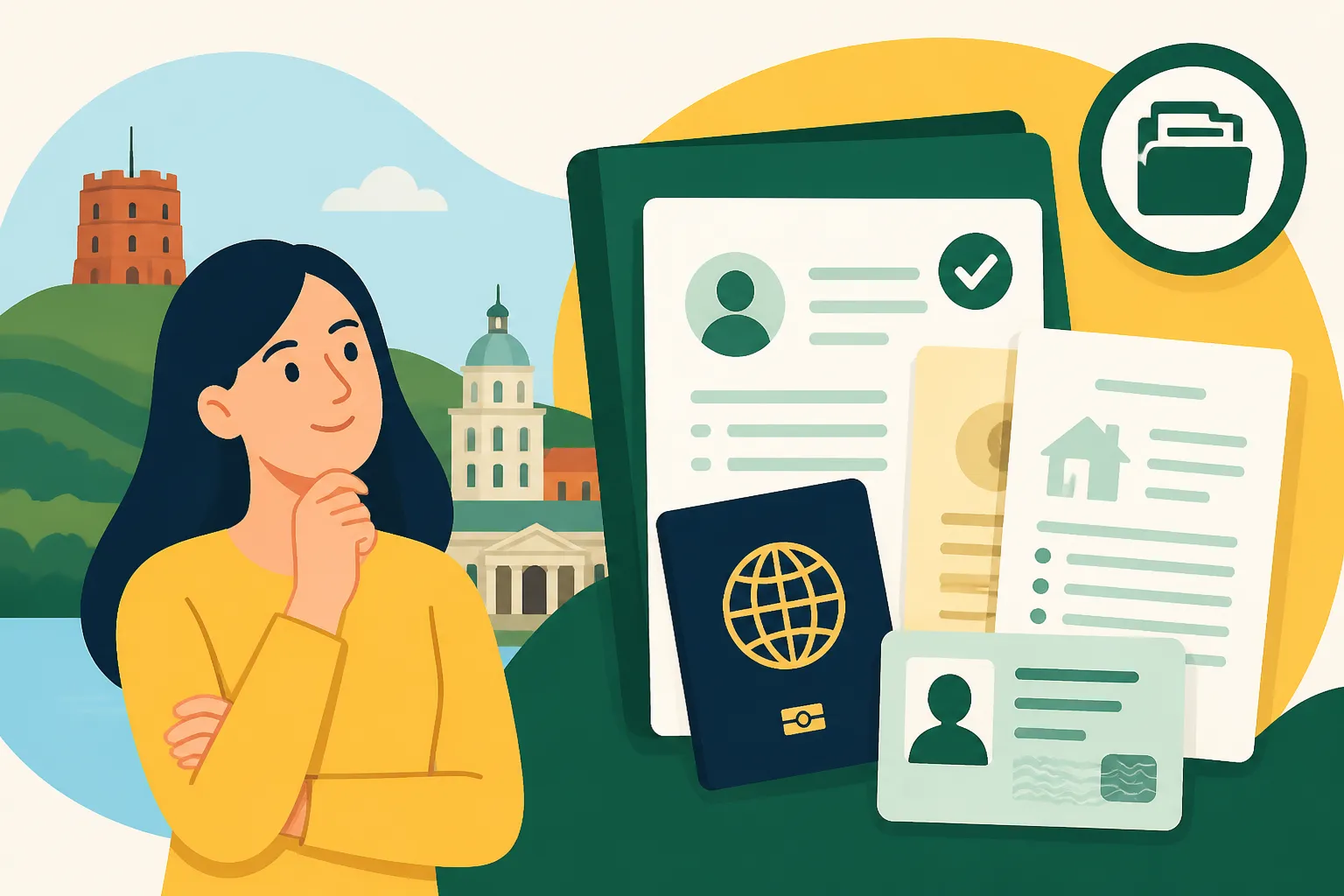
- Valid Passport or Travel Document: This is non-negotiable. Ensure your passport is valid for at least six months beyond your intended stay. If it's expiring soon, get it renewed before you start the residence permit process. You'll need scans of all pages containing personal data, visas, and entry stamps.
- Current Temporary Residence Permit (TRP) Card: Your existing permit card is crucial. You'll need to provide scans of both sides. This acts as proof of your current status and helps the Migration Department track your history in Lithuania.
- Proof of Your Asmens Kodas (Personal Code): While not a separate document you submit, your personal code is integral to your application. It links all your official records in Lithuania, including your tax and social security contributions. Make sure you know it and that it's correctly linked to your existing records. If you're wondering how this vital identifier works and why it’s so important for everything from healthcare to banking, you might want to read more about How to Get Your Asmens Kodas (Personal Code) and Why It Matters for Healthcare.
Proof of Your Basis for Residence
This is the most critical section, as it directly relates to why you are allowed to live in Lithuania. The documents required here depend entirely on the grounds your current permit was issued on.
Work-Based Residence Permit Renewal
If your permit is tied to employment, you'll need to demonstrate continuous employment and adherence to Lithuanian labour laws.
- Valid Employment Contract: A copy of your current employment contract (or an updated one if your position or terms have changed).
- Letter from Employer: A formal letter from your Lithuanian employer confirming your continued employment, position, and salary. This often needs to be fairly recent, so request it specifically for the permit renewal.
- Recent Payslips: Usually, the last 3-6 months of payslips are required to demonstrate stable income.
- Sodra Statements: Proof of your social security contributions (Sodra statements). You can typically get these from the Sodra self-service portal or sometimes from your employer. This shows you're contributing to the Lithuanian social safety net.
- Tax Documents: Evidence of your income tax payments. If you're an employee, this is often handled automatically, but having access to your annual tax returns through the VMI system can be helpful. Understanding Filing Your Annual Tax Return in Lithuania: The Complete Walkthrough (2027) can shed more light on this.
- Confirmation from Užimtumo Tarnyba (Employment Service): In some cases, especially for non-EU/EEA citizens, you might need an updated permit from the Lithuanian Employment Service, confirming that your employment is still valid under their regulations. This often applies if you required a work permit initially.
Study-Based Residence Permit Renewal
For students, the focus is on your ongoing enrolment and academic progress.
- Confirmation of Study from University: An official letter from your university or educational institution confirming your current enrolment, the duration of your studies, and that you are making satisfactory academic progress.
- Proof of Tuition Fee Payment: Receipts or statements showing that you have paid your tuition fees for the upcoming academic period.
- Academic Transcripts: Sometimes, recent transcripts are requested to show you're actively studying.
- Student ID Card: A copy of your valid student ID.
- For a deeper dive into student life and what to expect, consider checking out The Complete Guide to Studying at a Lithuanian University (2027).
Family Reunification Residence Permit Renewal
If your permit is based on joining a family member in Lithuania, you'll need to prove the continuation of that relationship and the sponsor's ability to support you.
- Proof of Relationship: Marriage certificate (if applicable), birth certificates for children. These might have been provided initially, but ensure you have up-to-date, legally translated copies if there have been changes or if they are requested again.
- Sponsor's Residence Permit: A copy of the Lithuanian resident's (your spouse, parent, etc.) valid residence permit.
- Sponsor's Financial Proof: Bank statements, employment contract, or business registration of the sponsoring family member, demonstrating their continued ability to financially support you.
- Proof of Shared Accommodation: Updated rental agreement or property ownership documents showing you continue to reside together.
- Detailed requirements for this process can be found in Family Reunification in Lithuania: A Complete Guide for Expats.
Self-Employment or Business-Based Residence Permit Renewal
For those running their own show, the renewal process hinges on the viability and active operation of your business or individual activity.
- Business Registration Documents: Current registration details of your company (UAB, MB) or Individuali Veikla (Individual Activity).
- Financial Statements/Tax Returns: Proof of your business's financial activity and solvency. This includes recent bank statements for your business account, annual financial statements, and tax declarations (both GPM and potentially VAT, if applicable).
- Proof of Business Activity: Contracts, invoices, or other documents demonstrating that your business is actively operating and generating income in Lithuania. This is crucial; simply having a registered business is not enough. You need to show it's functional.
- Capital Requirements: If your initial permit was based on a significant investment, you might need to show that the investment is still maintained.
- For more specific details on structuring your business as an expat, our guide on Self-Employment in Lithuania: The Individual Activity and MB Guide for Foreigners is a great resource.
Financial Stability and Accommodation Proof
Regardless of your permit's basis, you need to show you can support yourself and have a place to live.
- Proof of Sufficient Funds: This could be bank statements from a Lithuanian bank account showing a steady income or sufficient savings. The exact amount required can change, so always check the latest Migration Department guidelines. As a general rule, you need enough to cover your basic living expenses for at least six months.
- Proof of Accommodation: A valid rental agreement (nuomos sutartis), property ownership documents, or a notarised letter from a property owner confirming you reside there. This needs to be current and often registered with the Centre of Registers. If you've moved, you'll need your new Declaring Your Place of Residence in Lithuania: The Complete Guide documents. And if you're still navigating the rental market, our comprehensive guide to The Complete Guide to Renting an Apartment in Lithuania (2027) offers invaluable insights.
Health Insurance Coverage
Health insurance is a must-have for all residents in Lithuania.
- Proof of Health Insurance: This will either be confirmation of your Compulsory Health Insurance (PSD) contributions through Sodra (if you are employed or self-employed and paying contributions) or a valid private health insurance policy.
- Private Health Insurance Policy: If relying on private insurance, ensure your policy meets the minimum coverage requirements set by Lithuanian law. This typically means coverage for emergency medical treatment and repatriation. Many expats opt for international providers like Cigna Global for their flexibility and comprehensive coverage. For a detailed breakdown of your options, check out Health Insurance in Lithuania: Compulsory, Private and Travel Options Explained.
Navigating the MIGRIS Portal and Beyond
The digital age has streamlined some aspects of bureaucracy, but it also brings its own unique set of challenges. The MIGRIS electronic services portal is your primary gateway for submitting renewal applications.
The Online Application Process
The journey begins online. You’ll log into the MIGRIS system, fill out the electronic application form, and upload all your meticulously prepared documents.
- Create/Log in to Your MIGRIS Account: If you already have a temporary residence permit, you should have an account. Ensure your login details are active.
- Select "Temporary Residence Permit Renewal": Navigate to the correct section for renewal applications.
- Fill Out the Application Form: Be precise. Double-check every field for accuracy. Any discrepancies with your existing records can cause delays.
- Upload Documents: This is where attention to detail really pays off. Each document usually needs to be uploaded as a separate PDF file. Pay attention to file size limits and naming conventions. Ensure all foreign documents are translated into Lithuanian by a sworn translator and apostilled/legalised if required (though for renewals, this is less common for documents previously accepted). Missing even one minor document can lead to your application being returned, prolonging the whole process.
- Pay the State Fee: There’s a state fee for processing your application. This can usually be paid directly through the MIGRIS system or via bank transfer. Keep the payment confirmation.
- Book an Appointment: Once your online application is submitted and the fee paid, you'll need to book an in-person appointment at a MIGRIS branch (usually in Vilnius, Kaunas, or Klaipėda) for biometrics. For more guidance on this crucial step, see How to Book an Appointment at the Migration Department (MIGRIS) in Lithuania.
Biometrics and Card Collection
After the online submission, the next step is the physical visit.
- The In-Person Appointment: This is where you officially submit any original documents if requested, and provide your fingerprints and a digital photograph for your new residence permit card. Even if you submitted scans online, always bring the original versions of all your documents, just in case they want to see them. Better safe than sorry! The MIGRIS staff will verify your identity and confirm your application details.
- Collecting Your New Permit: Once your application is approved, you'll receive a notification (usually via SMS or email) that your new residence permit card is ready for collection. This usually happens at the same MIGRIS branch where you gave your biometrics. This is the moment you've been waiting for! For a deeper dive into the biometric card itself, refer to How Do I Get a Biometric Residence Permit Card in Lithuania?.
Common Pitfalls and How to Avoid Them
The Lithuanian bureaucracy, while generally efficient, can be a labyrinth for the uninitiated. Many expats get stuck at various points.
- Incomplete Documentation: The number one reason for delays. Don't assume anything. If a document might be needed, include it or be prepared to provide it.
- Outdated Information: Ensure your contact details (phone, email) in the MIGRIS system are current.
- Translations and Legalisation: While generally for initial applications, sometimes a document that was previously accepted might require a fresh translation or apostille if the rules have changed or if the original wasn't perfectly to standard. Always clarify if unsure.
- Not Starting Early Enough: As mentioned, this is paramount. You need time for gathering, translating, and potential re-submission if something is amiss.
- Language Barrier: Not everyone at MIGRIS will speak perfect English. While the system has English options, knowing some basic Lithuanian phrases or bringing a Lithuanian-speaking friend can be a lifesaver for the in-person appointment.
- Changes in Law: Immigration laws can change. Always consult the official MIGRIS website for the most up-to-date requirements, as guides like this one offer general advice but aren't substitutes for official legal counsel. Some relocation companies, like Sirelo, offer services that can help you understand the process and prepare for your move, which indirectly helps with renewals as well by setting up strong initial foundations.
Here's a quick reference table for your primary renewal documents:
| Document Category | General Requirements | Specific Examples (by Basis) | Notes |
|---|---|---|---|
| Personal Identification | Valid passport, current TRP card | Passport (all relevant pages), TRP (both sides) | Ensure passport validity well beyond permit expiry. |
| Proof of Asmens Kodas | Your personal code (not a document, but essential for linking) | N/A (verify linked to your records) | Crucial for all official interactions. |
| Basis for Residence | Official documentation proving your reason for staying | – Work: Employment contract, employer letter, payslips, Sodra – Study: University confirmation, tuition receipts, transcripts – Family: Marriage/birth certificates, sponsor's permit, sponsor's financials – Self-Employed: Business registration, financial statements, activity proof |
Varies greatly; ensure documents are current & comprehensive. |
| Financial Stability | Proof of sufficient funds to support yourself | Bank statements, income certificates, sponsor's financial proof | Check MIGRIS for current minimum income/savings requirements. |
| Accommodation | Proof of legal residence in Lithuania | Rental agreement, property ownership certificate, residence declaration | Must be current and legally registered. |
| Health Insurance | Valid health insurance coverage | PSD contributions (Sodra statement) or private health insurance policy | Must meet Lithuanian minimum coverage standards. |
| Application & Fee | Completed online application form, proof of state fee payment | MIGRIS application, bank transfer receipt | Apply online first, then book appointment for biometrics. |
Final Thoughts and Pro Tips for a Smoother Renewal
I know this seems like a mountain of paperwork and processes, but you've done it once, and you can absolutely do it again! The key is preparation, patience, and persistence. The Lithuanian system is quite structured, and if you follow the guidelines meticulously, you'll be fine.
My biggest piece of advice: start early. This cannot be stressed enough. Gather your documents long before the official application window opens. This gives you time to track down originals, get translations, or chase up a missing payslip from your employer. Sometimes, getting an appointment at MIGRIS itself can take a few weeks, so factor that into your timeline. For major relocation steps, services like Sirelo often highlight the importance of early planning, and permit renewals are no different.
Make digital and physical copies of everything you submit, and keep them organised. A dedicated folder for "MIGRIS Renewal 202X" can save you a lot of headache if you ever need to reference something. If you're unsure about any specific document, don't hesitate to reach out to MIGRIS directly through their contact channels. While their responses might sometimes be generic, they are the ultimate authority.
Remember, you're not alone in this. Many expats navigate these waters every year. Take it one step at a time, be thorough, and soon enough, you'll have that shiny new residence permit card in your hand, securing your continued journey in beautiful Lithuania.
Disclaimer
The information provided in this guide is for general informational purposes only and does not constitute legal or immigration advice. Requirements for residence permit renewal in Lithuania can change frequently. Always consult the official website of the Lithuanian Migration Department (MIGRIS) or seek advice from a qualified immigration lawyer for the most accurate and up-to-date information pertaining to your specific situation.