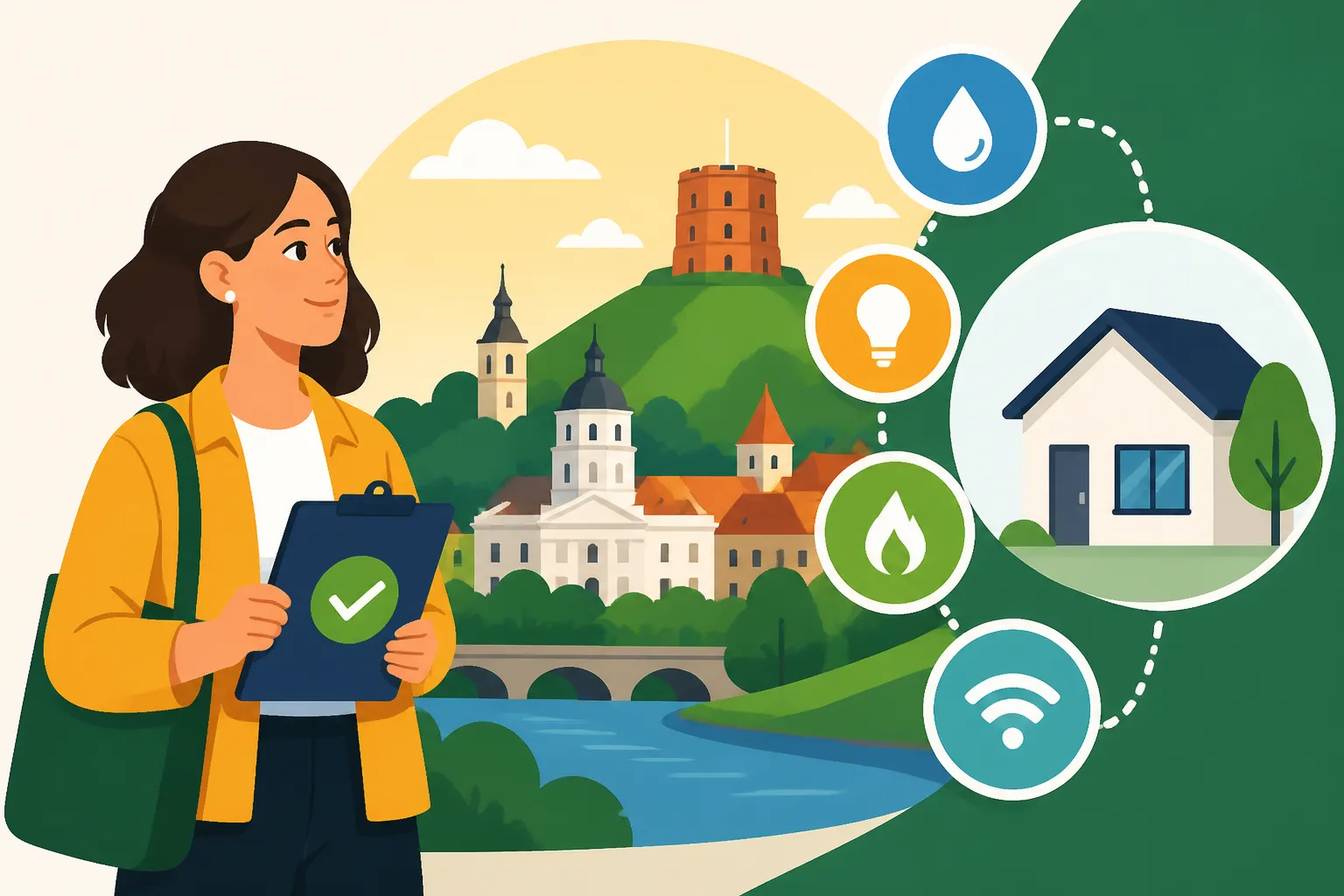
The Expat Guide to Setting Up Utilities in Lithuania
Oh, settling into a new place is always an adventure, isn't it? Especially when you're trying to figure out something as fundamental and, let's be honest, often bewildering as utilities. I remember my first few weeks here in Lithuania, staring blankly at forms in Lithuanian, trying to decipher what 'šildymas' (heating) or 'vandentiekis' (water supply) actually meant for my monthly budget and my sanity. This guide is here to walk you through the labyrinth of setting up electricity, water, heating, internet, and waste services, easing those initial expat headaches so you can focus on making your new house a home.
Understanding the Lithuanian Utility Landscape
Navigating the utility landscape in a new country can feel like trying to solve a Rubik's Cube blindfolded. In Lithuania, it's not always straightforward, but once you understand the key players and the general system, it becomes much more manageable. Think of it as a set of separate services that need individual attention, rather than one bundled package.
Key Players and Providers
Lithuania’s utility providers are generally quite distinct for each service. For electricity, there’s usually one main operator that manages the grid and supply, no matter where you live. For other services like water, heating, and waste, it often depends on your municipality. This means that if you move from Vilnius to Kaunas, your water and heating providers will likely change.
For electricity, your main point of contact will be ESO (Energijos Skirstymo Operatorius). They manage the power grid, supply electricity, and handle billing across the country. For water and wastewater, you'll be dealing with municipal companies. In Vilnius, it's Vilniaus Vandenys; in Kaunas, Kauno Vandenys, and in Klaipėda, it's Klaipėdos Vanduo. Heating is often provided by a centralized system in apartment buildings, with companies like Vilniaus Šilumos Tinklai (VŠT) in the capital, or similar municipal entities in other cities. Gas, if you have an individual boiler or gas appliances, typically comes from IGNITIS (formerly Lietuvos Dujos). Understanding these different entities is the first step to feeling in control.
The Concept of Komunaliniai Mokesčiai (Communal Fees)
When you rent an apartment in Lithuania, you'll quickly become familiar with the term Komunaliniai Mokesčiai, or communal fees. This isn't just one bill; it's a collective term for all your household utilities and building management costs. It usually covers heating, water, gas (if applicable), waste collection, and often a building maintenance fee. Sometimes, internet and cable TV might be bundled in by landlords, but usually, those are separate.
What often catches expats off guard is that these bills can fluctuate wildly, especially heating costs in winter. You might see a relatively low bill in summer, then get a shock when the heating kicks in. Your landlord should clarify exactly which utilities are included in the rent and which you’re responsible for. It’s absolutely crucial to get this in writing in your rental contract so there are no nasty surprises down the line. For a deeper dive, read our guide on Understanding Utility and Communal Costs (Komunaliniai Mokesčiai) in Lithuania.
Essential Documents for Utility Registration
Before you dive into the nitty-gritty of signing up for services, make sure you have your paperwork in order. The main things you'll need are proof of identity, your Lithuanian personal code (Asmens Kodas), and proof of residence. Your Asmens Kodas is practically your golden ticket for everything administrative in Lithuania, so make sure you’ve sorted that out. If you're still waiting for it, be prepared for some utility companies to be a bit hesitant to register you, or they might ask for additional documents like your passport and temporary residence permit.
You’ll also need your rental contract (nuomos sutartis) as proof that you are the legal occupant of the property. This document outlines your agreement with the landlord and is essential for transferring utility accounts into your name. Remember, it's always best to have utility bills in your own name as it serves as vital proof of address later on for other administrative tasks. For instance, when you need to formally declare your residence, having utilities in your name makes the process smoother, complementing your Declaring Your Place of Residence in Lithuania: The Complete Guide.
Electricity: The Spark of Your New Home
Getting the lights on and keeping your devices charged is usually high on the priority list when you move in. While the process itself isn't overly complicated, understanding how it works will save you a lot of grief. It’s not like in some countries where you pick from a dozen different providers; here, ESO is the main game.
Registering with ESO (Energijos Skirstymo Operatorius)
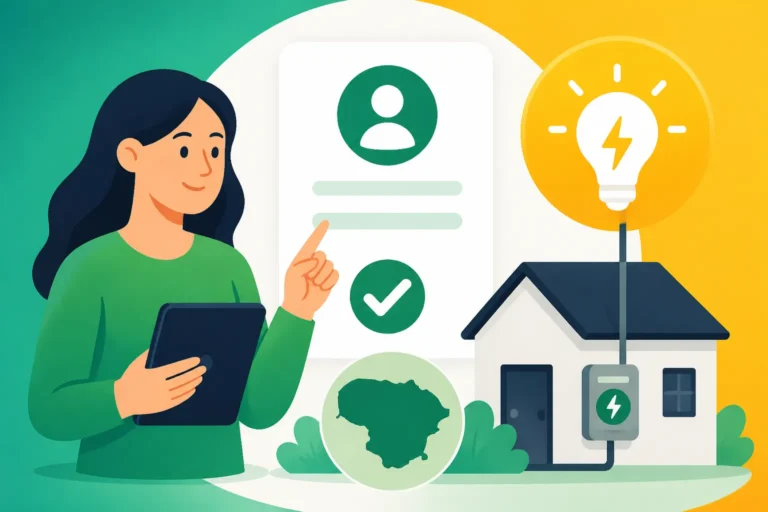
The first step for electricity is to get yourself registered with ESO. If you're moving into a newly built apartment or a place where the previous tenant or owner has already closed their account, you’ll need to open a new one. More often than not, your landlord will already have an active account for the property, and you simply need to transfer it into your name. This is usually the easiest route.
You can often initiate this process online through the ESO self-service portal (www.manogile.lt) or by calling their customer service. You'll need your Asmens Kodas, the property address, and details from your rental agreement. Sometimes, especially if there's a language barrier, your landlord might be willing to help you with the initial setup or transfer. I can't stress enough how helpful it is to have an active account in your own name from the get-go. For a step-by-step walkthrough, check out our article on How to Set Up Electricity (ESO) in Your Lithuanian Home.
Understanding Your Electricity Bill and Meter Readings
Electricity bills from ESO usually arrive monthly. You’ll receive them either by post or, more commonly these days, digitally via their online portal or email. The bill will detail your consumption in kilowatt-hours (kWh) and the associated charges, which include the cost of electricity itself, network services, and public service obligations. Lithuanian electricity prices are generally competitive within the EU, but still, being mindful of your usage is a good idea.
Most modern apartments have smart meters that automatically send readings to ESO, which is fantastic because it eliminates the need for manual readings. However, in older buildings, you might still have a traditional meter that requires you to submit readings yourself. This can usually be done online via the ESO portal, through their mobile app, or even by phone. Always keep an eye on the dates for submitting readings to avoid estimated bills, which might not accurately reflect your actual usage.
Troubleshooting and Emergency Contacts
Every now and then, things go wrong. Power outages, flickering lights, or other electrical issues can be frustrating, but knowing who to call makes a huge difference. For any immediate electrical faults, such as a power cut in your area or issues with your meter, you should contact ESO’s emergency services directly. Their customer service lines are usually staffed 24/7 for urgent matters.
It’s a good idea to save their emergency number in your phone as soon as you move in. While their main website is in Lithuanian, many of their customer service representatives speak English, especially if you call during regular business hours. For common issues like a tripped circuit breaker in your apartment, it's usually something you can fix yourself, but for anything more serious, always err on the side of caution and call the professionals.
Water and Wastewater: Keeping the Taps Flowing
Access to clean, running water is something we often take for granted until we move and realize it needs to be set up. In Lithuania, water supply and wastewater management are handled by local municipal companies, meaning your provider will depend entirely on your city.
Local Water Companies and Registration
As I mentioned before, the primary water providers are municipal companies like Vilniaus Vandenys (for Vilnius), Kauno Vandenys (for Kaunas), and Klaipėdos Vanduo (for Klaipėda). If you're in a smaller town, there will be a similar local entity. The process for registering or transferring an account is quite similar to electricity. You'll typically need your Asmens Kodas, proof of residence (rental contract), and the address of the property.
Many of these companies have online self-service portals where you can manage your account, submit readings, and view bills. If you’re not comfortable with Lithuanian, don't hesitate to ask your landlord for assistance with the initial setup. Sometimes, especially with Vilniaus Vandenys, you might find English-speaking staff available at their customer service centers or over the phone, which makes a world of difference. To help you through this, we have a detailed guide on How to Set Up Water, Heating and Gas in Lithuania.
Reading Your Water Meter and Billing Cycles
Just like with electricity, understanding your water meter and billing cycle is essential. Most apartments in Lithuania have individual water meters for cold and hot water. You’ll usually find these in a cabinet near your bathroom or kitchen, or sometimes in the building’s common areas. It’s crucial to locate these meters and understand how to read them.
Water bills are typically issued monthly, based on your consumption in cubic meters (m³). Many providers require you to submit your meter readings by a specific date each month. This can usually be done online through their self-service portal, a dedicated mobile app, or by phone. If you don't submit readings, they'll usually send an estimated bill, which might not be accurate. While the cost of water itself isn't usually exorbitant, letting estimates pile up can lead to a surprisingly large bill later on. Always try to provide actual readings.
Common Issues and Maintenance
While water supply in Lithuania is generally reliable and safe to drink, you might encounter some minor issues. Low water pressure, temporary service interruptions for maintenance, or discolored water (usually after pipe work) are not unheard of. For any widespread issues or planned maintenance in your area, the water company usually posts notices on their website or on noticeboards in apartment buildings.
If you experience an urgent issue like a burst pipe within your apartment, your first point of contact should generally be your landlord or the building administrator, as internal plumbing often falls under their responsibility. For external issues affecting the building or neighborhood, or for general inquiries about your service, you would contact your local water company’s customer service. Again, having their contact details readily available is always a good idea.
Heating and Gas: Staying Warm in Lithuanian Winters
Lithuanian winters are no joke, and a reliable heating system is absolutely non-negotiable. Understanding how heating works in your specific apartment and how to manage those costs is vital for comfort and your budget.
Central Heating Systems vs. Individual Gas Boilers
Most apartment buildings in Lithuania, especially in larger cities, rely on a centralized heating system. This means your building is connected to a municipal heat network (like Vilniaus Šilumos Tinklai in Vilnius) that supplies hot water for radiators and sometimes for domestic use. With central heating, you usually don't have individual control over turning the system on or off, as it's managed by the building or the city based on outdoor temperatures. You can, however, often adjust radiator valves to regulate the temperature in individual rooms.
Some apartments, particularly newer ones or private houses, might have individual gas boilers (dujinis katilas) for heating and hot water. If you have a gas boiler, you'll have much more control over your heating schedule and temperature, but you’ll also be directly responsible for your gas consumption and maintenance of the boiler. This means you'll need to set up an account with IGNITIS, the main gas supplier, if one isn't already active.
Managing Your Heating Costs
This is where things can get tricky. Heating is often the biggest utility expense in Lithuania during the colder months, which can run from October to April, or even May. With central heating, your bill is calculated based on the building’s overall consumption and then allocated to individual apartments, often based on square footage. Some modern buildings have individual heat meters (šilumos skaitikliai) for each apartment, which allows for more accurate billing based on your actual usage.
If you have central heating and don't have individual heat meters, unfortunately, your options for cost reduction are limited beyond closing radiator valves when you're out or using less-used rooms. If you have an individual gas boiler, you can save by setting timers, lowering temperatures at night or when you're away, and ensuring your home is well-insulated. Always make sure your rental contract clearly states who is responsible for heating costs and how they are calculated. This is especially important for The Cost of Healthcare in Lithuania: A Complete Breakdown for Foreigners (2026), as sudden high utility bills can strain your budget.
Gas Provider Registration and Safety
If your apartment has natural gas for cooking, an individual boiler, or other appliances, you'll need to deal with IGNITIS. Like other utilities, you'll typically transfer an existing account or open a new one. This will require your Asmens Kodas and rental agreement. Gas meters usually need to be read monthly, and readings can be submitted through the IGNITIS self-service portal or app.
Safety is paramount when it comes to gas. Make sure your appliances are regularly checked, and never ignore any strange smells or signs of a leak. If you ever suspect a gas leak, immediately turn off the main gas supply if you know how, open windows, evacuate the premises, and call the emergency services number (112) from a safe distance. Do not use any electrical switches or phones inside the building. IGNITIS also has a dedicated emergency line for gas incidents.
Internet, Mobile, and TV: Staying Connected
In today’s world, staying connected isn't a luxury; it's a necessity. Whether it's for work, keeping in touch with family, or simply streaming your favorite shows, a reliable internet connection and mobile service are essential. Lithuania boasts excellent connectivity, especially in urban areas, with competitive pricing.
Choosing a Provider
When it comes to internet, mobile, and TV, you have a good selection of providers in Lithuania. For mobile services, the big three are Telia, Bitė, and Tele2. All offer robust networks, good coverage, and various plans to suit different needs, from pay-as-you-go to unlimited data contracts. For home internet and TV, the main players include Telia (which offers both fiber and mobile internet), Cgates, and Balticum. There are also smaller regional providers.
Before choosing, consider your usage habits. Do you need lightning-fast fiber internet for gaming and heavy streaming, or is a standard ADSL connection enough? How much mobile data do you consume? It’s worth checking what infrastructure is available at your specific address, as some providers might offer fiber optic only in certain buildings or areas. Online comparison sites can be helpful, but often, the best deals come directly from the providers. Our guide on How to Choose a Mobile and Internet Provider in Lithuania offers more specifics.
Setting Up Your Home Internet and TV
Once you've chosen your provider, setting up home internet and TV usually involves arranging an installation appointment. A technician will come to your apartment to set up the router and connect the services. This usually requires a few days' notice, so it’s wise to arrange it as soon as you know your move-in date. Make sure someone is available at the property during the scheduled installation window.
For the initial setup, you'll need your Asmens Kodas and proof of address. Contracts for internet and TV usually run for 12 or 24 months. Be sure to read the terms and conditions carefully, especially regarding early termination fees, before signing anything. Many providers offer packages that bundle internet, TV, and sometimes even mobile services at a reduced rate. For a deeper look at the process, refer to How to Set Up Home Internet and TV in Lithuania.
Mobile Phone Services and SIM Cards
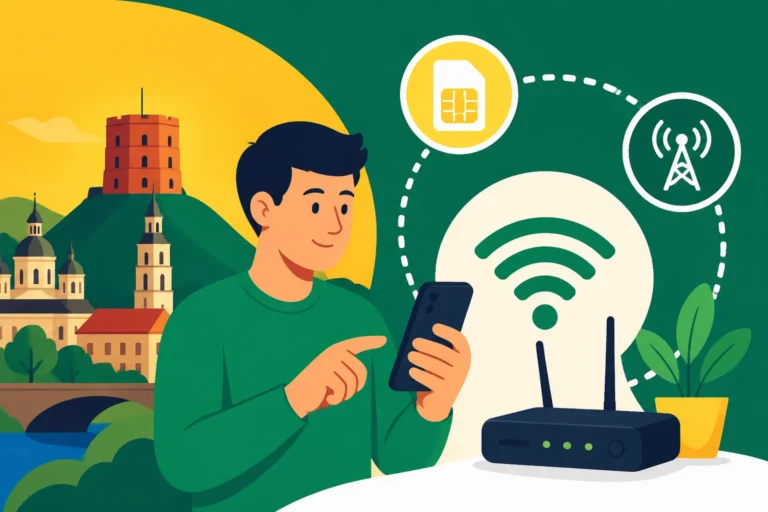
Getting a local SIM card is often one of the first things expats do upon arrival. It's relatively easy and you have two main options: a prepaid SIM (prepaid kortelė) or a post-paid contract. Prepaid SIMs are great for immediate connectivity and flexibility, often available at kiosks, supermarkets, or provider stores without needing much paperwork beyond your ID. Top-ups can be done online, at stores, or through ATMs. For those just landing and needing instant data, an eSIM from providers like Airalo can be a lifesaver, allowing you to get connected even before you pick up a physical SIM.
For a post-paid contract, you'll typically need your Asmens Kodas, a valid ID/passport, and sometimes proof of address. Contracts usually offer better value for money if you plan to stay long-term and use a lot of data or make many calls. Telia, Bitė, and Tele2 stores are widespread in all major cities, and staff often speak English. This is usually the easiest way to compare plans and sign up. You can learn more about this in How Do I Get a Lithuanian SIM Card as a New Arrival?.
Waste Management and Recycling: Keeping Lithuania Clean
Waste management might not be the most exciting topic, but it’s a crucial aspect of daily life and something you need to get right. Lithuania, like many EU countries, has a well-structured system for waste collection and emphasizes recycling.
Registering for Waste Collection Services
In most cases, if you're renting an apartment, waste collection services will already be set up for the building and are part of your Komunaliniai Mokesčiai. The landlord or building administrator usually handles the registration and payment for the building as a whole, and you'll pay your share as part of your monthly communal fees. You won't typically need to register individually for standard household waste collection.
However, if you're renting a house or are self-managing a property, you might need to register directly with your local municipal waste management company. For instance, in Vilnius, this is usually Ecoservice or VSA. They will provide you with specific bins (or clear instructions for shared bins) and a collection schedule. This is generally a straightforward process that requires your Asmens Kodas and proof of address, similar to other utilities.
Understanding Recycling Rules in Lithuania
Lithuania takes recycling seriously, and it's something you'll want to get acquainted with quickly to avoid fines or confused stares from your neighbors. The system is generally quite clear, with separate bins for different types of waste. Common categories include:
- Yellow bin/container: For plastic (plastikas), metal (metalas), and composite packaging (pakuotės).
- Green bin/container: For glass (stiklas).
- Blue bin/container: For paper (popierius) and cardboard (kartonas).
- Brown bin/container (less common for apartments): For organic/compostable waste (žaliųjų atliekų).
- Black/grey bin/container: For mixed household waste (mišrios komunalinės atliekos) – anything that doesn't fit into the recycling categories.
It’s important to rinse food containers, remove lids, and flatten cardboard boxes. Specific rules might vary slightly by municipality, so it’s a good idea to check the website of your local waste management company for detailed guidelines. Many apartment buildings have designated recycling areas, often with clear signage in Lithuanian and sometimes English.
Special Waste Disposal
Beyond the standard bins, there are specific procedures for disposing of larger items or hazardous waste. You can't just leave an old sofa or broken electronics by the regular bins. For bulky items like furniture or large appliances, you’ll need to arrange for a special collection with your waste management company, which often incurs an additional fee, or take them to designated collection points (Didelių gabaritų atliekų surinkimo aikštelės – DGASA). These sites also accept construction waste, tires, and other materials not suitable for regular bins.
For hazardous waste, such as batteries, expired medications, paints, or chemicals, you must use designated collection points, often found at larger supermarkets, pharmacies, or specialized waste collection centers. Never dispose of these items in your regular household waste, as it poses environmental and health risks. Being a responsible resident means understanding and adhering to these rules.
Understanding Utility Costs and Payment Methods
Money talks, and knowing what to expect for your utility costs and how to pay them efficiently will definitely make your life easier. It's not just about managing the bills, but also about integrating these payments into your new financial routine.
Typical Monthly Utility Expenses
Your monthly utility costs in Lithuania can vary significantly based on the size of your apartment, your consumption habits, the energy efficiency of your building, and crucially, the season. Heating will be your biggest variable. Here’s a rough breakdown to give you an idea (these are estimates and can fluctuate greatly):
| Utility Type | Average Monthly Cost (2024, for a 60sqm apartment, 1-2 people) | Notes |
|---|---|---|
| Heating (Šildymas) | €50 – €150+ (Winter) / €10 – €30 (Summer) | Heavily dependent on building insulation, outdoor temperature, and individual meters. Can be significantly higher in old, poorly insulated buildings. Summer costs are often for hot water maintenance. |
| Electricity (Elektra) | €25 – €50 | Depends on usage. Modern energy-efficient appliances help. |
| Water & Wastewater (Vanduo ir Nuotekos) | €15 – €30 | Based on consumption. Includes both cold and hot water. |
| Gas (Dujos) | €5 – €10 (for cooking only) / €50 – €150+ (for individual boiler) | If you only have a gas stove, it's minimal. If you use an individual gas boiler for heating, expect costs similar to central heating. |
| Waste Management (Atliekų Išvežimas) | €5 – €10 | Often included in communal fees. |
| Building Maintenance (Administratoriaus mokestis) | €10 – €30 | Covers common area cleaning, minor repairs, elevator maintenance, etc. Varies per building. |
| Internet & TV | €15 – €30 | For a basic package. High-speed fiber and premium TV channels will cost more. For more info, check How Much Does Home Internet Cost Per Month in Lithuania?. |
| Total (Monthly Average) | €125 – €300+ | This is a broad average. Expect higher in winter, lower in summer. Old buildings or high consumption habits can push this higher. For a broader picture of living costs, see How Much Does It Cost to Rent an Apartment in Vilnius in 2026?. |
Remember, these figures are just rough guidelines. Your actual expenses could be higher or lower.
Convenient Ways to Pay Your Bills
Gone are the days when you had to physically go to the post office to pay every single bill. Thankfully, Lithuania has a very modern and efficient system for bill payments. The most common and convenient methods for expats include:
- Online Banking: This is by far the most popular method. All major Lithuanian banks (like Swedbank, SEB, Luminor) offer robust online banking platforms. You can set up direct debits (e.g., for internet) or manually transfer money to the provided account details on your utility bills. Each bill will typically have a unique payment code or customer number to ensure your payment is correctly allocated.
- E-Banking Portals: Many utility providers have their own online self-service portals where you can view your bills and pay them directly using your bank card or through bank links. This is often the easiest way to manage multiple utilities in one place for that specific provider.
- Perlo Terminalai and Maxima/Rimi/Iki Stores: These self-service terminals (Perlo Terminalai) are ubiquitous in supermarkets and other public places. You can pay most utility bills using cash or card. Similarly, many supermarket chains (Maxima, Rimi, Iki) have customer service desks or special terminals where you can pay bills.
- Direct Debit: For recurring bills like internet or mobile phone contracts, you can usually set up a direct debit from your Lithuanian bank account. This ensures you never miss a payment.
Strategies for Managing Costs
Managing utility costs, especially the fluctuating heating bills, requires a bit of strategy. First, always try to use providers' online portals to track your consumption. Seeing your usage patterns can help you identify areas where you can cut back. Second, if your apartment has individual heat meters, actively managing your thermostat settings can make a big difference. Turning down the heat even by a couple of degrees when you're out or asleep can lead to noticeable savings.
Consider energy-efficient practices: unplug electronics when not in use, switch to LED lighting, and take shorter showers. If you have an older apartment, discuss with your landlord about improving insulation or sealing drafty windows – sometimes a small investment can lead to significant long-term savings for both of you. Lastly, always factor in those higher winter bills when budgeting for your overall The Complete Guide to Cost of Living in Lithuania for Expats (2026), so you're not caught off guard.
Troubleshooting and Support for Expats
Even with all the information in the world, you'll inevitably run into a snag or two. It's just part of being an expat! Knowing where to turn when you're facing a language barrier or an unexpected technical issue is key to a smoother experience.
Language Barriers and How to Overcome Them
Let's be real: bureaucracy and technical issues are annoying enough in your native language, let alone in Lithuanian! While many younger Lithuanians, especially in major cities, speak excellent English, not all customer service representatives will. This can be a real source of frustration when you're trying to explain a complex problem or understand nuanced terms.
My best advice here is to have a few strategies ready. First, try calling during peak business hours, as you're more likely to connect with English-speaking staff. Second, don't be afraid to ask, "Ar kalbate angliškai?" (Do you speak English?). If they don't, politely ask if there's someone else who does. Third, if you're comfortable, try using online translation tools for simple inquiries via email or online chats. Failing that, ask a Lithuanian friend or colleague for help. Most Lithuanians are incredibly kind and willing to lend a hand, especially when they see you're genuinely trying to navigate their system.
Where to Go for Help
When you need assistance, there are several avenues available. For specific utility issues, your first stop should always be the customer service department of the respective utility company (ESO, Vilniaus Vandenys, Telia, etc.). They are the experts on their services. For broader questions about communal living, your building administrator (namo administratorius) can be a great resource, as they manage the common areas and often act as a liaison between tenants and utility providers.
Expat Facebook groups and online forums for Lithuania are also goldmines of information. Someone else has almost certainly faced the exact same problem you're dealing with and can offer advice or recommend a solution. Websites like Sirelo that provide comprehensive moving guides can also be helpful for general guidance when you're first settling in, offering broader support for the entire relocation process. Don't underestimate the power of community knowledge!
Emergency Services for Utility-Related Issues
For true emergencies, such as a major gas leak, a significant electrical fault that could be dangerous, or a burst water pipe that's flooding your apartment, you should immediately call the universal emergency number 112. This number connects you to all emergency services (police, fire, ambulance, and utility emergencies). Operators usually speak English, and they can dispatch the appropriate team.
It’s vital to distinguish between a general query or minor fault and an actual emergency. If it's something that could cause immediate harm, significant property damage, or affects public safety, call 112 without hesitation. For less urgent technical issues, such as a localized power outage affecting only your building, contacting the specific utility provider's emergency line (which they usually list on their website) would be more appropriate. Always prioritize safety first.
Disclaimer
Please remember that while this guide provides comprehensive information, utility regulations, pricing, and administrative procedures in Lithuania can change. We always recommend checking the most up-to-date information directly with the service providers or relevant governmental bodies. This article is for informational purposes only and does not constitute professional advice.