How E-Referrals (Siuntimas) Work for Specialists in Lithuania
One of the most confusing aspects of relocating to Lithuania is realizing that you cannot simply call up a cardiologist or a dermatologist and book an appointment if you want the state to foot the bill. This guide deciphers the "siuntimas" or e-referral system, ensuring you understand how to navigate the bureaucratic bridge between your family doctor and specialist care without unnecessary delays or expenses.
Understanding the Concept of the Siuntimas
When you first enter the Lithuanian healthcare system, the term "siuntimas" will become a recurring part of your vocabulary. Essentially, an e-referral is a digital "permission slip" issued by a primary care physician that justifies your need for specialized medical attention. In the eyes of the Territorial Health Insurance Fund (TLK), the family doctor acts as a gatekeeper, ensuring that specialist resources are allocated to those who genuinely need them. This system is designed to prevent the public clinics from being overwhelmed by patients self-diagnosing and booking appointments for every minor ailment.
What is an E-Referral
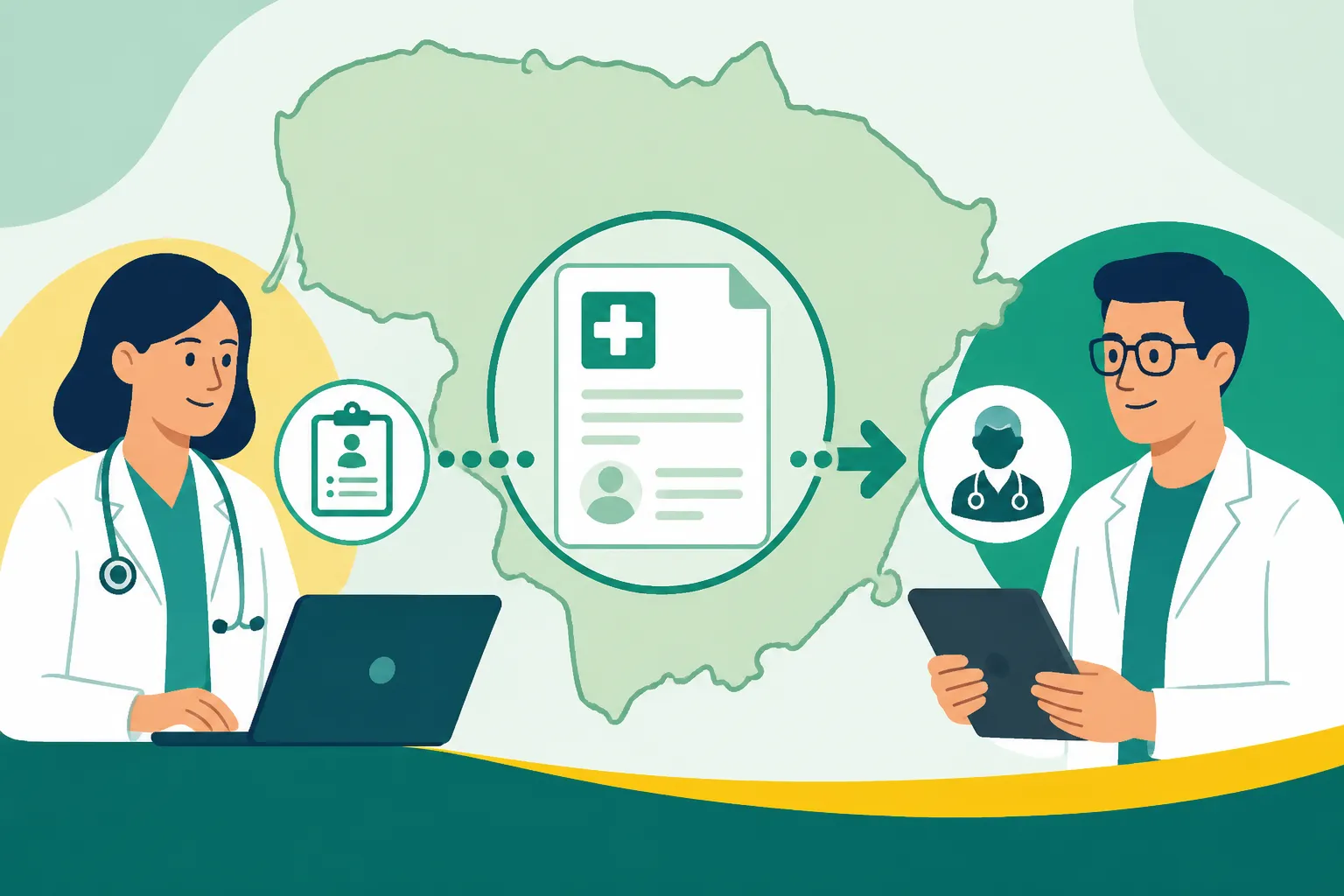
An e-referral is no longer a physical piece of paper that you carry in your hand, though you can still request a printed copy if it makes you feel more secure. In the modern Lithuanian system, it is a digital entry in the national health database known as E-Sveikata. When a doctor issues a siuntimas, they are essentially tagging your electronic health record with a specific code and a medical justification. This digital record is what allows a specialist at a completely different clinic to see why you were sent to them and what tests have already been performed.
For most expats, the realization that this digital link exists is a relief. It means you don't have to worry about losing a precious slip of paper or having your handwriting misread. However, it also means you are tethered to the system. Without that digital entry being correctly finalized by your doctor, the specialist’s computer will show that you are a "private" patient, and you will be asked to pay the full price of the consultation out of pocket. This is why Understanding the E-Sveikata (E-Health) system in Lithuania is so vital for anyone living here long-term.
Why the System Exists
The logic behind the siuntimas system is rooted in the way How Lithuania's Health Insurance Fund (VLK/PSDF) Works: A Full Overview handles its budget. The Compulsory Health Insurance Fund (PSDF) pays for specialist visits, but only if they are deemed medically necessary by a general practitioner. By requiring a referral, the state ensures that the family doctor, or "šeimos gydytojas," has first attempted to treat the issue or at least narrowed down the diagnostic path. This prevents, for example, a patient with simple back pain from jumping straight to an expensive MRI when a physical therapy session or a specific medication might have sufficed.
From an expat's perspective, this can feel like an annoying extra step, especially if you come from a country where you can book any specialist you like. It can feel like you are wasting a week just to get a five-minute appointment with your family doctor to ask for a referral you already know you need. However, understanding that this is the mechanism for keeping public healthcare free at the point of use helps mitigate some of that frustration. If you find the waiting times for these referrals too cumbersome, some expats choose to use SafetyWing as a supplementary option during their initial transition period or for emergencies while they are still Registering for Compulsory Health Insurance (PSD) in Lithuania (2027).
Electronic vs Paper Referrals
While the system has gone almost entirely digital, the transition hasn't been 100% seamless across the entire country. In major cities like Vilnius and Kaunas, paper is a rarity. However, if you are visiting a smaller clinic or a very senior specialist, you might still encounter the old-school paper "siuntimas." Even in these cases, the information should eventually be mirrored in the E-Sveikata portal.
The main difference for you as a patient is the booking process. With an e-referral, you can often log into centralized booking portals and the system will automatically "see" that you have a valid referral, allowing you to choose from available times. If you have a paper referral, you may find yourself having to call the registration desk (registratūra) and read off numbers or codes, which can be a significant hurdle if your Lithuanian language skills are still in the early stages.
The Step by Step Process of Getting a Referral
Navigating the path to a specialist requires a specific order of operations. You cannot skip steps without incurring costs. Many newcomers make the mistake of calling a hospital first, only to be told they need to go back to their local clinic. It is essential to have your Asmens Kodas (Personal Code) and Why It Matters for Healthcare ready, as this is the primary identifier used to track your referrals in the system.
Visiting the Family Doctor
The journey always begins at your "Poliklinika" or private clinic where you are registered. Your The Expat Guide to Finding a Family Doctor (Šeimos Gydytojas) in Lithuania is your first point of contact. During the consultation, you explain your symptoms. If the doctor agrees that a specialist’s opinion or a specific diagnostic test (like an ultrasound or an endoscopic exam) is required, they will "open" a referral in the system.
It is worth noting that you should be very clear with your doctor about which specialist you want to see. While a general referral for a "neurologist" is standard, if you have a preference for a specific hospital or clinic, it’s good to mention it. Once the doctor clicks 'submit' on their computer, the referral is live. You don't need to wait for a confirmation email; it is instantly attached to your national ID number in the database.
The Role of E-Sveikata in Referrals
Once the doctor has entered the referral, it resides within your electronic health record. You can actually log in to the E-Sveikata portal yourself using your mobile signature or e-banking credentials. Under the "Siuntimai" section, you will see the date it was issued, the specialty it is for, and the "ICD-10" code representing your diagnosis or suspected condition.
This transparency is excellent because it allows you to see the expiration date of your referral. Most referrals are valid for 60 days. This doesn't mean you have to see the doctor within 60 days, but you must book the appointment within that window. If you forget to book and the 60 days pass, the referral disappears or becomes "expired," and you will have to return to your family doctor to start the process all over again. This digital management is a cornerstone of Navigating the Lithuanian Healthcare System: An Expat's Roadmap (2027).
Exceptions Where No Referral is Needed
There are a few key exceptions where the "gatekeeper" rule does not apply. You can go directly to certain specialists without a siuntimas and still have the visit covered by your public insurance. The most common of these is the dermatovenerologist (for skin and sexually transmitted diseases) and the psychiatrist. In these cases, the sensitivity or urgency of the issues allows patients to bypass the general practitioner.
Additionally, if you are seeking Emergency Medical Care in Lithuania: What Every Expat Needs to Know, you do not need a referral. If you break your arm or have a sudden, acute illness, the emergency department (priimamasis) will treat you. However, follow-up care after the emergency—such as seeing an orthopedist to have your cast checked—will usually require a referral from your family doctor once the initial emergency phase has passed.
Navigating Specialist Access in the Public System
The public system is where the siuntimas is most powerful, as it unlocks "free" care. However, the public system is also where you will encounter the infamous Lithuanian waiting lists. Understanding how to work the system can save you months of waiting.
Choosing a Polyclinic or Specialist
One of the best-kept secrets in Lithuania is that a referral is not tied to a specific building. If your doctor in a Vilnius polyclinic gives you a referral for an ophthalmologist, you are not obligated to see the one in that same building. You can take that e-referral to any public or private institution in the country that has a contract with the TLK.
This is crucial because waiting times vary wildly. While the wait for a specialist in central Vilnius might be three months, a clinic in a neighboring district or even a different city like Kaunas might have an opening next week. Understanding the Role of the Polyclinic (Poliklinika) in Lithuania helps you realize that you have the freedom of choice. You can search for the shortest queues across the entire "Sergu.lt" or "ipr.esveikata.lt" platforms.
Dealing with Waiting Lists
Waiting lists are the primary complaint of locals and expats alike. For popular specialists like endocrinologists or cardiologists, the "talonėliai" (appointment slots) for the next month might be released at a specific time on a specific day—often the first workday of the month at 7:00 AM. If you aren't online or on the phone at that exact moment, the slots can vanish in minutes.
If you find yourself stuck in a three-month waiting list and your condition is causing you significant distress, you have two options. You can keep checking the booking portal daily for cancellations, or you can opt for private care. If you have SafetyWing or similar coverage, you might find that the cost of a private specialist is worth the immediate peace of mind. Otherwise, you must play the waiting game that is characteristic of the public sector.
Booking Appointments Online via Centralized Portals
The primary tool for booking is the "Išankstinė pacientų registracijos sistema" (IPR). This portal aggregates available times from clinics across the country. To use it, you'll need to authenticate your identity. Once logged in, the system will automatically fetch your active referrals. You then select the specialty, and a map or list of clinics will appear.
The interface is predominantly in Lithuanian, which can be a significant barrier. Many expats use browser translation tools or ask a Lithuanian-speaking friend to help during the first few attempts. The portal allows you to filter by city, clinic, and even specific doctor. It will clearly show which slots are "PSDF-funded" (free with referral) and which are "Paid" (private).
| Service Type | Requirement | Cost (with PSD) | Typical Wait Time |
|---|---|---|---|
| Public Specialist | Valid E-Referral | 0 EUR | 2 weeks – 4 months |
| Public Specialist | No Referral | Full Price (Varies) | 1 week – 1 month |
| Private Specialist | Referral (Public) | Partial Discount* | 2 – 10 days |
| Private Specialist | No Referral | Full Price (60-150 EUR) | 1 – 5 days |
Note: Some private clinics accept public referrals but charge a "service fee" or top-up.
Comparing Public and Private Specialist Access
The "Great Divide" in Lithuanian healthcare is the choice between the slow, free public system and the fast, expensive private system. Your referral status often dictates which path you take.
Public System Costs and Coverage
In the public system, a referral means the consultation, basic blood tests, and standard diagnostics related to that visit are entirely covered. You shouldn't have to open your wallet at all. This is the primary benefit of How to Access Specialist Care Through the Lithuanian Public System. However, "standard diagnostics" can be a gray area. If a specialist decides you need a very advanced genetic test or a brand-new type of biological therapy, there might still be some costs involved if those specific treatments aren't on the "compensated" list.
The trade-off for this zero-cost experience is the environment. Public polyclinics can be crowded, the decor is often "functional," and not every specialist will speak fluent English. You are essentially trading your time and comfort for financial savings. For many, this is a fair trade, especially for routine check-ups.
Private Specialist Visits Without a Siuntimas
If you decide to skip the family doctor and go straight to a private clinic like Northway, Kardiolita, or InMedica, you do not need a referral. You simply call, book, and pay. A typical consultation for How Much Does a Private Specialist Consultation in Lithuania? can range from 60 to 120 Euros, depending on the doctor's seniority and the city.
The experience is starkly different: modern waiting rooms, often English-speaking staff, and appointments available within 48 hours. If you are a high-earning expat or have your costs covered by a company insurance plan, the private route is significantly less stressful. Many expats use SafetyWing to handle unexpected medical needs that require this kind of speed, bypassing the "siuntimas" bureaucracy entirely for urgent but non-emergency issues.
The Role of Supplementary Insurance
Many large employers in Lithuania provide private health insurance (Sveikatos draudimas) as a perk. This insurance often covers a certain amount of private specialist visits per year. In many cases, these insurance companies also require a referral from a family doctor (even a private one) before they will reimburse the cost of a specialist.
It is a common misconception that private insurance removes all bureaucracy. Always check your policy. You might still need to visit a private family doctor first to get that digital "siuntimas" so your insurance provider can verify that the visit was necessary. This is a crucial distinction between the "free" state system and the "reimbursed" private system.
Common Challenges and Troubleshooting
Even with a digital system, things can go wrong. Being prepared for these "glitches" will save you a lot of headache at the registration desk.
Expired Referrals and Validity Periods
As mentioned, the standard 60-day window is the most common pitfall. If you book an appointment on the 61st day after the referral was issued, the specialist’s system might not be able to "attach" the referral to the visit. Some clinics are strict about this; others might be more lenient, but it is a risk not worth taking.
If your appointment is scheduled for three months in the future because of long waiting lists, that is fine, as long as you made the booking while the referral was still valid. If the doctor cancels your appointment and you have to re-book, and your referral has since expired, you generally need to ask your family doctor to "renew" or issue a new one. This can often be done via a phone consultation or a message through the clinic's portal, so you don't always have to go in person.
Language Barriers with Specialists
While many younger doctors in Lithuania speak excellent English, some older specialists or those in more regional polyclinics may not. This becomes a challenge when you have a referral for a complex issue. It is perfectly acceptable—and often encouraged—to bring a friend who speaks Lithuanian or to use a translation app.
When your family doctor writes the referral, it is usually written in Lithuanian medical terminology. If you plan to see a specialist privately, you might want to ask your family doctor for a brief summary of the referral in English, though they are not legally obligated to provide one. Most private clinics will have English-speaking specialists, making the "siuntimas" conversation much smoother.
Handling Referrals for Children and Family
If you are moving with family, you will be handling referrals for your children. The process is the same, starting with the How Do I Find a Pediatrician (Vaikų Gydytojas) in Kaunas? or your local family doctor. Children are prioritized in many clinics, but for certain specialties like pediatric orthodontics or neurology, the waits can still be long.
The E-Sveikata portal allows parents to view their children’s records and referrals by switching "profiles" within the system. This is incredibly helpful for keeping track of multiple appointments. Ensure that your children are properly registered in the system through your own residency status to avoid issues with referral coverage.
Practical Tips for Expats
To thrive in the Lithuanian medical landscape, you need to be proactive rather than reactive. Don't wait until you are in pain to figure out how the portal works.
Managing Your Health Data
Log in to E-Sveikata now. Even if you aren't sick, ensure you can access the portal. Check if your Asmens Kodas (Personal Code) and Why It Matters for Healthcare is correctly linked to your name and address. If you see errors in your digital record, it is much easier to fix them with a calm phone call to the clinic than it is during a medical crisis.
When a doctor issues a referral, ask them to double-check that your phone number in the system is correct. Often, when an appointment slot opens up due to a cancellation, the clinic will call the next person on the list. If they have your old number or a foreign number they can't dial, you'll miss out on a faster track to care.
Travel Insurance and Specialist Care
If you are a digital nomad or an expat who hasn't yet secured Registering for Compulsory Health Insurance (PSD) in Lithuania (2027), you are essentially a private patient. In this scenario, the "siuntimas" system doesn't apply to you because you are paying full price anyway.
For those in this transition phase, SafetyWing is an excellent bridge. It provides the necessary coverage for specialist visits that arise unexpectedly. Once you are fully integrated into the Lithuanian system and paying your monthly PSD contributions, you can transition to relying on the e-referral system for your non-urgent, long-term health maintenance.
When to Seek a Second Opinion
If you receive a referral for a major procedure or surgery, you are entitled to a second opinion. You can ask your family doctor for another referral to a different specialist or a different hospital. In the Lithuanian system, patients have a lot of autonomy in choosing where they receive their "secondary" care (specialist care) and "tertiary" care (major hospitals).
Don't feel pressured to stick to the first specialist you see if there is a significant language barrier or if you don't feel comfortable with the proposed treatment. The e-referral is your ticket to the entire network of Lithuanian specialist care—use it wisely to find the doctor that best fits your needs.
Disclaimer
This guide is provided for informational purposes only and does not constitute professional medical or legal advice. Healthcare regulations and procedures in Lithuania, including the E-Sveikata system and PSDF regulations, are subject to change by the Ministry of Health and the National Health Insurance Fund (VLK). Always consult with your registered family doctor or the Migration Department for the most current information regarding your specific residency and insurance status. For up-to-date information on state-funded services, refer to the official portal of the Territorial Health Insurance Fund (TLK).