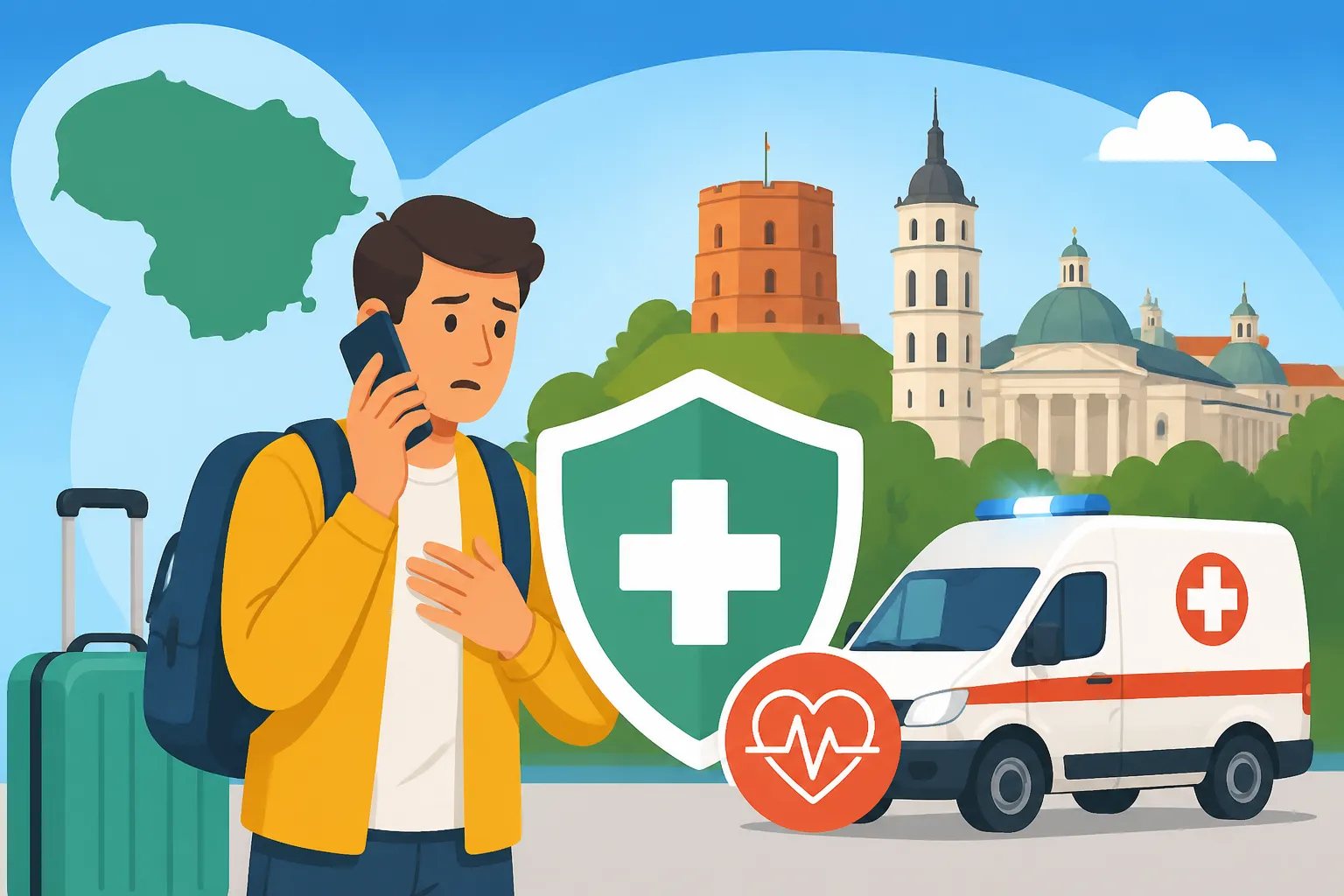
How to Handle a Medical Emergency Abroad with Lithuanian Insurance
Imagine you are enjoying a weekend getaway in the Alps or visiting family back home when a sudden medical crisis strikes. For many expats living in Lithuania, the initial panic of a health emergency is quickly followed by a second wave of anxiety: will my Lithuanian insurance actually cover this? This guide explains exactly how to navigate medical emergencies outside Lithuania using both public and private coverage.
The Foundation of Coverage: The European Health Insurance Card (EHIC)
If you are legally residing in Lithuania and paying into the public system, your first line of defense within Europe is the European Health Insurance Card (EHIC). In Lithuania, this is known as the Europos sveikatos draudimo kortelė (ESDK). It is a physical card that proves you are covered by the Lithuanian Compulsory Health Insurance Fund (PSD). Without this card in your wallet, seeking treatment in a foreign hospital becomes significantly more complicated and expensive.
What the EHIC Covers and Where
The EHIC is valid in all EU member states, as well as Iceland, Liechtenstein, Norway, and Switzerland. It ensures that you receive necessary, state-provided healthcare under the same conditions and at the same cost as people insured in that country. It is crucial to understand that this is for "necessary" care—things that cannot wait until you return to Lithuania. This includes emergency room visits, treatment for sudden illnesses, and even maternity care, provided you didn't travel specifically to give birth abroad.
However, the "same cost" part is where many expats get caught off guard. If a local in France pays a 20% co-payment for an emergency consultation, you will also pay that 20%. The EHIC does not make healthcare "free"; it makes it "equal." This is why How Lithuania's Health Insurance Fund (VLK/PSDF) Works: A Full Overview is so important to understand; the system is designed to reciprocate costs, not necessarily to erase them.
How to Apply for the EHIC in Lithuania
Getting your card is one of those administrative tasks that feels like it will be a nightmare but is actually surprisingly straightforward. You can apply for it through the Territorial Health Insurance Fund (TLK) offices in Vilnius, Kaunas, Klaipėda, Šiauliai, or Panevėžys. Most expats find it easiest to apply online through the VLK website or the E-Government Gateway. You will need your asmens kodas and a valid identity document.
If you are in a rush and your trip is tomorrow, you can visit a TLK office in person and often get a temporary certificate on the spot. It is advisable for residents to do this as soon as they receive their residence permit. It’s a small piece of plastic that prevents a massive headache later. If you are still figuring out your status, you might want to read about Registering for Compulsory Health Insurance (PSD) in Lithuania (2027) to ensure your contributions are up to date before you leave the country.
The Critical Limitations of the EHIC
I cannot stress this enough: the EHIC is not a replacement for travel insurance. It will not cover mountain rescue in the Swiss Alps, it won't pay for a private hospital room, and it certainly won't cover the cost of a medical flight back to Vilnius if you are seriously injured. It only works in state-run facilities. If the ambulance takes you to a private clinic by mistake, you are on the hook for the entire bill.
Furthermore, the EHIC is useless once you step outside the borders of the EU and the specific EFTA countries. If you’re heading to the United States, Turkey, or Thailand, your Lithuanian PSD coverage effectively stays behind at the border. This is where Health Insurance in Lithuania: Compulsory, Private and Travel Options Explained becomes a vital resource for planning your trips.
Private Travel Insurance and the Role of SafetyWing
Because of the limitations mentioned above, most veteran expats in Lithuania carry a secondary form of private travel insurance. Whether you are a digital nomad using Lithuania as a base or a corporate employee, having a private plan provides a safety net that the public system simply cannot match. Private insurance covers the gaps—repatriation, private clinic fees, and emergencies in non-EU countries.
Why Supplemental Insurance is Necessary for Expats
When you are in a foreign country, the last thing you want to navigate is a language barrier in a crowded public hospital. Private travel insurance often gives you access to a wider network of English-speaking doctors and private facilities where wait times are shorter. Additionally, most private policies include "travel" benefits, such as coverage for lost luggage or canceled flights, which are obviously not part of the Lithuanian public health mandate.
For those who travel frequently or work remotely, SafetyWing offers a flexible solution that functions more like a subscription than a traditional one-off policy. SafetyWing is particularly popular among the expat community in Vilnius because it covers you globally (except for a few specific countries) and can be started even if you have already left Lithuania. This flexibility is a lifesaver if you realize halfway through a trip to Montenegro that you forgot to buy insurance.
Comparing SafetyWing with Local Lithuanian Options
Local Lithuanian insurance companies like Lietuvos Draudimas or ERGO offer travel insurance packages that are quite affordable. These are great for short, one-week holidays. However, they often have strict rules about when the policy must be purchased (usually before you leave Lithuanian soil). SafetyWing, on the other hand, is designed for the modern, mobile expat.
If you are a resident, you should look into Understanding Private Health Insurance Plans in Lithuania to see if your employer-provided health insurance already includes a travel component. Many "Sveikatos Draudimas" packages provided by tech companies in Kaunas or Vilnius include a basic travel insurance rider that might be sufficient for short trips within Europe. However, always check the "repatriation" clause; this is the most expensive part of a medical emergency and is often the first thing cut from basic policies.
Navigating Non-EU Emergencies
Outside the EU, the cost of healthcare can be astronomical. A simple appendectomy in the United States can cost upwards of 30,000 USD. SafetyWing provides the kind of high-limit coverage necessary for these environments. When you are outside the EHIC zone, you are essentially a private patient. You will be expected to pay upfront or provide a guarantee of payment from your insurer. This is why having an insurance card with an emergency 24/7 hotline is non-negotiable.
Steps to Take During a Medical Emergency Abroad
The moments immediately following an accident or sudden illness are chaotic. However, following a specific protocol can be the difference between a fully reimbursed claim and a rejected one. Your Lithuanian insurance (or your private provider like SafetyWing) has specific requirements that must be met.
Immediate Contact with the Insurer
The very first thing you should do—after calling emergency services (112 in the EU)—is contact your insurance provider. If you are using your EHIC, you don't necessarily need to call the VLK immediately, but you must ensure the hospital sees your card before they start billing you as a private patient. If you are using private insurance, call their emergency hotline. Most providers, including SafetyWing, require notification within 24 to 48 hours of admission.
They can often arrange a "Guarantee of Payment," which means the hospital bills the insurance company directly. This is much better than paying 5,000 Euros on your credit card and waiting months for a refund. If you are unsure of who to call, Emergency Medical Care in Lithuania: What Every Expat Needs to Know provides a good overview of the types of documents and numbers you should keep handy, even when traveling.
Documenting Everything for Future Claims
If you are forced to pay out of pocket, you need to become a master archivist. You will need:
- Original invoices (not just credit card receipts).
- Detailed medical reports explaining the diagnosis and the treatment provided.
- Prescriptions for any medication purchased.
- Proof of your travel dates (like a boarding pass or hotel booking).
In Lithuania, the VLK is notoriously strict about documentation. If your medical report is in a language other than Lithuanian or English, they may require a certified translation before they even consider your claim. This is a common hurdle mentioned in How to Claim Healthcare Cost Reimbursement in Lithuania, and it can add significant costs and delays to the process.
Understanding the Role of the Family Doctor Post-Emergency
Once you return to Lithuania, your journey isn't necessarily over. You will likely need follow-up care. This is where you must re-enter the local system through your Šeimos Gydytojas. You should bring all your foreign medical records to them so they can enter the data into the Understanding the E-Sveikata (E-Health) System in Lithuania portal.
This ensures that any prescriptions you need for recovery can be issued via the Understanding the Electronic Prescription (E-Receptas) System in Lithuania system, which allows you to get subsidized medicine at local pharmacies. Without this step, your follow-up care will remain outside the public system, meaning you’ll be paying full price for everything.
Reimbursement Procedures via the VLK
If you used your EHIC and still had to pay a "patient fee," or if you didn't have your EHIC and paid the full bill, you can apply for reimbursement from the VLK once you are back in Lithuania. This is not a "quick cash" process; it requires patience and a fair amount of paperwork.
Filing a Claim with the Territorial Health Insurance Fund
You must submit your claim to the TLK in the city where you have declared your residence. You can do this in person or via the post. You will need to fill out a specific application form (available on the VLK website) and attach all the original documents you collected abroad. It is worth reading Navigating the Lithuanian Healthcare System: An Expat's Roadmap (2027) to understand the general bureaucratic culture you are dealing with.
The VLK will then contact the health insurance fund of the country where you were treated to verify the costs. They will only reimburse you the amount that the foreign country's insurance fund would have covered for its own citizens. If you were treated in a country with high patient co-payments, you will not get that money back from the Lithuanian state.
Comparison of Coverage Options for Expats
| Feature | EHIC (Public) | Private Travel Insurance | SafetyWing (Nomad Insurance) |
|---|---|---|---|
| Geographic Scope | EU/EFTA Only | Global or Region-specific | Global (excluding few) |
| Provider Type | Public Hospitals Only | Public & Private | Public & Private |
| Repatriation | Not Covered | Covered | Covered |
| Ease of Use | Show card at desk | Call hotline for GOP | Online dashboard/Hotline |
| Cost | Free (via PSD) | Paid upfront | Monthly subscription |
| Search & Rescue | Not Covered | Usually Covered | Covered |
Required Documentation and Translations
One of the biggest frustrations foreigners face is the translation requirement. If you were treated in Greece or Poland, the VLK may insist that the medical summary be translated into Lithuanian. This can cost more than the actual medical bill if the claim is small. However, if the bill is in the thousands, the translation is a necessary investment.
Readers should check The Cost of Healthcare in Lithuania: A Complete Breakdown for Foreigners (2026) to get a sense of how the VLK values different treatments. If they see a bill for a "specialist consultation" that seems quadruple the Lithuanian rate, they will likely only reimburse you up to the Lithuanian standard or the foreign state-standard rate, whichever is lower.
Practical Scenarios: Public vs. Private Coverage
To make this real, let’s look at how this actually plays out in the real world. Many expats assume their insurance is a "magic shield," but the reality is more nuanced.
Scenario A: A Broken Leg in the French Alps
If you are skiing in France and break your leg, and you have your EHIC, the mountain rescue team will take you to a local hospital. If that hospital is public, you show your EHIC. France has a "ticket modérateur" system where the patient pays a portion of the costs. You will pay that 20% out of your own pocket. If you only have EHIC, that money is gone. If you have SafetyWing or another private policy, you can submit that 20% bill to them for reimbursement. Furthermore, if you need a special flight home because you can't sit in a standard airplane seat with your cast, EHIC pays zero. SafetyWing would pay for the extra seat or the medical transport.
Scenario B: Sudden Illness in a Non-EU Country (e.g., Vietnam)
In this case, your Lithuanian PSD is completely irrelevant. You arrive at the hospital in Hanoi, and they ask for a credit card or insurance details immediately. If you have SafetyWing, you call their 24/7 line. They can speak to the hospital and verify your coverage. If you don't have private insurance, you are paying every cent yourself. This is a terrifying situation to be in, and it's why Health Insurance in Lithuania: Compulsory, Private and Travel Options Explained emphasizes that PSD is only one part of a complete expat health strategy.
Navigating the "Poliklinika" Mentality Abroad
In Lithuania, we are used to the Understanding the Role of the Polyclinic (Poliklinika) in Lithuania model, where everything is centralized. Abroad, the system might be fragmented. You might go to one place for an X-ray and another for the doctor. If you are using public insurance (EHIC), you must ensure every single one of those providers is part of the "public" network. If the X-ray clinic is a private partner, your EHIC won't cover it. Private insurance like SafetyWing is much more "forgiving" in this regard, as they generally cover any licensed medical provider.
Final Advice for the Savvy Expat Traveler
Handling a medical emergency abroad while living in Lithuania is about preparation before you ever leave your apartment in Vilnius or Kaunas.
- Check your EHIC validity: They expire every few years. Log into the VLK portal and make sure yours is current.
- Keep a digital folder: Scan your passport, residence permit, EHIC, and private insurance policy (like SafetyWing) and keep them in a secure cloud folder.
- Understand the Siuntimas system: Even for emergencies abroad, some private insurers like to see that you followed up with your family doctor once home. Read How E-Referrals (Siuntimas) Work for Specialists in Lithuania to understand the follow-up process.
- Don't skip the private policy: For the price of a couple of coffees a month, a plan like SafetyWing removes the "what if" from your travels.
Living in Lithuania offers a great quality of life and a robust (if sometimes bureaucratic) healthcare system. By bridging the gap between the Lithuanian public system and international private insurance, you can explore the world with the peace of mind that a medical emergency won't become a financial one.
Disclaimer
The information provided in this guide is for informational purposes only and does not constitute legal or professional medical advice. Healthcare regulations and insurance policies in Lithuania and abroad are subject to change. Always consult with the Valstybinė ligonių kasa (VLK) or your private insurance provider for the most current information regarding your specific coverage.