Is Public or Private Healthcare Faster for Expats in Lithuania?
Moving to a new country like Lithuania often comes with the realization that getting a doctor's appointment isn't as simple as it was back home. If you're dealing with a sudden illness or need a specialist, the choice between public and private can be a high-stakes gamble. This guide clarifies exactly which system moves faster so you can get treated without the wait.
Understanding the Dual System in Lithuania
When you first arrive in Vilnius, Kaunas, or Klaipeda, the healthcare landscape can seem a bit bifurcated. On one hand, you have the robust, tax-funded public system managed by the Compulsory Health Insurance Fund (PSDF). On the other, there is a rapidly growing private sector. For many of us who have lived here for years, the question isn't just about which is better, but which is faster when you are actually in pain or need a diagnostic test to move forward with your life.
The public system is anchored by the "Poliklinika." These are massive neighborhood hubs that serve as the first point of contact for almost every resident. If you have been Registering for Compulsory Health Insurance (PSD) in Lithuania (2027), you are entitled to use these facilities for free or at a very low cost. However, because they serve the entire population, they are prone to significant bottlenecks. In contrast, private clinics like Kardiolita, Northway, or InMedica operate on a fee-for-service model. They are essentially the "express lane" of Lithuanian medicine, but that speed comes at a literal price.
For those who are just arriving and haven't yet settled their residency paperwork, or for digital nomads who move frequently, having a bridge like SafetyWing can be a lifesaver. Before your public insurance kicks in, relying on the private sector through a flexible plan ensures you aren't stuck waiting for a system you haven't yet paid into. Understanding How Lithuania's Health Insurance Fund (VLK/PSDF) Works: A Full Overview is crucial, but knowing when to bypass it is arguably more important for your immediate well-being.
Public Healthcare Waiting Times: The Reality Check
The public system is impressively comprehensive, but "fast" is rarely the word used to describe it. The speed of the public system depends heavily on which door you are trying to walk through. If you are seeing your primary care physician, things move relatively quickly. If you need a specialist, you should prepare for a lesson in Lithuanian patience.
Primary Care and the Family Doctor
Your "Šeimos gydytojas" is the gatekeeper of your health. Generally, if you are registered at a local polyclinic, you can get an appointment with your family doctor within 2 to 5 business days. During flu season or a local outbreak, this might stretch to a week. The system is designed to handle acute issues relatively well; if you have a fever or a sudden infection, many polyclinics offer "extra" slots or a walk-in hour for urgent cases.
However, the speed of getting that first appointment is only half the battle. Once you are in the office, the doctor has to manage a massive patient load. This often leads to shorter consultation times. If you are still working on The Expat Guide to Finding a Family Doctor (Šeimos Gydytojas) in Lithuania, I highly recommend choosing a polyclinic close to your home or work, as you will be visiting it for every single referral you might need in the future.
Specialist Referrals (The Siuntimas System)
This is where the public system's speed truly falters. In Lithuania, you cannot simply call up a cardiologist or a neurologist in the public system and book an appointment. You must first see your family doctor to get a "siuntimas" (referral). Once that referral is entered into the Understanding the E-Sveikata (E-Health) System in Lithuania, you then have to find a specialist with an open slot.
Wait times for specialists in the public system can range from 3 weeks to 4 months. For high-demand doctors, like dermatologists or endocrinologists in major cities, the wait can be even longer. If you are trying to understand How E-Referrals (Siuntimas) Work for Specialists in Lithuania, the most important takeaway is that the "clock" doesn't start until your family doctor clicks "send" on that electronic form.
Diagnostic Procedures and Scans
If your specialist decides you need an MRI, CT scan, or even a specialized ultrasound, you enter yet another waiting list. While basic blood tests are usually done the same day or the next morning at your polyclinic, advanced imaging is a different story. Because the expensive equipment is shared across many patients, the queue can be months long unless your case is deemed an immediate emergency. This delay is often the primary reason expats choose to go private for diagnostics, even if they plan to use the public system for the eventual treatment or surgery.
Private Healthcare: The Fast Track for Expats
If you value your time or if your condition is causing significant daily discomfort, private healthcare in Lithuania is almost always the faster route. The private sector is built for efficiency and patient experience, catering to those who would rather pay 50 to 100 Euros than wait two months for an answer.
Bypassing the Referral Bureaucracy
The single greatest "speed hack" in the Lithuanian medical system is the ability to book a specialist directly in a private clinic. You do not need a referral from a family doctor to see a specialist privately. You can simply go online, find an open slot (often for the next day or even the same afternoon), and book it. This bypasses at least two weeks of administrative hurdles associated with the public polyclinic system.
For many of us, this is the difference between getting a diagnosis this week versus getting one next quarter. When I was dealing with a recurring sports injury, I spent two days trying to get a polyclinic appointment just to get the referral. Eventually, I gave up and booked a private orthopedist. I was in his office by 10:00 AM the next morning. If you are curious about the costs involved, The Cost of Healthcare in Lithuania: A Complete Breakdown for Foreigners (2026) provides a realistic look at what these "speedy" visits will run you.
English-Speaking Staff and Modern Amenities
While the medical expertise in public hospitals is top-tier, the administrative speed is often hampered by language barriers. Private clinics specifically hire staff who are fluent in English, which speeds up the registration, history-taking, and follow-up processes. You won't spend twenty minutes trying to explain your symptoms to a receptionist who is struggling to understand you; instead, the process is streamlined.
Furthermore, private clinics often have their own diagnostic labs and imaging equipment on-site. This means you can often see a doctor, get an ultrasound, and receive your results all within a two-hour window. In the public system, these three steps could easily span three different weeks and three different buildings. For travelers or those on temporary assignments, using a service like SafetyWing alongside these private clinics ensures that the high cost of this speed is covered, allowing you to focus on recovery rather than the bill.
Comparative Speed and Accessibility Table
To give you a clearer picture, I have broken down the typical wait times you can expect for various services in both sectors. Note that these are averages based on my experience and current data for 2026; small towns may have shorter or longer waits depending on local demand.
| Service Type | Public System Wait Time | Private System Wait Time | Referral Required? (Public) |
|---|---|---|---|
| Family Doctor (Routine) | 2 – 7 Days | Same Day – 2 Days | No |
| Cardiologist / Specialist | 3 – 12 Weeks | 1 – 5 Days | Yes |
| Routine Blood Tests | 1 – 2 Days | Same Day | Yes (for free) |
| MRI / CT Scan | 1 – 4 Months | 2 – 7 Days | Yes |
| Routine Dental Check-up | 2 – 6 Weeks | 1 – 3 Days | No |
| Minor Surgery (Non-urgent) | 3 – 9 Months | 1 – 4 Weeks | Yes |
| Physical Therapy Session | 2 – 4 Weeks | 1 – 3 Days | Yes |
Which One Should You Choose? Practical Scenarios
Choosing between public and private isn't just about speed; it's about matching the system to the problem you are facing. There are times when the public system is actually the "safer" choice, and times when the private system is the only logical one.
Emergency Situations
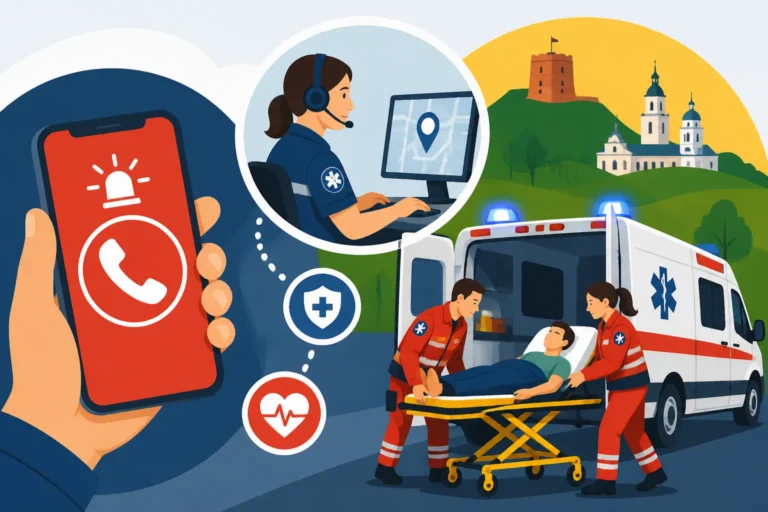
In a true emergency—think chest pains, severe trauma, or a high-speed accident—the public system is actually the fastest and most prepared. The emergency rooms (Priimamasis) in major public hospitals like Santaros Klinikos in Vilnius are equipped for everything. Private clinics in Lithuania generally do not handle major emergencies or provide ambulance services for life-threatening events. If you call 112, you are going to a public hospital, and that is exactly where you want to be. For more on this, read Emergency Medical Care in Lithuania: What Every Expat Needs to Know.
Routine Maintenance and Chronic Conditions
If you have a chronic condition that requires monthly medication or regular check-ups, the public system is perfectly fine once you are "in" the system. Once your specialist establishes a treatment plan, your family doctor can handle the Understanding the Electronic Prescription (E-Receptas) System in Lithuania renewals quite quickly. The speed issue in the public system is primarily about entering the queue, not staying in it.
The "I Need an Answer Now" Scenario
If you find a strange mole, have a persistent cough, or are worried about a sudden pain, go private. The psychological toll of waiting three months for a scan is simply not worth the savings for most expats. This is where having private insurance or a global plan like SafetyWing becomes invaluable. It gives you the freedom to choose speed when your health—or your peace of mind—is on the line. I always tell new arrivals that even if they are paying into the public system, they should keep a "private clinic fund" or a good insurance policy for these specific moments.
How to Maximize Speed in the Public System
If you are committed to using the public system (perhaps because you are on a budget or simply want to utilize the services your taxes pay for), there are ways to move through it faster. It requires a bit of "system savvy" that most locals have mastered over decades.
Using E-Sveikata and Online Portals
Don't call the polyclinic reception if you can avoid it. Use the How to Set Up Your Account on the Patient Portal in Lithuania guide to get your digital access sorted. The online system, Sergu.lt or the newer Mano.E-Sveikata portal, allows you to see all available openings across multiple clinics. Sometimes, a polyclinic just 15 minutes away by bus has an opening two weeks earlier than the one in your neighborhood. Being flexible with your location can significantly cut down your wait time.
Selecting the Right Polyclinic
Not all polyclinics are created equal. Some are notoriously overcrowded, while others, often in slightly newer or less densely populated districts, have better ratios of doctors to patients. Before you register, ask fellow expats in local Facebook groups about their experiences with Understanding the Role of the Polyclinic (Poliklinika) in Lithuania in your specific area. Often, the smaller clinics (Šeimos medicinos centras) that have contracts with the VLK offer a "private feel" with public prices and much faster service than the massive district polyclinics.
Veteran Advice for Navigating the Wait
After living through several Lithuanian winters and the inevitable colds that come with them, my strategy has evolved into a hybrid approach. I use my public family doctor for routine things, certificates, and basic blood work. However, the moment a specialist is mentioned, I weigh the severity. If it's a routine check, I'll take the public appointment in two months. If it's something bothering me today, I open a private clinic's app and book for tomorrow.
One thing to remember is that even if you see a private specialist for a diagnosis, you can often take that diagnosis back to the public system for subsidized treatment or surgery. This "bridge" approach is very common. You pay for the speed of the diagnosis but use the public funds for the expensive long-term treatment. It's also worth noting that for those still waiting on residency, How Do I Register for PSD After Moving to Vilnius? is the first step to unlocking the public system, but until that is finalized, private care is your only real option.
For anyone moving here, I strongly suggest having a plan for those first 90 days. Whether it's a specialized expat plan or something flexible like SafetyWing, having coverage that allows you to walk into a private clinic without fear of a 200-Euro bill is the best way to start your life in Lithuania. The peace of mind that comes with knowing you can see a doctor tomorrow, rather than in three months, is worth every penny.
Disclaimer
This guide is for informational purposes only and is based on the personal experiences of expats living in Lithuania and current 2026 healthcare regulations. Medical systems and waiting times can change frequently. You should always consult with the National Health Insurance Fund (VLK) or a qualified legal professional regarding your specific insurance obligations and rights. This content does not constitute medical or legal advice.