What Is the Emergency Phone Number in Lithuania?
Imagine waking up in the middle of the night in a quiet apartment in Vilnius or Kaunas, feeling a sharp, localized pain that you know requires immediate medical attention. In that moment of vulnerability, the last thing you want to be doing is scrolling through confusing government websites or outdated forums to find out who to call. This guide provides the definitive answer to emergency contacts in Lithuania, ensuring you know exactly how to get help when seconds count.
112: The Universal Gateway to Emergency Services
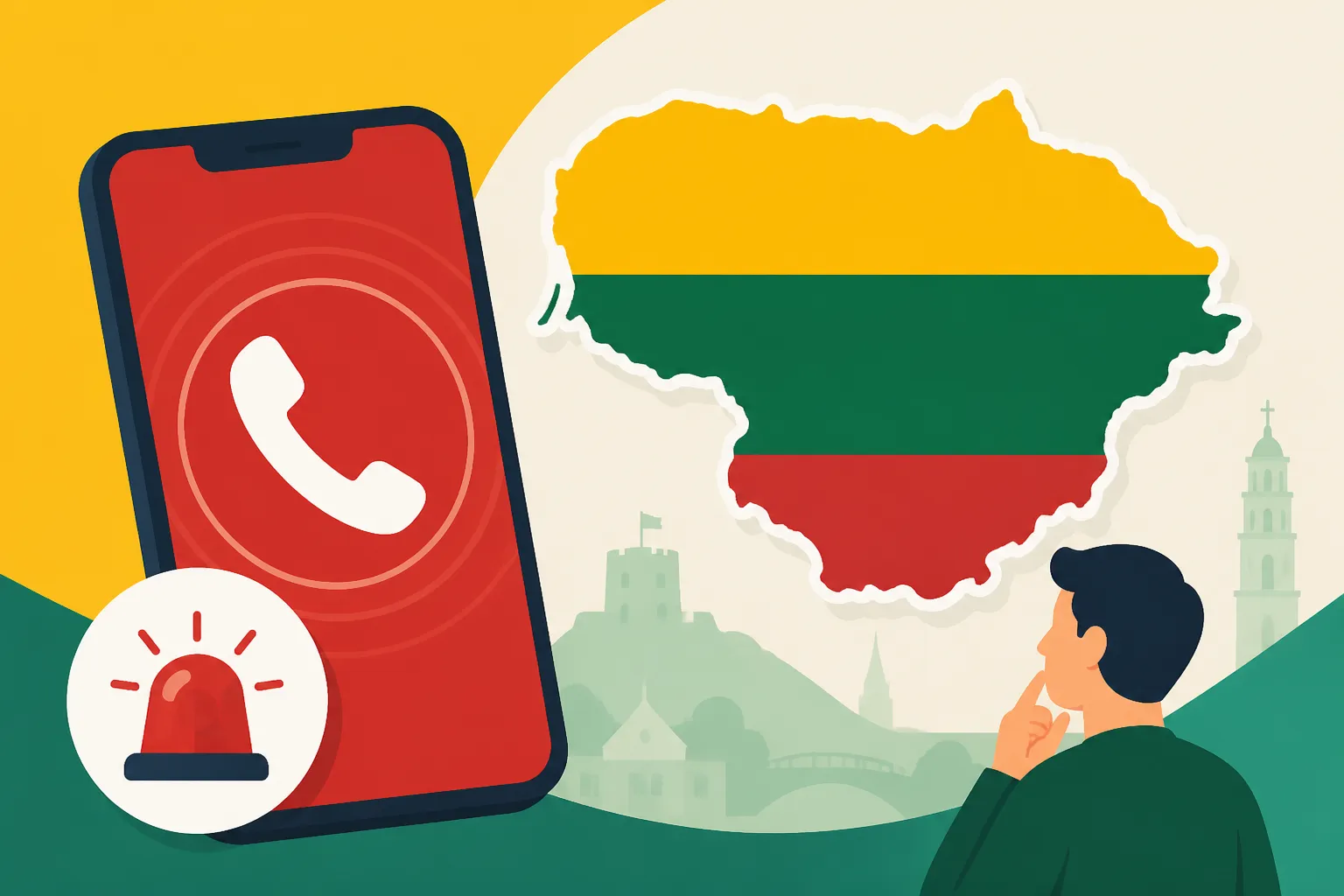
When you are in Lithuania, the most important number to commit to memory is 112. This is the single, universal emergency telephone number used throughout the country, similar to 911 in the United States or 999 in the United Kingdom. It is designed to be the one-stop entry point for any crisis requiring the police, the fire brigade, or an ambulance. It is worth noting that the centralization of this service is a massive relief, especially when you are too stressed to remember separate numbers for different departments.
How the 112 System Operates in Lithuania
The 112 emergency line is managed by the Emergency Response Centre (Bendrasis pagalbos centras). When you dial this number, your call is routed to a professional dispatcher who is trained to assess the nature of the emergency quickly. They will ask a series of specific questions to determine which service needs to be deployed. It is vital to stay on the line and answer these questions calmly, even if they seem repetitive. They are filtering the information to ensure the right team—whether it’s a high-speed medical unit or a fire truck—arrives at your exact location.
One of the biggest hurdles for newcomers is understanding Emergency Medical Care in Lithuania: What Every Expat Needs to Know before a crisis actually occurs. The dispatchers are connected to a sophisticated GPS tracking system that can often pinpoint your location if you are calling from a mobile phone, though you should always be prepared to give your address or a nearby landmark. If you are in a large apartment complex, knowing your floor and apartment number in Lithuanian can save precious minutes.
Technical Accessibility: Calling Without a SIM or Credit
A significant advantage of the 112 system in Lithuania is its high level of accessibility. You can dial 112 from any mobile phone, even if it does not have a SIM card inserted, and even if the phone is locked. Furthermore, the call is entirely free of charge from both landlines and mobile networks. You do not need to have a positive balance on your prepaid SIM card to reach help.
This is particularly relevant for those who have just arrived and are still figuring out how to Get a Lithuanian SIM Card as a New Arrival. If your phone is still roaming or if you haven't topped up your local account, the 112 service remains open to you. It is a safety net that operates regardless of your mobile provider or residency status. For digital nomads or those on a scouting trip who might be using a global health plan like SafetyWing, knowing that the initial call for help is free and accessible provides an essential layer of security.
Navigating the Language Barrier During a Crisis
Perhaps the most common fear I hear from fellow expats is the worry that the operator won't understand them. When your heart is racing and you’re trying to describe a medical emergency, the language barrier can feel like an insurmountable wall. However, the Lithuanian emergency services are quite well-equipped to handle foreign callers, especially in major urban centers.
English and Russian Support at the Dispatch Center
The Emergency Response Centre in Lithuania employs many dispatchers who are proficient in English and Russian. While it is not a 100% guarantee that the first person who picks up will be a native-level English speaker, the system is designed to transfer you to an English-speaking operator almost immediately if needed. In my experience, if you start the call by saying "Do you speak English?" (Ar kalbate angliškai?), the dispatcher will either continue in English or quickly find a colleague who can.
It’s worth noting that while the dispatchers are often multilingual, the first responders—the police officers or paramedics who show up at your door—may have varying levels of English. This is where Understanding the Lithuanian Healthcare System: An Expat's Roadmap (2026) becomes crucial. Being prepared for a mix of languages during the actual intervention is part of the expat experience here. Having a translation app ready or a neighbor’s phone number can be a lifesaver.
Essential Lithuanian Phrases for Emergency Calls
Even if you rely on the dispatcher's English, knowing a few key Lithuanian words can help clarify your location or the nature of the problem. If you are in a panic, these simple terms can bridge the gap:
- Greitoji pagalba – Ambulance/Emergency medical aid
- Policija – Police
- Gaisras – Fire
- Avarija – Accident/Crash
- Kraujavimas – Bleeding
- Sąmonės netekimas – Loss of consciousness
- Mano adresas yra… – My address is…
If you are calling from a location where you are unsure of the street name, try to look for the "Gatvė" (street) sign on the corner of the building. Lithuanian addresses are usually formatted as Street Name followed by the Building Number, then the Apartment Number (e.g., Gedimino pr. 1-10).
Medical Emergencies: Ambulances and Hospitals
Once the 112 operator determines you have a medical crisis, they will dispatch the "Greitoji Medicinos Pagalba" (GMP), which is the state-run ambulance service. Understanding how this differs from private transport or routine doctor visits is essential for managing both your health and your expectations.
The Role of the Greitoji Medicinos Pagalba (GMP)
The GMP units are highly professional and are divided into different levels of care. Some units are staffed by paramedics for basic life support, while others include specialized doctors for advanced life support. They are remarkably efficient, particularly in cities like Vilnius and Kaunas. However, it is important to remember that the ambulance is there to stabilize you and transport you to the nearest emergency room (Priėmimo skyrius).
While you are waiting for help to arrive, it is a good idea to have your documents ready. The crew will ask for your ID and proof of health insurance. If you are still in the process of Registering for Compulsory Health Insurance (PSD) in Lithuania (2027), you might worry about the paperwork. This is why having a transitionary insurance like SafetyWing is so helpful; it covers you during those initial weeks or months before your local social security (Sodra) status is fully active.
Understanding Public vs Private Emergency Care
In a life-threatening situation, the 112 ambulance will almost always take you to a public hospital, as these facilities are the only ones equipped with 24/7 trauma centers and specialized intensive care units. Lithuania has excellent public hospitals, such as Santaros Klinikos in Vilnius or the Kaunas Clinics.
However, once the immediate danger has passed, some expats prefer to transition to private clinics for follow-up care or non-emergency surgeries. You might find yourself debating Public vs Private Healthcare in Lithuania: Which Should Expats Choose? depending on your comfort level and the complexity of your condition. Private insurance or specialized travel medical plans like SafetyWing can often cover the costs of these private facilities, which usually offer more English-speaking staff and shorter wait times for non-emergency consultations.
The Financial Aspect: Who Pays for the Ambulance?
A common question is: How Much Does an Ambulance (Greitoji) Cost in Lithuania? The answer depends largely on your insurance status. For those who are covered by the Compulsory Health Insurance Fund (PSDF)—which includes most employees, self-employed persons paying PSD, and their children—the emergency ambulance service and subsequent ER treatment are free at the point of use.
If you are a tourist or a new resident without PSD coverage, you may be billed for the ambulance service later. These costs are generally not as exorbitant as in the US, but they can still be a surprise. If you find yourself asking What Happens If I Get Sick Before My PSD Registration Is Complete?, having a private policy is your best defense. These policies usually reimburse you for the costs incurred during a 112-call-out and hospital stay.
| Service Type | Phone Number | Coverage / Purpose |
|---|---|---|
| All Emergencies | 112 | Police, Fire, Ambulance (Universal) |
| Medical Consultation | 1808 | Non-emergency medical advice (Limited hours) |
| Poison Control | +370 5 236 20 52 | Specialist advice for poisoning/overdose |
| Gas Emergency | 1804 | Reporting gas leaks or smells |
| Child Helpline | 116 111 | Emotional support for children/teens |
Beyond 112: Specialized Hotlines and Services
While 112 is the "big one," there are several other numbers that might be useful depending on the specific crisis you're facing. Not every problem is a life-or-death emergency, and knowing where to turn for niche issues can save you a lot of time.
Non-Emergency Medical Advice and Out-of-Hours Care
If you have a high fever or a painful cough but don't feel it's a 112-level emergency, you might wonder How to See a Doctor Outside of Business Hours in Lithuania. During the day, your first point of contact should always be your "Šeimos gydytojas" (Family Doctor). But on weekends or late at night, you can visit the duty doctor at your local polyclinic or call the medical information line if available.
For those who are tech-savvy, Understanding the E-Sveikata (E-Health) System in Lithuania can be very helpful. All your prescriptions and medical history are stored there, so even a doctor you’ve never met at an emergency clinic can see what medications you are taking, which prevents dangerous drug interactions during a crisis.
Emotional and Mental Health Support
Lithuania has been working hard to improve its mental health infrastructure. If you are experiencing a psychological crisis, 112 can still be called if there is an immediate risk of harm. However, for emotional support, there are dedicated helplines. The "Vilties linija" (Hope Line) offers support for adults, and there are several English-speaking psychologists available in the private sector. If you are struggling with the transition, it is worth looking into How to Access Mental Health Services in Lithuania as an Expat to find long-term support.
Practical Preparation: Before an Emergency Happens
Being an expat means being proactive. You cannot wait for an emergency to learn how the system works. There are a few small steps you can take today that will make a massive difference if you ever have to dial 112.
Setting Up Your ICE (In Case of Emergency) Contact
Make sure your phone has an ICE contact that is accessible even when the screen is locked. In Lithuania, medical personnel are trained to look for this. If you have any chronic conditions or severe allergies, write them down on a small card in both English and Lithuanian and keep it in your wallet.
I also highly recommend that new arrivals figure out their health insurance situation immediately. If you're a freelancer, you'll need to know How Much Is the Monthly PSD Contribution Through Sodra? to keep your coverage active. If you're still waiting for your residency permit, keep your SafetyWing details easily accessible in your phone's files. The peace of mind that comes from knowing you won't be hit with a massive bill after an emergency is priceless.
Know Your Neighborhood
Take a walk around your neighborhood and locate the nearest "Poliklinika" (Polyclinic) and "Ligoninė" (Hospital). Knowing the physical location of these buildings helps you orient yourself when describing your location to a dispatcher. For instance, if you live in the capital, knowing the Best Hospitals in Vilnius for Expats can help you communicate with the ambulance crew if they ask which facility you prefer, though they will ultimately go where the emergency dictates.
Summary of Emergency Procedures
- Dial 112 immediately for any life-threatening situation.
- Stay Calm: The dispatcher might speak English; if not, ask for an English speaker.
- State Your Location: Give the street name and building/apartment number clearly.
- Describe the Problem: Use simple words (Fire, Accident, Heart Attack).
- Prepare Documents: Have your ID and insurance card (PSD or private like SafetyWing) ready for the paramedics.
- Follow Instructions: Do not hang up until the dispatcher tells you to.
Disclaimer
This guide is for informational purposes only and does not constitute legal or medical advice. While every effort has been made to ensure the accuracy of the emergency numbers and procedures mentioned, systems and regulations in Lithuania may change. Always verify current emergency protocols with official government sources such as the Emergency Response Centre (BPC) or the Ministry of Health of the Republic of Lithuania. In a true emergency, always prioritize calling 112 immediately.