Health Insurance in Lithuania: Compulsory, Private and Travel Options Explained
Most expats arrive in Lithuania expecting a straightforward "pay tax, see doctor" system, but quickly find themselves tangled in a web of Sodra payments, Migris requirements, and the legendary waiting lists of the local Poliklinika. This comprehensive guide demystifies the compulsory PSD system, explores when private insurance is a necessity, and simplifies the administrative hurdles of staying healthy in Lithuania.
Understanding Compulsory Health Insurance (PSD) in Lithuania
Compulsory Health Insurance, known locally as Privalomasis Sveikatos Draudimas or PSD, is the backbone of the Lithuanian healthcare landscape. If you are living here legally, chances are you are required to be part of this system. It is managed by the National Health Insurance Fund (VLK) and funded through contributions collected by Sodra, the social insurance board. For a veteran expat, the first rule of thumb is simple: if your PSD is not active, you are effectively invisible to the public healthcare system, which can lead to massive out-of-pocket bills for even minor emergencies.
What is PSD and Who Must Pay
The PSD system is based on the principle of universal solidarity. This means that everyone contributes a portion of their income to a collective fund, which then pays for the healthcare services of all insured persons. For employees, this is usually invisible, as the employer deducts the contribution from the gross salary. However, for those who are self-employed, students from non-EU countries, or those here on certain types of residence permits, the responsibility to pay falls squarely on your shoulders. You can find more details on the mechanics of this in our guide on Understanding PSD Contributions Through Sodra in Lithuania.
It is a common mistake for newcomers to assume that simply having a residence permit means they are insured. In reality, your insurance status is tied to your contributions. If you are an EU citizen, you might have a grace period using your EHIC, but once you declare residence, the local system takes over. For non-EU citizens, the stakes are higher; a lapse in PSD payments can actually jeopardize your residency status, as maintaining valid health insurance is a core requirement of your permit. If you are just starting this journey, I highly recommend reading about How to Register for Compulsory Health Insurance (PSD) as a Foreigner in Lithuania to avoid early pitfalls.
How PSD Contributions are Calculated
The math behind PSD can be a bit of a headache if you are not a standard W2-style employee. As of 2026, the standard rate remains pegged to the Minimum Monthly Wage (MMA). For those working under "Individual Activity" or with a "Business Certificate," you generally pay 6.98% of the MMA every month to keep your status "Active." This payment must be made by the last day of the current month. If you miss a payment, even by a day, your insurance status in the national database often flips to "Inactive" immediately.
Many expats get caught out by this when they transition between jobs or start freelancing. They assume that because they paid for three years straight, a one-month gap won't matter. In Lithuania, the system is digital and unforgiving. If you walk into a clinic with an inactive status, you will be charged the "uninsured" rate, which is significantly higher. To avoid this, many people use flexible global options like SafetyWing during transition periods to ensure they are never without some form of medical protection while the local bureaucracy catches up. For a deeper dive into the numbers, check our breakdown of How Much Is the Monthly PSD Contribution Through Sodra? to plan your budget accurately.
Activating Your PSD Coverage
Activation isn't always automatic. While employees are covered from their first day of work, others must proactively register. This usually involves a visit to the local "Sodra" office or, more conveniently, using their online portal. You will need your Asmens Kodas (personal code) for this. If you don't have one yet, your first priority should be How to Get Your Asmens Kodas (Personal Code) and Why It Matters for Healthcare. Without this code, you are essentially a ghost in the machine, unable to link your payments to your persona in the E-health system.
Once registered and your first payment is processed, you are officially in the system. However, "being in the system" and "getting a doctor's appointment" are two very different things. Your next step is to register with a specific Poliklinika. This is a crucial step that many foreigners skip until they are actually sick, which is the worst time to try and navigate Lithuanian paperwork. Newcomers are often advised to register with a family doctor the same week they get their residence permit.
The Role of the Compulsory Health Insurance Fund (PSDF) and VLK
The PSDF is the actual pot of money that pays the doctors, and the VLK (Valstybinė ligonių kasa) is the administrator. Understanding how these entities interact helps you realize what you are actually paying for. The public system is remarkably comprehensive, covering everything from routine check-ups and complex surgeries to maternity care and emergency services. However, it operates on a strict referral basis, which can be a cultural shock for those used to direct access to specialists.
What Services are Covered by the Public System
The range of services covered by PSD is impressive. If you are fully insured, you don't pay for visits to your family doctor, most diagnostic tests (like blood work or X-rays), or hospital stays. Even high-tech procedures like MRIs are covered, provided you have a "Siuntimas" (referral) from your GP. This is a massive benefit, but the catch is the "waiting list." For non-urgent specialist care, you might wait weeks or even months.
Many expats find themselves confused about dental care. While the consultation and work are technically covered, the materials (like the filling itself) usually are not, leading to a small co-pay. If you are planning a family, you’ll be relieved to know that prenatal care and childbirth are fully covered. For a full list of what's included, I suggest looking at What Is Covered by Compulsory Health Insurance in Lithuania?. It’s better to know your rights before you find yourself standing at a reception desk trying to translate medical terms.
Navigating the Polyclinic (Poliklinika) System
The Poliklinika is a uniquely post-Soviet institution that has evolved into a modern, albeit sometimes bureaucratic, healthcare hub. Each district in cities like Vilnius, Kaunas, and Klaipėda has its own. When you register, you aren't just picking a doctor; you are picking a facility. This facility becomes your primary point of contact for everything. If you need a dermatologist, your family doctor at the Poliklinika writes an electronic referral, and you then book an appointment within that same system or another public hospital.
The biggest hurdle for expats is the language barrier. While younger doctors often speak excellent English, the administrative staff at the front desks often do not. This is where The Expat Guide to Finding a Family Doctor (Šeimos Gydytojas) in Lithuania becomes an essential resource. Some Poliklinikas are known to be more "expat-friendly" than others, and choosing the right one can save you hours of frustration. Remember, you have the right to change your doctor or your Poliklinika if you aren't happy, though there are small fees and waiting periods involved.
Prescription Medications and the E-Health Portal
Lithuania has moved almost entirely to a digital health system called E-Sveikata. When a doctor prescribes medication, they don't give you a piece of paper; they upload an "E-Receptas" (electronic prescription) to your profile. You then simply go to any Vaistinė (pharmacy) with your ID card, and they pull up your prescription. It is incredibly efficient. To manage this yourself, you should learn How to Access My E-Sveikata Health Record Online in Lithuania.
The cost of medications is often subsidized by the state. Depending on the condition and the drug, the government might pay 50%, 80%, or even 100% of the price. However, this only applies to drugs on the "Compensated Medicines List." If you prefer a specific brand name that isn't on the list, you will have to pay the full price. For a deeper understanding of how to save money at the pharmacy, read Prescription Medications and Pharmacies in Lithuania: The Complete Guide.
Private Health Insurance: When and Why You Need It
While the public system is great for major issues, many expats choose to supplement it with private health insurance. In Lithuania, private insurance isn't usually a replacement for PSD (you still have to pay your PSD by law if you are a resident), but rather an "express lane" to bypass public waiting lists and access more comfortable facilities. For many of us, the ability to see a specialist within 48 hours instead of 48 days is worth every cent.
Public vs. Private Healthcare: The Real Trade-offs
The primary reason to go private is speed and comfort. Private clinics like Northway, Kardiolita, or InMedica feel more like boutiques than hospitals. The doctors usually have more time to speak with you, and English proficiency is almost guaranteed. However, private care is expensive if you pay per visit. A simple consultation can cost between €50 and €150, which is why having a dedicated private policy is beneficial.
There is a nuanced middle ground here. Some people choose to stay in the public system for "big" things—like surgeries or chronic disease management—and use private clinics for "small" things like annual check-ups, mole checks, or physical therapy. If you are weighing your options, our comparison in Public vs Private Healthcare in Lithuania: Which Should Expats Choose? offers a realistic look at the costs and benefits.
Choosing a Private Health Insurer in Lithuania
When looking for private insurance, you have two main routes: local corporate-style plans or international expat insurance. Local insurers like Ergo, Gjensidige, or Seesam often provide "health baskets" where you are given a set amount of money to spend on different categories (e.g., €500 for consultations, €200 for diagnostics). These are very common as employee benefits in the tech and fintech sectors.
If you are a freelancer or your company doesn't provide insurance, you might look into Understanding Private Health Insurance Plans in Lithuania. The key is to check the "waiting periods." Most private insurers won't cover pre-existing conditions or elective procedures until you have been a member for 3 to 6 months. For those who travel frequently or aren't sure how long they will stay in Lithuania, a more flexible option like SafetyWing can be a lifesaver, as it covers you globally and offers a more subscription-based model that fits the modern nomadic lifestyle.
Supplementing Public Care with Private Plans
The "Gold Standard" for many veteran expats is the hybrid approach. You maintain your PSD to ensure you are covered for catastrophic emergencies (like a major car accident or a sudden appendectomy) where you would be taken to a public university hospital anyway. Then, you use a private plan to handle the day-to-day. This ensures that you get the best of both worlds: the massive resources of the state and the customer service of the private sector.
One thing to watch out for is that private insurance in Lithuania often works on a "reimbursement" basis. You pay the clinic, get an invoice, and then upload it to your insurer's app to get your money back. Some "premium" plans have direct billing with certain clinics, but these are rarer and more expensive. If you are on a budget, Is Private Health Insurance Worth It for Expats in Lithuania breaks down the math to help you decide if the monthly premium actually saves you money in the long run.
Travel Insurance and Remote Work Coverage
Not everyone moving to Lithuania is a permanent resident from day one. Many arrive on a 90-day visa-free stay or a National D Visa to look for work. In these cases, you are not yet eligible for PSD, but you are legally required to have health insurance. This is a critical gap that many people fail to plan for properly.
Health Insurance for Residence Permits and Visas
To get your first Temporary Residence Permit (TRP), the Migration Department (MIGRIS) requires proof of health insurance that covers at least €30,000 and is valid in all Schengen countries. This insurance must be in place before you even submit your application. Many people buy the cheapest "travel insurance" they can find, only to realize it doesn't actually cover anything other than "emergency stabilization."
It is wise to use a provider that understands the specific needs of expats. For example, SafetyWing is often accepted by MIGRIS because their policies meet the technical requirements for the residence permit while providing actual, usable coverage for the policyholder. If you are in the middle of your application process, you should read Do I Need Private Insurance for a Lithuanian Residence Permit? to ensure your documents won't be rejected.
SafetyWing and Flexible Options for Digital Nomads
Lithuania has become a hotspot for digital nomads, especially with its burgeoning tech scene in Vilnius. If you are working remotely for a company in the US or UK, you aren't paying into the Lithuanian Social Security system through salary deductions. This means you have to pay PSD voluntarily, which can be an administrative hassle if you move every few months.
For this group, SafetyWing offers a "Nomad Insurance" that is essentially a subscription. You can start and stop it whenever you want, and it covers you in Lithuania and almost every other country in the world. It’s particularly useful for those who haven't yet committed to the "Asmens Kodas" lifestyle but want to make sure a broken leg in the Old Town doesn't result in a €5,000 bill. It acts as a perfect bridge until you decide to settle down and dive into the Health Insurance in Lithuania: Compulsory, Private and Travel Options Explained local public system.
Using the EHIC Card for EU Citizens
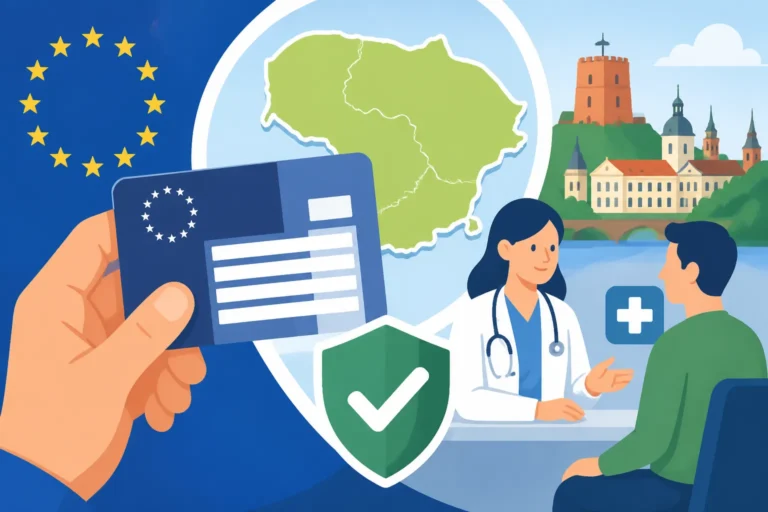
If you are an EU/EEA citizen, your European Health Insurance Card (EHIC) is your best friend for the first few months. It allows you to access Lithuanian public healthcare under the same conditions as locals. However, there is a catch: the EHIC is intended for "temporary stays." Once you register your residence and get your Lithuanian ID, you are expected to join the local PSD system.
Using a German or French EHIC indefinitely while living and working in Vilnius is a legal grey area that can lead to complications with the Tax Authority (VMI). If you are an EU citizen planning a long-term move, check out How to Use Your EHIC (ESDK) Card in Lithuania as an EU Citizen to understand exactly when you need to make the switch to the local system.
Costs and Practicalities: Budgeting for Your Health
Let's talk money. Lithuania is generally more affordable than Western Europe, but healthcare costs can still surprise you if you aren't prepared. Whether it's a sudden dental emergency or a specialized blood test, you need to know what's coming.
| Service Type | Public System (with PSD) | Private Clinic (Out of Pocket) |
|---|---|---|
| Family Doctor Visit | Free | €45 – €80 |
| Specialist Consultation | Free (with referral) | €60 – €150 |
| Blood Test (Basic) | Free | €15 – €40 |
| MRI Scan | Free (with referral, 1-3 month wait) | €150 – €300 |
| Dental Filling | €5 – €30 (material cost) | €60 – €120 |
| Emergency Room | Free | Free (for life-threatening) |
Out-of-Pocket Expenses for Specialists and Dental Care
Even with PSD, you will likely face some costs. As mentioned, dental care is only partially subsidized. Most expats choose to go entirely private for dental work because the quality of materials and the speed of service are vastly superior. If you are curious about specific prices, How Much Does Dental Treatment Cost in Lithuania Without Insurance? provides a realistic breakdown of what a root canal or a crown will actually cost you in Vilnius.
Specialist visits are the other area where you might spend money. If you don't want to wait two months for a public dermatologist, you'll pay about €70 for a private one. These costs can add up if you have a chronic condition. This is why many people look for The Cost of Healthcare in Lithuania: A Complete Breakdown for Foreigners (2026) to figure out if they should put aside a "health fund" or buy a private policy.
Emergency Medical Care for Expats
In a life-threatening situation, you call 112. The ambulance (Greitoji pagalba) will take you to the nearest emergency department, and you will be treated regardless of your insurance status. If you have PSD, the stay is free. If you don't, you will receive a bill afterward. However, the rule in Lithuania is: stabilize first, ask for the ID card later.
It is vital to know What Is the Emergency Phone Number in Lithuania? and how to explain your location. Most emergency operators speak English, but in smaller towns, it might be a struggle. For non-life-threatening but urgent issues (like a high fever on a Saturday night), you shouldn't go to the ER; instead, you should go to the "Duty Doctor" at designated clinics. This is a common point of confusion that we explain in Emergency Medical Care in Lithuania: What Every Expat Needs to Know.
Health Coverage for Family Members and Children
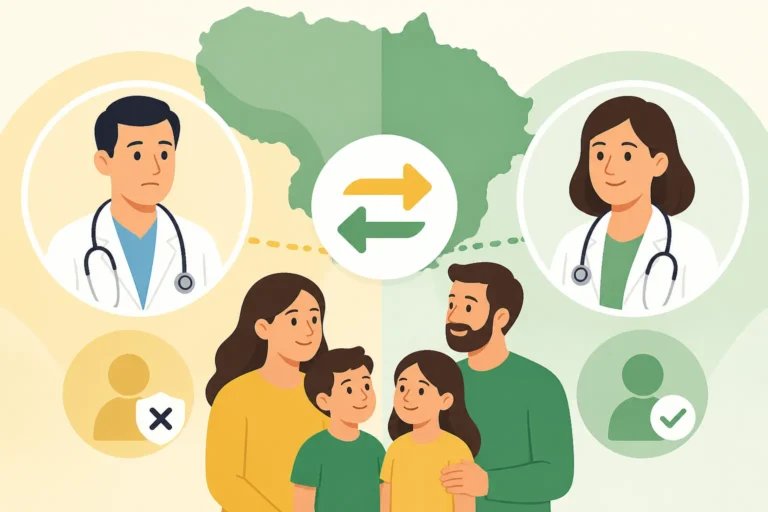
One of the best parts of the Lithuanian system is that children are automatically insured by the state. If you are a legal resident, your children get full PSD coverage regardless of whether you are working or not. The same often applies to one parent if they are staying home to care for a child under the age of 8 (or two children under 18).
Registering your family can be a bit of a paperwork marathon. You will need birth certificates (translated and often with an apostille) and proof of your own residence. To make this easier, we have a step-by-step guide on How to Register Family Members for Health Insurance in Lithuania. Once they are in the system, you can register them with a pediatrician at your local Poliklinika, which is usually a much smoother process than the adult registration.
Step-by-Step Guide: Moving from No Coverage to Fully Insured
So, you've just landed in Vilnius. Your bags are unpacked, you've found a flat in Užupis, and now you realize you need to sort out your health. Here is a commonly recommended path.
Getting Your Asmens Kodas and First Registration
Everything starts with the Asmens Kodas. You get this when you declare your place of residence at the "Seniūnija" (district office) or through MIGRIS. This code is your digital identity. Once you have it, you can log into the Sodra portal to see your insurance status. If you are employed, your employer will register you automatically. If you are self-employed, you need to go to How to Register for PSD as a Self-Employed Person in Lithuania to start your monthly payments.
Don't wait until you are sick to do this. The time between "paying" and "appearing as active" in the system can be a few days. During this gap, it is wise to keep your SafetyWing active. It’s better to have overlapping coverage for a week than to have none at all when you suddenly catch the flu.
Finding an English-Speaking Family Doctor
Once your PSD is active, you need to "Prisirašyti" (register) at a Poliklinika. You can do this by physically going there with your ID card and filling out a small form. You will be asked to choose a specific doctor. This is where you should do your homework. Call ahead and ask, "Ar gydytojas kalba angliškai?" (Does the doctor speak English?).
In Vilnius, clinics like the Centro Poliklinika or Antakalnio Poliklinika are very large and usually have several English-speaking GPs. If you are in Kaunas, you might have better luck at the clinics associated with the LSMU university. For a curated list of doctors who won't require you to bring a translator, check Where Can I Find an English-Speaking Family Doctor in Vilnius?.
Handling Sick Leave and Social Benefits
If you get sick and can't work, you need a "Nedarbingumo pažymėjimas" (sick leave certificate). In Lithuania, your employer doesn't just "take your word for it"—you must have a doctor log the sick leave in the national system. This is done electronically by your GP. For the first two days, your employer usually pays a portion of your salary; from the third day onward, Sodra pays.
This system is very robust but requires you to contact your doctor on the first day you are sick. They cannot backdate a sick leave certificate. If you wake up on Monday with a fever, call the clinic immediately. If you don't, you won't get paid for that day. We've detailed the whole process in Understanding Sick Leave (Nedarbingumo Pažymėjimas) and Sick Pay in Lithuania so you don't lose out on your benefits.
Comprehensive Comparison of Health Coverage Options
To help you visualize your options, I’ve put together this comparison based on my years of helping expats navigate the system. Most of us end up using a combination of at least two of these.
| Feature | Compulsory (PSD) | Private (Local) | Travel/Nomad (SafetyWing) |
|---|---|---|---|
| Best For | Long-term residents/employees | High-earners/specialist care | New arrivals/Digital nomads |
| Cost | 6.98% of salary or MMA | €30 – €100 / month | ~€45 / month (approx.) |
| Waiting Lists | Long (weeks/months) | Short (days) | Short (for emergencies) |
| English Speakers | Hit or miss | Guaranteed | Guaranteed (Support/Network) |
| Coverage Area | Lithuania only (+ EHIC) | Lithuania only | Global (except home country) |
| Application | Via Sodra/Migration | Via Insurance Broker | Online (Instant) |
| Pre-existing Cond. | Covered | Usually Excluded | Usually Excluded |
Disclaimer
This guide is for informational purposes only and is based on the author's personal experience and research as of 2026. Healthcare laws and Sodra contribution rates are subject to change by the Lithuanian government. Always consult with the National Health Insurance Fund (VLK) or a certified legal advisor before making decisions regarding your medical coverage or residency requirements. The author is not a licensed insurance broker or a medical professional.